Stepping into the world of fitness, you’re quickly faced with a seemingly simple choice: a mat. Yet, the array of options, particularly when distinguishing between a yoga mat and an exercise mat, can leave anyone puzzled. Are these terms interchangeable, or do their subtle differences profoundly impact your workout experience? This comprehensive guide will dissect the unique characteristics of yoga and exercise mats, helping you understand their specific purposes and ultimately decide if one mat can truly serve all your fitness needs.
What is a Yoga Mat and Why is it Essential?
A yoga mat is a specially designed surface crafted to support and enhance your yoga practice. Its primary role is to provide a stable, non-slip foundation, essential for maintaining balance and executing poses with precision and safety. Beyond preventing slips and falls, a quality yoga mat offers a crucial barrier between your body and the hard floor, cushioning joints and allowing for comfortable, prolonged stretches. The right mat facilitates proper alignment and deepens your connection to the practice, making it an indispensable tool for any yogi.
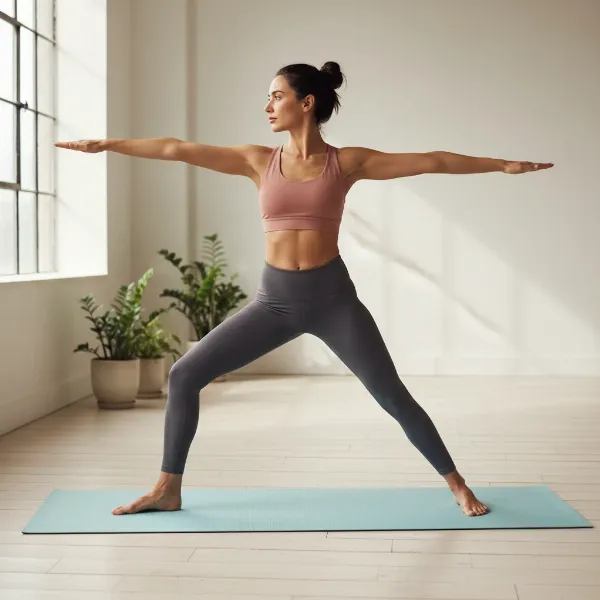 Woman in warrior II pose on a light-colored yoga mat, demonstrating stability.
What is an Exercise Mat and Why is it Essential?
An exercise mat, often referred to as a fitness or gym mat, is engineered to provide superior cushioning and shock absorption for a wider variety of fitness activities. Unlike yoga mats that prioritize grip and ground connection, exercise mats focus on joint protection during dynamic and high-impact workouts such as HIIT, plyometrics, strength training, and core work. They create a comfortable and supportive surface that minimizes stress on your knees, elbows, and spine, ensuring you can perform vigorous movements safely and effectively without discomfort or impact-related injuries.
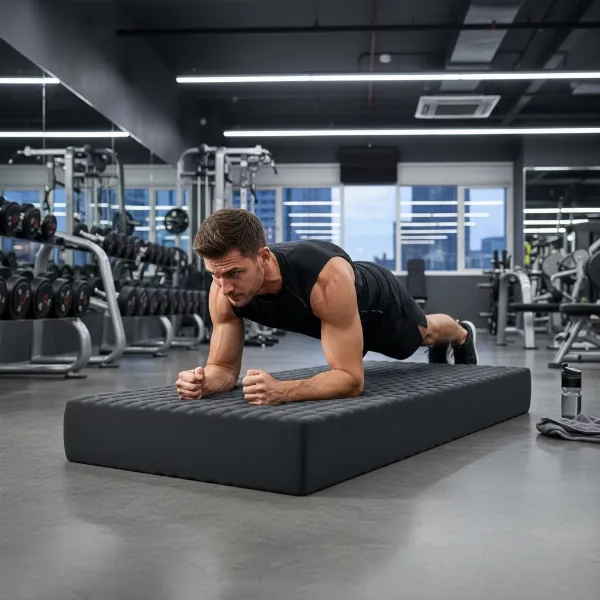 Man performing a plank on a thick black exercise mat, highlighting cushioning.
Common Types of Mats: Detailed Comparison
While both yoga and exercise mats serve as essential workout foundations, their construction materials are chosen for distinct performance characteristics. Understanding these materials is key to selecting the right mat for your specific fitness regimen.
- PVC (Polyvinyl Chloride) Mats: PVC mats are known for their durability, stickiness, and affordability, making them a popular choice for both yoga and general exercise. They offer good grip but are less environmentally friendly. Their closed-cell surface repels moisture, making them easy to clean, yet they may become slippery with excessive sweat. PVC mats are often recommended for beginners due to their low cost and robustness.
- TPE (Thermoplastic Elastomer) Mats: TPE mats are a more eco-conscious alternative to PVC, being recyclable and biodegradable. They provide a good balance of cushioning and grip, making them suitable for various activities, including yoga, Pilates, and light strength training. TPE mats are lightweight, making them easy to transport, and generally offer a softer feel than PVC.
- Natural Rubber Mats: Highly praised for their exceptional grip, natural rubber mats are a premium choice for serious yogis, especially those who practice hot yoga or sweat profusely. They offer excellent stability and cushioning, are often biodegradable, and provide superior traction even when damp. However, they can be heavier, more expensive, and may have a distinct rubber odor that some find strong.
- Jute Mats: Jute mats are an environmentally friendly option made from natural fibers, offering a unique texture that provides good grip and a connection to nature. They are durable and breathable but typically offer less cushioning than rubber or TPE mats. Jute mats are often preferred for restorative yoga or practices where a firmer, more grounded feel is desired.
- Cotton Mats: Often used as yoga rugs or for specific practices like Ashtanga, cotton mats are soft, highly absorbent, and machine washable. They offer a fabric-like surface, providing less grip than rubber or PVC, but excellent sweat absorption. They are best suited for gentle yoga, meditation, or as a top layer over another mat for added comfort and hygiene.
- NBR (Nitrile Butadiene Rubber) / EVA (Ethylene-Vinyl Acetate) Foam Mats: These materials are predominantly used for exercise mats due to their superior thickness and cushioning properties. NBR mats are very soft and provide excellent joint protection, ideal for Pilates, core workouts, and stretching. EVA foam mats are lightweight and shock-absorbent, making them great for dynamic exercises and floor work. While comfortable, these thicker mats can be less stable for standing yoga poses.
Comparison Table: Yoga Mat vs. Exercise Mat Materials
|
Our Picks for the Best Yoga Mat in 2026
As an Amazon Associate I earn from qualifying purchases.
|
||
| Num | Product | Action |
|---|---|---|
| 1 | Amazon Basics Extra Thick Exercise Yoga Mat with Carrying Strap |

|
| 2 | Retrospec Solana Yoga Mat 1/2" Thick w/Nylon Strap for Men & Women - Non Slip Excercise Mat for Yoga, Pilates, Stretching, Floor & Fitness Workouts |
|
| 3 | CAP Barbell High Density Exercise Yoga Mat with strap, 68"x24"x 1/2" - Sage Green |
|
| 4 | Amazon Basics Extra Thick Exercise Yoga Mat with Carrying Strap |
|
| 5 | Amazon Basics Extra Thick Exercise Yoga Mat with Carrying Strap |
|
| 6 | Retrospec Solana Yoga Mat 1" Thick w/Nylon Strap for Men & Women - Non Slip Exercise Mat for Home Yoga, Pilates, Stretching, Floor & Fitness Workouts |
|
| 7 | Gruper Yoga Mat Non Slip, Eco Friendly Fitness Exercise Mat with Carrying Strap,Pro Yoga Mats for Women,Workout Mats for Home, Pilates and Floor Exercises |
|
| 8 | Amazon Basics 1/4 Inch Thick TPE Exercise Yoga Mat with Carrying Strap |
|
| 9 | Retrospec Solana Yoga Mat 1" Thick w/Nylon Strap for Men & Women - Non Slip Exercise Mat for Home Yoga, Pilates, Stretching, Floor & Fitness Workouts |
|
| 10 | MICRODRY Deluxe Fitness Exercise Yoga Mat for Home & Gym, Extra Thick for High Impact Training, Multi Layered Skid Resistant Surface, Odor Neutralizing with Carrying Strap |
|
| Material | Pros | Cons | Grip | Durability | Price | Best For |
|---|---|---|---|---|---|---|
| PVC | Affordable, durable, good initial grip, easy to clean | Less eco-friendly, can be slippery with sweat | Medium-Good | High | Low | Beginners, general yoga/exercise, budget-conscious |
| TPE | Eco-friendly, lightweight, good balance of grip & cushion | Moderate durability compared to rubber | Good | Medium | Medium | Regular yoga, Pilates, light home workouts |
| Natural Rubber | Superior grip (even when wet), excellent cushioning, eco-friendly | Heavier, more expensive, distinct odor, can be sensitive to sunlight | Excellent | High | High | Intense yoga styles (hot yoga), advanced practitioners, joint support |
| Jute | Eco-friendly, natural texture for grip, durable | Less cushioning, can be rough texture | Medium-Good | High | Medium | Restorative yoga, practitioners preferring natural materials |
| Cotton | Soft, highly absorbent, machine washable | Low grip, minimal cushioning, can bunch up | Low | Low | Low | Meditation, gentle yoga, as a top layer for hygiene |
| NBR / EVA Foam | Excellent cushioning, joint protection, shock absorption, lightweight | Less stable for balance poses, can compress over time, bulkier to store | Low-Medium | Medium | Low-Medium | Pilates, core work, stretching, strength training, high-impact exercise |
Yoga Mat vs. Exercise Mat: Key Differences at a Glance
The distinctions between yoga and exercise mats are rooted in their design philosophy, catering to the specific demands of different physical activities. Understanding these core differences is crucial for selecting the right tool for your fitness journey.
Thickness & Cushioning
The most apparent difference lies in thickness. Yoga mats typically range from 3mm to 6mm, offering enough cushioning to protect joints while maintaining a strong connection to the ground for balance and stability in various poses. Exercise mats, conversely, are often much thicker, ranging from 10mm up to 2 inches (50mm), providing substantial padding to absorb impact from dynamic movements and shield joints during high-intensity workouts, Pilates, or core exercises.
Grip & Texture
Yoga mats are engineered with superior grip and a “sticky” texture to prevent hands and feet from sliding during static holds and transitions, especially in sweaty conditions. Materials like natural rubber and TPE are prized for their non-slip properties. Exercise mats, while offering some slip resistance, prioritize cushioning over extreme stickiness. Their surfaces might be smoother, focusing on durability and ease of cleaning rather than the intricate grip required for precise yoga alignment.
Density & Stability
A yoga mat is generally denser and firmer, allowing practitioners to feel grounded and stable, which is paramount for balance-oriented poses like Tree Pose or Warrior III. The firmness supports the body’s structure without sinking. Exercise mats tend to be softer and more yielding, designed to absorb impact. While this softness is excellent for joint protection during dynamic movements, it can compromise stability for standing yoga poses, making it harder to find your center of balance.
Size & Portability
Yoga mats are typically standardized in length and width, designed to be rolled up easily and carried to and from classes. Travel yoga mats are even thinner and lighter for maximum portability. Exercise mats, especially the thicker varieties, tend to be wider and longer to accommodate a wider range of motion for dynamic exercises. Their increased bulk and weight can make them less convenient for transport, often being better suited for home gyms or studios where they can remain unrolled.
Primary Purpose
A yoga mat’s core purpose is to facilitate the practice of yoga, supporting flexibility, balance, and alignment through precise poses. An exercise mat is a more versatile tool, designed to support a broad spectrum of general fitness activities, from ab workouts and stretching to plyometrics and weight training, where impact absorption and joint comfort are paramount.
Can You Use One Mat for Both?
The question of interchangeability is common, and the answer largely depends on your specific fitness activities and personal preferences. While there’s some overlap, optimal performance and comfort often benefit from using the mat designed for the task.
Using a Yoga Mat for Exercise
A yoga mat can be used for many forms of exercise, especially low-impact activities like stretching, Pilates, or bodyweight exercises that don’t involve significant jumping or heavy impact. Its good grip can be beneficial for stability in planks or push-ups. However, for high-impact workouts such as HIIT or jumping jacks, a yoga mat’s thinner profile may not provide enough cushioning, potentially leading to joint discomfort. Moreover, some thinner yoga mats may slide during vigorous, dynamic movements on certain floor surfaces.
Using an Exercise Mat for Yoga
It is generally safe to perform yoga on an exercise mat, particularly if joint cushioning is a priority due to sensitive knees or wrists. However, the added thickness and softness of an exercise mat can make balance poses more challenging, as it reduces your connection to the ground and can feel less stable. While comfortable for seated or reclined poses, an exercise mat’s bulkier nature and potentially slicker surface (compared to a dedicated yoga mat) might hinder advanced yoga practices requiring precise grip and stability.
Guide to Choosing the Right Mat
Selecting the perfect mat is a personal decision that hinges on your workout style, body needs, and priorities. Consider these factors to make an informed choice.
Thickness
The ideal thickness depends on your activity and body.
- 3-4mm: Offers a close connection to the floor, ideal for experienced yogis who prioritize stability and ground feel. Less cushioning for sensitive joints.
- 5-6mm: A versatile thickness, popular for general yoga and light exercise. Provides a good balance of cushioning and stability, suitable for most practitioners and workouts.
- Above 6mm (e.g., 10mm-50mm): Best for exercise mats, Pilates, core work, and anyone needing maximum joint protection. Excellent for high-impact activities or those with sensitive knees, hips, or spine. However, it may reduce stability for standing yoga poses.
Size
Choose a mat that accommodates your full body length plus a little extra for movement.
- Length: Your mat should be at least 6-10 inches longer than your height to allow for full extension in poses or exercises.
- Width: Standard mats are 24 inches wide, but wider mats (26-30 inches) are available and can offer more freedom of movement, especially beneficial for dynamic exercises or larger individuals.
Grip
Grip is paramount for safety and performance in both yoga and dynamic exercise. Look for mats with textured surfaces or made from naturally grippy materials like natural rubber or a microfiber suede top layer. For hot yoga or intense workouts where sweating is significant, a mat with excellent wet-grip properties or an absorbent top layer is essential to prevent slipping.
Material
Your material choice impacts performance, durability, and environmental footprint. Consider PVC for affordability and durability, TPE for a balance of features and eco-friendliness, natural rubber for superior grip and sustainability, or NBR/EVA foam for maximum cushioning in exercise mats. Factor in any sensitivities to material odors (e.g., natural rubber).
Price
Mats range from budget-friendly options to high-end investments. Determine your budget, but remember that a more expensive mat often correlates with better materials, durability, and performance, potentially saving money in the long run by not needing frequent replacements.
Type of Workout
- Yoga (Hatha, Vinyasa, Ashtanga): Opt for a grippy mat (natural rubber, TPE, high-quality PVC) around 4-6mm for stability and balance.
- Hot Yoga: Essential to have a mat with exceptional wet grip, often natural rubber or a mat with an absorbent microfiber top layer.
- Restorative/Yin Yoga: A thicker yoga mat or an exercise mat can provide extra comfort for long holds.
- Pilates/Core Work: A thicker exercise mat (10mm+) offers excellent cushioning for spine and joints.
- HIIT/Strength Training/Bodyweight: A durable, thick exercise mat (10mm-50mm) is crucial for joint protection and impact absorption.
Tips for Cleaning and Maintaining Your Mat
Proper care extends the life of your mat and maintains hygiene.
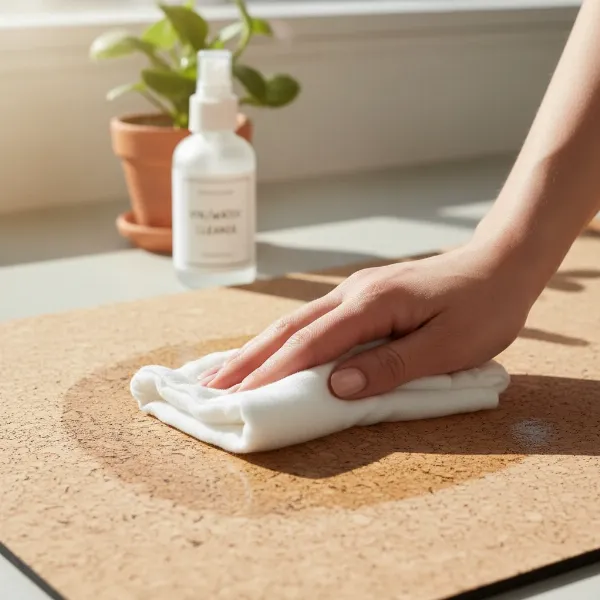
- Regular Cleaning: Wipe your mat down after every use to remove sweat, dirt, and oils.
- Cleaning Solution: Use a dedicated yoga mat spray or a diluted solution of mild soap and water (e.g., a few drops of dish soap in a spray bottle of water) for most mats. For natural rubber mats, use plain water or a very mild, natural cleaner to avoid damage.
- Drying: Always air dry your mat completely in a cool, shaded area, away from direct sunlight, which can degrade certain materials like natural rubber.
- Storage: Roll your mat loosely, surface-side out, to prevent creasing and keep the edges flat. Store it in a cool, dry place. Avoid folding thick exercise mats, as this can create permanent creases.
Top Mats for Versatile Use
For those who enjoy a variety of fitness activities, several mats offer a good compromise between the specialized needs of yoga and general exercise. These “hybrid” or “dual-purpose” mats typically fall in the 5mm to 8mm thickness range, providing reasonable cushioning while still offering sufficient grip and stability. Look for mats made from resilient materials like high-density TPE or natural rubber with a textured surface. Brands like Lululemon’s The Reversible Mat (5mm) or certain Gaiam Studio Select mats (6mm) are often praised for their versatility. These mats aim to provide enough support for floor exercises and adequate grip for most yoga practices, making them an excellent choice for a home gym or varied routine.
Where to Buy Reliable Mats?
Investing in a quality mat from a reputable source ensures durability and performance.
- Online Retailers: Websites like Amazon, Yoga Outlet, and dedicated fitness brand sites (e.g., Manduka, Lululemon, Gaiam, TRX) offer extensive selections, detailed product descriptions, and customer reviews. This allows for easy comparison and often competitive pricing.
- Specialty Fitness Stores: Local yoga studios, sports goods stores, or dedicated fitness equipment retailers allow you to physically inspect mats, feel the texture, and test their cushioning. Staff can also provide expert advice tailored to your needs.
When buying online, pay close attention to customer reviews regarding grip, durability, and odor. Ensure the return policy is favorable in case the mat doesn’t meet your expectations.
Comprehensive Buying Guide
Making the right mat purchase is a strategic decision that factors in your lifestyle, fitness aspirations, and personal preferences.
- Budget: Determine how much you’re willing to spend. While cheaper mats are available, investing a little more often results in a mat with better materials, performance, and longevity.
- Workout Frequency: If you practice daily, a durable, high-quality mat built to withstand frequent use is a wise investment. For occasional use, a mid-range option might suffice.
- Type of Exercise/Yoga: Your primary activity dictates the mat’s essential features. Prioritize grip and stability for yoga, and cushioning and impact absorption for dynamic exercise.
- Personal Factors: Consider if you sweat heavily (requiring a high-grip or absorbent mat), have sensitive joints (needing extra cushioning), or prefer eco-friendly materials. Your aesthetic preference for color and design also plays a role in your motivation to use the mat regularly.
Conclusion
While yoga mats and exercise mats share the fundamental goal of providing a safe and comfortable surface for movement, their specialized designs cater to distinctly different fitness demands. Yoga mats prioritize grip, stability, and a strong ground connection for precise poses, typically offering moderate cushioning. Exercise mats, conversely, excel in providing thick cushioning and shock absorption for dynamic, high-impact activities, making them less ideal for balance-focused yoga. Ultimately, understanding these core differences empowers you to choose a mat that perfectly aligns with your primary workout style and personal comfort needs.
Could investing in a dedicated mat for each activity be the secret to unlocking your full potential?
Frequently Asked Questions
Can I use a regular exercise mat for hot yoga?
Using a regular exercise mat for hot yoga is generally not recommended as most exercise mats are not designed with the superior wet grip needed to prevent slipping in sweaty conditions. A dedicated hot yoga mat or adding a non-slip yoga towel is essential for safety and stability.
What is the best mat thickness for sensitive knees?
For sensitive knees or other joints, an exercise mat with a thickness of 10mm (1/2 inch) or more is highly recommended. This provides ample cushioning and shock absorption, significantly reducing pressure and discomfort during floor exercises or yoga poses that put weight on the knees.
How do I clean a natural rubber mat without damaging it?
To clean a natural rubber mat, use a gentle cleaning solution like plain water or a very diluted mixture of water and a mild, natural soap. Spray the solution onto the mat, wipe it down with a soft cloth, and then rinse thoroughly with a damp cloth. Always air dry completely away from direct sunlight.
Are eco-friendly mats as durable as traditional PVC mats?
Many eco-friendly mats, particularly those made from high-quality natural rubber or TPE, can be just as durable as, or even surpass, traditional PVC mats. Their longevity often depends on proper care and the specific quality of the material and manufacturing process.
Can a yoga mat help with general stretching and flexibility?
Yes, a Yoga Mat is excellent for general stretching and improving flexibility. Its non-slip surface provides a stable base for holding stretches, and the cushioning protects your joints from the hard floor, allowing you to deepen your stretches comfortably and safely.