The humble yoga mat serves as your personal sanctuary, the ground beneath your feet for every stretch, pose, and moment of mindfulness. Yet, its thickness, a seemingly minor detail, plays a pivotal role in shaping your practice. Choosing the right density can significantly impact your comfort, stability, and overall experience on the mat. Whether you’re a seasoned yogi or just beginning your journey, understanding the nuances between thick and thin yoga mats is key to finding your ideal companion. This comprehensive guide will illuminate the distinctions, helping you make an informed decision that elevates every session.
The Foundation of Your Practice: Understanding Yoga Mat Thickness
Yoga mat thickness refers to the measurement from the mat’s surface to its base, typically ranging from a mere 1 millimeter to a plush 12 millimeters or more. This seemingly simple dimension is crucial because it dictates the amount of cushioning and stability your mat provides. A thicker mat offers more padding, which can be a blessing for sensitive joints, while a thinner mat provides a firmer connection to the ground, essential for balance-focused poses. The right thickness creates a harmonious balance between protecting your body and allowing you to feel rooted in your practice.
Thin Yoga Mats: Embrace Stability and Mobility
Thin yoga mats, generally ranging from 1 to 3 millimeters (approximately 1/16 inch), are the minimalist’s choice. They are designed for those who prioritize a strong connection to the earth beneath them and often travel with their practice.
Advantages of Thin Yoga Mats:
- Superior Stability: With less cushioning, thin mats provide a firm, stable foundation. This direct ground connection is invaluable for balance-intensive poses like Tree Pose (Vrksasana) or Half Moon Pose (Ardha Chandrasana), enhancing your proprioception and ensuring steady footing.
- Enhanced Portability: Their lightweight nature and ability to roll or fold compactly make thin mats exceptionally easy to transport. They fit effortlessly into luggage or a yoga bag, making them perfect for traveling yogis, outdoor sessions, or simply commuting to the studio.
- Ideal for Dynamic Styles: Practitioners of vigorous and flowing yoga styles such as Vinyasa, Ashtanga, or Hot Yoga often prefer thinner mats. The reduced “give” allows for quicker transitions between poses and a more grounded feel, preventing your feet from sinking too much.
- Quicker Drying: Generally made with less material, thin mats tend to dry faster, which is particularly beneficial in sweaty environments like hot yoga classes.
|
Our Picks for the Best Yoga Mat in 2026
As an Amazon Associate I earn from qualifying purchases.
|
||
| Num | Product | Action |
|---|---|---|
| 1 | Retrospec Solana Yoga Mat 1/2" Thick w/Nylon Strap for Men & Women - Non Slip Excercise Mat for Yoga, Pilates, Stretching, Floor & Fitness Workouts |

|
| 2 | CAP Barbell High Density Exercise Yoga Mat with strap, 68"x24"x 1/2" - Sage Green |
|
| 3 | Amazon Basics Extra Thick Exercise Yoga Mat with Carrying Strap |
|
| 4 | Retrospec Solana Yoga Mat 1" Thick w/Nylon Strap for Men & Women - Non Slip Exercise Mat for Home Yoga, Pilates, Stretching, Floor & Fitness Workouts |
|
| 5 | Amazon Basics Extra Thick Exercise Yoga Mat with Carrying Strap |
|
| 6 | Gruper Yoga Mat Non Slip, Eco Friendly Fitness Exercise Mat with Carrying Strap,Pro Yoga Mats for Women,Workout Mats for Home, Pilates and Floor Exercises |
|
| 7 | MICRODRY Deluxe Fitness Exercise Yoga Mat for Home & Gym, Extra Thick for High Impact Training, Multi Layered Skid Resistant Surface, Odor Neutralizing with Carrying Strap |
|
| 8 | Amazon Basics Extra Thick Exercise Yoga Mat with Carrying Strap |
|
| 9 | Amazon Basics 1/4 Inch Thick TPE Exercise Yoga Mat with Carrying Strap |
|
| 10 | Retrospec Solana Yoga Mat 1" Thick w/Nylon Strap for Men & Women - Non Slip Exercise Mat for Home Yoga, Pilates, Stretching, Floor & Fitness Workouts |
|
Disadvantages of Thin Yoga Mats:
- Minimal Cushioning: The primary trade-off for portability and stability is reduced padding. This can lead to discomfort, especially for individuals with sensitive joints (knees, wrists, hips) during floor-based poses or longer holds.
- Uncomfortable on Hard Surfaces: When practicing on concrete or hardwood floors, a thin mat offers little insulation and can feel quite hard, potentially causing pain.
Best Suited For:
Thin mats are ideal for experienced yogis, frequent travelers, those who practice dynamic styles, and individuals who prioritize stability and direct ground connection.
Standard and Medium Yoga Mats: The All-Rounder (4-5mm)
The 4-5 millimeter (approximately 1/8 to 1/6 inch) range represents the sweet spot for many, often considered the standard thickness for yoga mats. These mats strike a commendable balance between cushioning and stability, making them a popular choice across various levels and styles of yoga.
Advantages of Standard and Medium Yoga Mats:
- Versatile Performance: These mats are true all-rounders, suitable for a broad spectrum of yoga styles from Hatha and Vinyasa to gentle flow classes. They offer enough padding to support your joints without significantly compromising balance.
- Moderate Joint Protection: They provide a comfortable cushion for knees, wrists, and elbows during common poses, making them a good option for most practitioners, including beginners.
- Good for Studio and Home Use: Their balanced design makes them equally effective in a busy studio setting or a quiet home practice space.
- Reasonably Portable: While not as light as travel mats, medium-thickness mats are still manageable for daily transport to and from classes.
Disadvantages of Standard and Medium Yoga Mats:
- Potential for Insufficient Cushioning: For individuals with very sensitive joints or specific physical considerations, the cushioning might still feel inadequate during prolonged floor work or restorative practices.
- Less Portable than Thin Mats: They are bulkier and heavier than their thinner counterparts, which might be a consideration for those who prioritize extreme portability.
Best Suited For:
Standard and medium-thickness mats are an excellent choice for beginners, intermediate practitioners, and anyone seeking a versatile mat that can adapt to different yoga styles and practice environments.
Thick Yoga Mats: Prioritizing Comfort and Joint Support (6mm)
When comfort and joint protection are paramount, thick yoga mats, typically around 6 millimeters (1/4 inch), step in. These mats offer a more cushioned and softer feel, significantly enhancing comfort during various poses.
Advantages of Thick Yoga Mats:
- Superior Joint Protection: The increased padding provides excellent cushioning for sensitive knees, wrists, hips, and spine, making poses that involve direct contact with the floor much more comfortable. This is a game-changer for those with existing joint pain or sensitivities.
- Ideal for Gentle Practices: Thick mats shine in restorative yoga, Yin yoga, prenatal yoga, and Pilates, where poses are held longer or involve significant floor work. The softness allows for deeper relaxation and support.
- Comfort for Longer Holds: Whether in Savasana or a supported restorative pose, the extra cushioning ensures you can remain comfortable for extended periods without discomfort.
- Good Insulation: A thicker mat provides better insulation against cold or hard floors, contributing to a more comfortable practice environment.
- Increased Durability: Generally, more material can translate to increased durability, making a 6mm mat a long-lasting investment.
Disadvantages of Thick Yoga Mats:
- Reduced Stability for Balance: The extra “give” in a thicker mat can make balancing poses more challenging, as your feet may sink slightly, reducing your direct connection to the ground. Yoga instructor Leanne Bird notes that “thicker mats… can add challenge to balancing, especially when used on carpets.”
- Heavier and Bulkier: Their substantial nature makes them less portable and more cumbersome to carry to classes or store.
- May Hinder Dynamic Flows: For fast-paced, dynamic styles, the cushioning might absorb too much energy, making quick transitions feel less fluid.
Best Suited For:
Thick yoga mats are best for individuals with joint pain or sensitivities, practitioners of gentle and restorative yoga, those who primarily practice at home on hard floors, and Pilates enthusiasts.
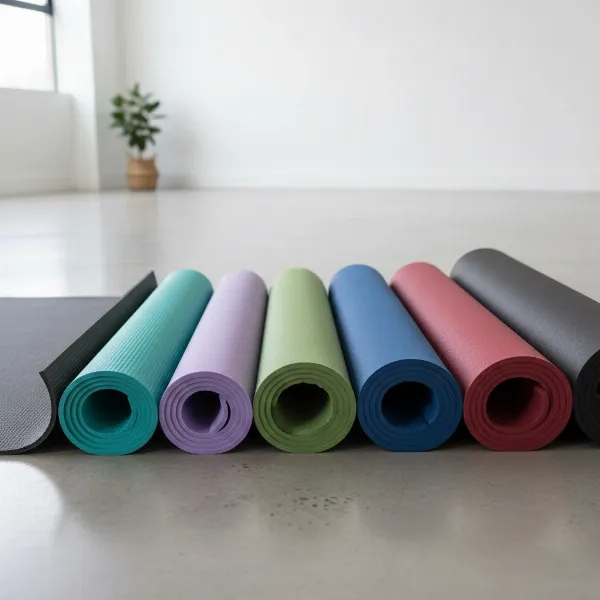 A side-by-side comparison of yoga mats of varying thicknesses, from ultra-thin to extra-thick, on a wooden floor, emphasizing the difference in cushioning.
Extra-Thick Yoga Mats: Maximum Cushioning for Specific Needs (7-12mm+)
At the far end of the spectrum are extra-thick yoga mats, ranging from 7 millimeters up to 12 millimeters or more (approximately 1/4 to 1/2 inch). These mats are designed for ultimate cushioning.
Characteristics:
- Plush cushioning, very soft feel.
- Significantly more material than standard mats.
Advantages:
- Ultimate Comfort and Support: Provides maximum comfort and support, especially beneficial for individuals with severe joint sensitivity or chronic pain.
- Therapeutic Applications: Excellent for therapeutic exercises, physical therapy, or specific rehabilitation routines where ample cushioning is paramount.
- General Fitness and Pilates: Often preferred for general floor exercises, core workouts, and Pilates, where the focus is on support during supine or prone positions rather than standing balance.
Disadvantages:
- Significantly Impacts Balance: The extreme softness of these mats can make maintaining balance in standing yoga poses exceedingly difficult, as it feels akin to balancing on a pillow.
- Very Bulky and Heavy: These are the least portable mats, often best suited for dedicated home use or in a setting where they don’t need to be moved frequently.
- Not for Active Yoga: Generally not recommended for traditional or active yoga practices that require stability and a connection to the ground. Michelle Klein, from Yogamatters, highlights this, stating a thicker mat “does not work as well for balancing asanas such as tree pose or more dynamic yoga.”
Best Suited For:
Extra-thick mats are ideal for Pilates, general floor exercises, therapeutic applications, and individuals with severe joint issues who prioritize comfort above all else for specific, non-balance-intensive movements.
Yoga Mat Thickness Comparison Chart
| Thickness (mm/inch) | Key Characteristics | Advantages | Disadvantages | Ideal For |
|---|---|---|---|---|
| 1-3mm (1/16″) | Ultra-thin, firm | Excellent stability, highly portable, direct ground connection | Minimal cushioning, uncomfortable on hard floors | Dynamic yoga, travel, experienced yogis, hot yoga |
| 4-5mm (1/8″-1/6″) | Standard, balanced | Good all-rounder, versatile, moderate cushioning | May not suffice for very sensitive joints | Beginners, most yoga styles, studio/home practice |
| 6mm (1/4″) | Thick, cushioned | Superior joint protection, comfortable for floor work, good insulation | Reduced stability for balance, heavier, bulkier | Restorative/Yin yoga, sensitive joints, Pilates, home use |
| 7-12mm (1/4″-1/2″) | Extra-thick, plush | Maximum comfort, therapeutic support | Significantly impacts balance, very bulky | Therapeutic exercises, Pilates, severe joint sensitivity |
How to Choose Your Perfect Yoga Mat Density
Selecting the right yoga mat thickness is a personal journey, influenced by a blend of your practice style, physical needs, and lifestyle. Here’s a guide to help you navigate your options:
-
Consider Your Yoga Style:
- Dynamic and Flowing (Vinyasa, Ashtanga, Hot Yoga): A thinner mat (1-4mm) will provide the stability and firm connection to the floor needed for quick transitions and balance.
- Gentle and Restorative (Yin, Restorative, Prenatal): A thicker mat (6mm+) will offer the necessary cushioning and comfort for longer holds and floor-based poses, protecting your joints.
- Hatha Yoga: A standard 4-5mm mat usually provides a good balance for Hatha, which combines both active and holding poses.
-
Assess Your Body and Joints: Do you have sensitive knees, wrists, hips, or a history of joint pain? If so, prioritizing a thicker mat (6mm or more) will significantly enhance your comfort and protect your joints during practice. If you prefer a very firm surface and feel strong joint protection naturally, a thinner mat might suffice.
-
Where Do You Practice?
- Hard Floors (wood, concrete, tile): Thicker mats (6mm+) provide much-needed cushioning and insulation.
- Carpeted Floors: A thinner mat might be suitable as the carpet already offers some padding. However, be aware that a very thick mat on a plush carpet can create an unstable surface.
-
Portability Needs:
- Frequent Travel/Commute: An ultra-thin (1-3mm) travel mat is ideal for its lightweight and compact design.
- Studio/Home Practice: A medium (4-5mm) or thick (6mm) mat is generally fine if you don’t need to carry it long distances.
-
Personal Preference: Ultimately, the “right” mat feels right for you. If possible, try out different thicknesses before making a purchase. Many studios offer mats for rent or have different options available to test during a class.
Beyond Thickness: Complementary Factors for Your Mat Choice
While thickness is a primary concern, other features work in tandem to create the perfect yoga mat experience.
- Material: The mat’s material significantly impacts its grip, durability, and eco-friendliness. Common materials include PVC (durable, sticky), TPE (eco-friendly, good grip), and natural rubber (excellent grip, sustainable). Each offers a different feel and performance, influencing how well you stay put, regardless of thickness.
- Size: Standard mats are typically 68 inches long and 24 inches wide. However, taller individuals or those who prefer more space might opt for longer (72-85 inches) or wider mats to ensure their hands and feet remain on the mat throughout their practice.
- Texture: A mat’s texture, whether smooth, subtly patterned, or deeply ridged, affects its traction. Good texture is vital for preventing slips, especially in sweaty conditions, complementing the stability provided by mat density.
Maintaining Your Investment: Tips for Yoga Mat Care
Regardless of its thickness, a well-maintained yoga mat will serve you faithfully. Regularly cleaning your mat with a gentle, purpose-made solution or diluted soap and water removes sweat and grime, preserving its grip and hygiene. Proper storage, typically by rolling it up (rather than folding) and keeping it in a cool, dry place away from direct sunlight, helps maintain its integrity and extend its lifespan.
Your Journey to the Ideal Yoga Mat
Choosing between a thick and thin yoga mat is a crucial, yet personal, decision that directly influences your comfort, stability, and enjoyment of your practice. There’s no single “best” option; instead, it’s about finding the perfect balance that aligns with your specific yoga style, physical needs, and lifestyle. By considering how each density impacts your body and practice, you can confidently select a mat that becomes a true extension of yourself, supporting you through every pose and breath.
What mat density has transformed your yoga practice the most, and why?
Frequently Asked Questions
Can a yoga mat be too thick?
Yes, a yoga mat can be too thick, especially for active practices. While mats over 6mm provide excellent cushioning for therapeutic or restorative yoga, they can compromise stability and make balance poses challenging, as the soft surface reduces your connection to the ground.
What is the most common yoga mat thickness?
The most common yoga mat thickness is typically 4-5 millimeters (about 1/8 to 1/6 inch). This range offers a versatile balance of comfort and stability, making it suitable for a wide variety of yoga styles and practitioners.
Is a thicker yoga mat better for beginners?
A thicker Yoga Mat (around 5-6mm) can be beneficial for beginners as it offers more cushioning for sensitive joints during new poses and floor work. However, mats that are too thick (7mm+) might hinder stability in standing poses, which are also common for beginners. A medium thickness (4-5mm) is often recommended as a good starting point.
How do I know if my mat is too thin?
Your mat might be too thin if you experience discomfort or pain in your knees, wrists, or hips during poses, especially on hard floors. If you feel excessive pressure on your joints or find yourself needing to fold your mat for extra padding, it’s likely a sign that a thicker mat would better suit your needs.