Finding the perfect yoga mat can feel like a quest, especially when your practice demands unwavering stability. The subtle difference in material under your hands and feet can dramatically impact your balance, safety, and overall experience. As a technician with over a decade of hands-on experience in yoga mat technology, I’ve seen countless materials come and go, but one truth remains: the science of grip is paramount. This article delves into the fascinating world of material science, comparing natural rubber and its synthetic counterparts to uncover why natural rubber often provides a superior grip, empowering you to choose a mat that truly supports your practice.
Yoga Mat Grip: An Essential Foundation for Your Practice
A yoga mat is far more than just a cushioned surface; it’s a critical tool that provides the necessary friction to prevent slips and maintain stability during your practice. Without adequate grip, even the simplest poses can become challenging, leading to frustration or, worse, injury. The right mat allows you to ground yourself confidently, enabling deeper stretches, more stable balances, and a smoother transition between postures.
Understanding the Mechanics of Grip
At its core, grip is a manifestation of friction – the force resisting relative motion between surfaces in contact. In the context of a yoga mat, two primary components contribute to this crucial force: adhesion and hysteresis. Adhesion refers to the molecular forces that create a bond between your skin and the mat’s surface. Hysteresis involves the deformation of the rubber as pressure is applied, where the energy absorbed during compression is not fully recovered immediately, creating a “stickiness” or drag. The unique molecular structure of rubber, an elastomer, allows it to deform and recover, making it an excellent material for applications where high friction is desired.
Natural Rubber: The Grip Champion
Natural rubber, derived from the milky sap (latex) of the Hevea brasiliensis tree, boasts an inherent molecular structure that makes it an exceptional material for grip. Its polymer chains are naturally highly elastic, allowing the material to conform intimately to the microscopic contours of your skin. This conformity increases the actual contact area, enhancing adhesive forces. Furthermore, natural rubber exhibits a notable tackiness, or “stickiness to the touch,” which contributes significantly to its superior surface friction.
Beyond its molecular advantages, natural rubber also offers excellent tensile strength and resilience, meaning it can stretch considerably without breaking and quickly rebound to its original shape after deformation. These properties are vital for a mat that needs to withstand dynamic movements and maintain its integrity over time, all while providing consistent, reliable traction. Natural rubber mats are celebrated for their “anti-skid performance” and “strong friction and grip”.
Synthetic Rubber Explained: PVC, TPE, and Beyond
While natural rubber holds a unique position, synthetic rubbers have been engineered to offer a range of properties, often addressing specific industrial needs like resistance to chemicals or extreme temperatures. In the yoga mat market, the most common synthetic materials are Polyvinyl Chloride (PVC) and Thermoplastic Elastomer (TPE).
-
PVC (Polyvinyl Chloride): For many years, PVC mats dominated the market due to their durability and affordability. They are known to offer good “viscidity and traction”. However, PVC’s grip performance can be inconsistent, sometimes feeling slippery when wet with sweat. From an environmental standpoint, PVC is less eco-friendly; it is not easily biodegradable or recyclable and can contain phthalates, which are potentially harmful chemicals.
-
TPE (Thermoplastic Elastomer): TPE mats represent a greener synthetic alternative, often a blend of synthetic rubber and plastic. They are generally considered eco-friendly, non-toxic, and recyclable. TPE mats are praised for their “excellent anti-skid properties” and “superior grip in high-temperature practices”. However, some users might find TPE surfaces can feel “slippy” compared to PVC or natural rubber, and its traction can vary depending on the specific formulation. TPE offers a good balance of cushioning, flexibility, and generally good grip, making it a popular choice for many practitioners.
> “The unique blend of elasticity and surface tack in natural rubber creates an unparalleled adhesive quality, giving yogis the firm foundation they need.” – Yogamatgo Admin, Yoga Mat Specialist
Comparing Grip Performance: Natural vs. Synthetic Rubber
When it comes to pure grip performance, particularly in yoga where a steadfast, non-slip surface is crucial, natural rubber often holds a distinct advantage over synthetics. The natural open-cell structure of rubber, combined with its inherent tackiness and exceptional ability to deform and recover, provides a “sticky” feel that enhances traction, especially when hands and feet begin to sweat. This allows for superior adhesion and minimizes slippage during challenging poses.
While synthetic materials like PVC can offer good initial grip and TPE can excel in certain conditions, they often lack the same deep, responsive grip profile that natural rubber delivers. The controlled deformation and energy dissipation (hysteresis) of natural rubber’s molecular chains create a stronger interface with the skin, which is difficult for engineered synthetics to replicate perfectly without compromising other properties like durability or eco-friendliness.
Comparative Glance: Yoga Mat Materials
|
Our Picks for the Best Yoga Mat in 2026
As an Amazon Associate I earn from qualifying purchases.
|
||
| Num | Product | Action |
|---|---|---|
| 1 | Gruper Yoga Mat Non Slip, Eco Friendly Fitness Exercise Mat with Carrying Strap,Pro Yoga Mats for Women,Workout Mats for Home, Pilates and Floor Exercises |

|
| 2 | Amazon Basics Extra Thick Exercise Yoga Mat with Carrying Strap |
|
| 3 | Retrospec Solana Yoga Mat 1" Thick w/Nylon Strap for Men & Women - Non Slip Exercise Mat for Home Yoga, Pilates, Stretching, Floor & Fitness Workouts |
|
| 4 | MICRODRY Deluxe Fitness Exercise Yoga Mat for Home & Gym, Extra Thick for High Impact Training, Multi Layered Skid Resistant Surface, Odor Neutralizing with Carrying Strap |
|
| 5 | Retrospec Solana Yoga Mat 1" Thick w/Nylon Strap for Men & Women - Non Slip Exercise Mat for Home Yoga, Pilates, Stretching, Floor & Fitness Workouts |
|
| 6 | CAP Barbell High Density Exercise Yoga Mat with strap, 68"x24"x 1/2" - Sage Green |
|
| 7 | Amazon Basics 1/4 Inch Thick TPE Exercise Yoga Mat with Carrying Strap |
|
| 8 | Retrospec Solana Yoga Mat 1/2" Thick w/Nylon Strap for Men & Women - Non Slip Excercise Mat for Yoga, Pilates, Stretching, Floor & Fitness Workouts |
|
| 9 | Amazon Basics Extra Thick Exercise Yoga Mat with Carrying Strap |
|
| 10 | Amazon Basics Extra Thick Exercise Yoga Mat with Carrying Strap |
|
| Chất Liệu (Material) | Ưu Điểm (Advantages) | Nhược Điểm (Disadvantages) | Độ Bám (Grip) | Độ Bền (Durability) | Giá (Price) | Phù Hợp Với (Best For) |
|---|---|---|---|---|---|---|
| Natural Rubber | Superior grip, eco-friendly, excellent cushioning, high elasticity | Strong odor, heavier, susceptible to UV/oils, higher maintenance | Very Good to Excellent | High | High | Serious practitioners, hot yoga, prioritizing grip & sustainability |
| PVC | Durable, affordable, good initial grip, easy to clean | Not eco-friendly, contains phthalates, can be slippery with sweat | Good | Very High | Low | Beginners, budget-conscious, general use |
| TPE | Eco-friendly, non-toxic, lightweight, good cushioning | Variable grip (can be slippery for some), less durable than PVC | Good | Medium | Medium | Eco-conscious, light to moderate practice, those with latex allergies |
| Jute (mixed with NR) | Natural, absorbent, good grip | Can be scratchy, heavier | Good | Medium | Medium | Those seeking natural texture and moderate grip |
| Cotton | Soft, absorbent, lightweight | Low grip, low durability, prone to bunching | Low | Low | Low | Restorative yoga, meditation, gentle practices |
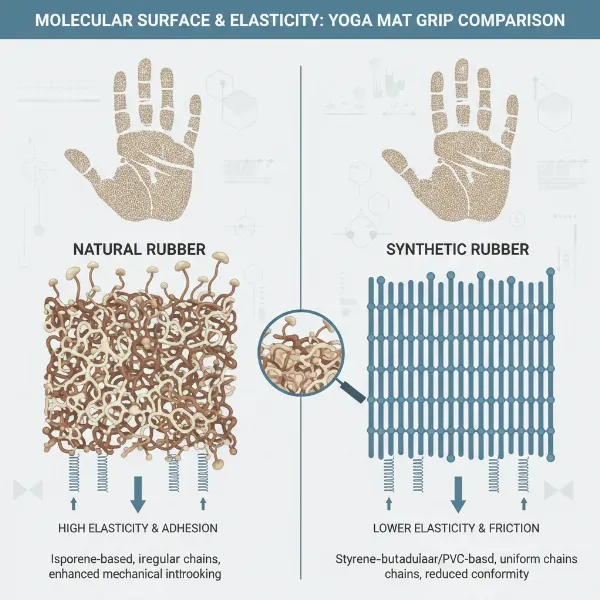 Illustrative image comparing the molecular structure and surface texture of natural rubber and synthetic rubber yoga mats, highlighting grip points
Choosing Your Perfect Mat: The Grip Factor
Selecting the ideal yoga mat requires you to prioritize your needs, with grip often topping the list for an effective and safe practice.
- Practice Style: If you engage in dynamic styles like Vinyasa or Ashtanga, or practice hot yoga, superior grip is non-negotiable. Natural rubber mats excel here, maintaining traction even when you sweat. For gentler practices like Yin or Restorative yoga, a softer mat with less aggressive grip might suffice.
- Material Preference: Consider your values. If environmental impact is a concern, natural rubber or TPE are excellent choices. If you prioritize maximum grip above all else, natural rubber’s inherent properties make it a strong contender.
- Allergies: Natural rubber contains latex, which can be an allergen for some. If you have a latex allergy, TPE or other synthetic options should be your go-to.
- Sweat Factor: Natural rubber mats, especially those with an open-cell structure, tend to absorb sweat well and maintain grip. Some synthetics may become more slippery when wet.
Maintaining Your Mat’s Grip: Care and Longevity
Proper care is essential to preserve your mat’s grip and extend its lifespan, regardless of the material.
- Regular Cleaning: Sweat, oils, and dirt can diminish any mat’s grip. Clean your mat regularly with a mild soap and water solution or a specialized mat cleaner.
- Drying: Always air dry your mat completely after cleaning or a sweaty session. Avoid direct sunlight for natural rubber, as UV rays can degrade the material and reduce its elasticity and grip over time.
- Storage: Roll your mat loosely, surface-side out, to prevent creases that can affect grip consistency. Store it in a cool, dry place.
Top Considerations for Optimal Grip Yoga Mats
When seeking a yoga mat renowned for its grip, focus on these key characteristics:
- Material: Natural rubber consistently provides the most reliable and responsive grip, particularly as temperatures rise and sweat increases. Its inherent tackiness and elastic properties create a strong bond with your hands and feet.
- Surface Texture: Mats with a slightly textured or open-cell surface enhance grip by increasing friction points and wicking away moisture.
- Density and Firmness: A denser mat provides a more stable foundation, allowing for better energy transfer and a more grounded feel, which indirectly supports grip.
Buying Guide: Your Personal Grip Checklist
Making the right choice involves balancing several factors to match your unique needs:
- Budget: Determine what you’re willing to invest. Natural rubber mats, while superior in grip, often come at a higher price point.
- Frequency of Practice: If you practice daily or frequently, investing in a high-quality mat with excellent grip is crucial for long-term comfort and safety.
- Type of Yoga: High-intensity or sweaty yoga styles demand the best grip. Gentler practices might allow for more flexibility in material choice.
- Personal Factors: Consider any latex allergies, your preference for eco-friendly materials, and aesthetic appeal (color, design).
Conclusion
The science of grip reveals why natural rubber stands out in the crowded market of Yoga Mats. Its unique molecular structure, characterized by exceptional elasticity and inherent tackiness, creates a bond with your skin that synthetics often struggle to fully replicate. While synthetic options like TPE offer admirable eco-credentials and good general performance, and PVC provides durability and affordability, the raw, responsive grip required for a confident and secure yoga practice often finds its purest expression in natural rubber.
Understanding the material science behind your mat allows you to make an informed decision, ensuring that the foundation of your practice empowers rather than hinders. Which aspects of grip are most important for your journey on the mat?
Frequently Asked Questions
Why does natural rubber provide better grip than many synthetic alternatives?
Natural rubber’s superior grip stems from its highly elastic molecular structure, which allows it to conform intimately to surfaces, maximizing contact and enhancing adhesive forces. Its inherent tackiness and viscoelastic properties further contribute to excellent surface friction, ensuring a firm, non-slip foundation during your practice.
Are there any downsides to choosing a natural rubber yoga mat for grip?
While natural rubber offers exceptional grip, it can have a distinct natural odor, be heavier than some synthetics, and may degrade when exposed to direct sunlight, oils, or certain chemicals. Additionally, it contains latex, which can be an allergen for some individuals, requiring careful consideration.
How does TPE mat grip compare to natural rubber and PVC?
TPE mats generally offer good grip and are often praised for their anti-skid properties, particularly in hot yoga. However, while some formulations can be excellent, TPE’s grip may not consistently match the inherent tackiness and responsiveness of natural rubber or the “viscidity” of some PVC mats, with performance varying by manufacturer and specific blend.