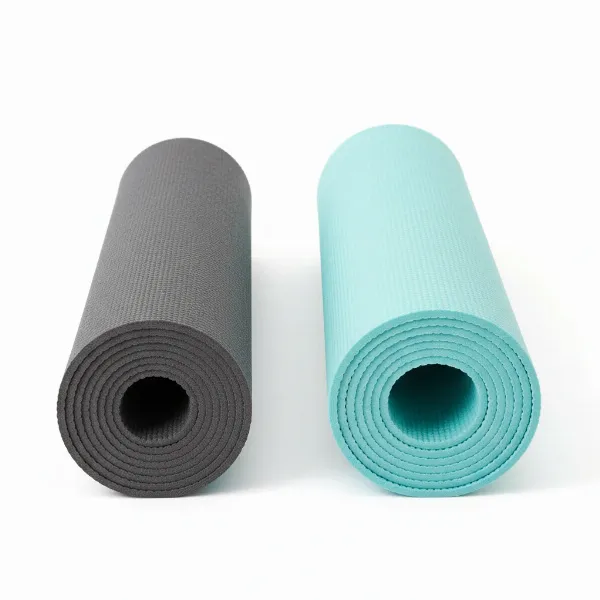
Choosing the right yoga mat can transform your fitness routine, offering the crucial support, grip, and comfort you need to excel. While countless options flood the market, Reebok has established itself as a well-known brand in fitness equipment. But does a Reebok yoga mat genuinely stand up to the demands of diverse fitness practices, from tranquil yoga flows to intense HIIT sessions? This comprehensive review will delve into the various aspects of Reebok yoga mats, helping you determine if one is the perfect foundation for your workouts.
What is a Yoga Mat? Why is it Necessary?
A yoga mat is a specially designed padded surface that provides a stable, non-slip, and cushioned platform for practicing yoga, Pilates, and various other floor-based exercises. Its primary role is to prevent slipping, which is essential for maintaining proper alignment and avoiding injuries during poses and movements. Beyond safety, a quality yoga mat offers crucial cushioning for joints like knees, wrists, and hips, making extended holds and floor work more comfortable. It also creates a hygienic barrier between you and the floor, absorbing sweat and offering a personal space for your practice. Without a suitable mat, practitioners might find themselves struggling with stability, experiencing discomfort, and potentially losing focus on their movements.
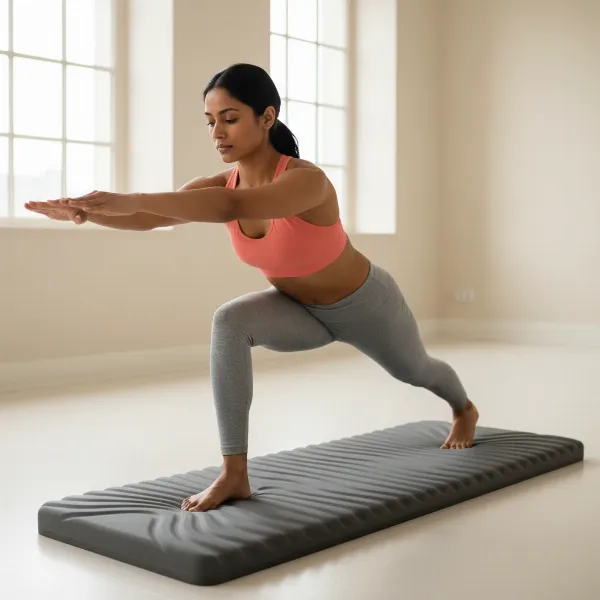 A person performing a yoga pose on a mat, demonstrating stability, comfort, and proper alignment.
Reebok Yoga Mats: Understanding the Range
Reebok offers a variety of mats, often designed to cater to both yoga and general fitness needs. You’ll find mats under specific names like the “Reebok Delta Pro Fitness Mat,” “Reebok Eco-Friendly Yoga Mat,” and “Reebok Elite Yoga Mat,” each with distinct features. Common materials used in Reebok mats typically include EVA (Ethylene-vinyl acetate) and TPE (Thermoplastic Elastomer), often in blends to achieve a balance of comfort and durability. The Reebok Elite Yoga Mat, for example, is crafted from eco-friendly POE material, ensuring it is both odor-free and non-toxic, with a diamond-textured surface for enhanced traction. These material choices reflect Reebok’s commitment to providing versatile and reliable fitness equipment.
Popular Yoga Mat Types: A Comparative Look
Understanding the common types of yoga mat materials helps contextualize Reebok’s offerings and aids in making an informed choice for your practice. Each material brings its own set of characteristics in terms of grip, durability, eco-friendliness, and feel.
- PVC (Polyvinyl Chloride): Often found in traditional yoga mats, PVC mats are known for their exceptional durability and affordability. They offer a good, sticky grip, which can improve over time with use. However, PVC is less environmentally friendly due to its manufacturing process and non-biodegradable nature, and some users may find it has an initial chemical odor.
- TPE (Thermoplastic Elastomer): TPE mats are a popular eco-conscious alternative to PVC, being recyclable and free from latex and phthalates. They strike a balance between cushioning and grip, often feeling softer and lighter than PVC. Many Reebok yoga mats incorporate TPE, sometimes blended with EVA, to provide an eco-friendly and comfortable surface.
- Natural Rubber: Praised for its superior non-slip grip, even when wet, natural rubber is an excellent choice for hot yoga or intense practices. It’s biodegradable and sustainable, offering a firm yet cushioned feel. However, natural rubber mats can be heavier, more expensive, and may have a distinct rubbery smell that some find off-putting.
- Jute: Jute mats are made from natural plant fibers, offering a rough, organic texture that provides good grip and wicks away moisture. They are highly durable and eco-friendly but typically offer less cushioning than rubber or PVC mats, making them more suitable for standing poses where stability is paramount.
- Cotton: Often used as a yoga rug or top layer, cotton mats are soft, absorbent, and breathable, ideal for restorative yoga or meditation. They are less about grip and cushioning and more about natural feel and sweat absorption. For dynamic practices, they are often paired with a rubber or PVC mat underneath to prevent slipping.
Reebok Yoga Mat: In-Depth Review for Fitness
Reebok yoga mats are designed with versatility in mind, aiming to support a range of fitness activities. From providing a stable base for your yoga flow to cushioning your joints during high-intensity training, these mats offer distinct advantages.
Cushioning and Comfort
Reebok mats come in various thicknesses, which directly impact the level of cushioning and comfort they provide. Common thicknesses include 4mm, 5mm, 6mm, and even robust 15mm options.
- 4-5mm mats: These thicknesses offer a good balance between cushioning and stability. They provide enough padding to protect your joints during typical yoga poses, Pilates, and light fitness exercises, while still allowing you to feel connected to the floor for balance. Users have noted that 5mm mats provide the “right balance between cushioning and stability”.
- 6mm mats: Described as thicker than average, Reebok’s 6mm mats offer a noticeably more comfortable experience. Some reviews highlight a “memory foam” like feel, providing exceptional cushioning that is highly beneficial for the knees and joints during seated poses or floor exercises.
- 15mm mats: For those requiring maximum support, such as individuals with joint issues or those engaging in high-impact activities and strength training, Reebok offers 15mm “fitness mats.” These thick mats provide “exceptional support” and allow users to kneel or lie down for prolonged exercises without discomfort.
Grip and Stability
The ability of a mat to provide reliable grip is paramount, especially during dynamic movements or when moisture is present. Many Reebok mats feature a “non-slip surface” or a “diamond-textured surface” designed to enhance traction. This design helps keep the mat securely in place on the floor and prevents hands and feet from sliding during exercises like yoga, HIIT, and stretching. While most reviews praise the non-slip qualities, older or thinner mats, especially those made primarily of rubber without specific texturing, have been criticized for potentially moving during practice or not providing enough grip for intensely sweaty hands. For a truly slip-free experience, particularly for sweaty individuals, looking for specific descriptions of enhanced grip textures is crucial.
Durability and Quality
Reebok mats generally receive positive feedback regarding their build quality. The use of robust materials like EVA and TPE contributes to their longevity. Some models, such as the Reebok Elite Yoga Mat, feature bound material edges, which are designed to enhance durability and withstand regular home or class use. Customers often comment on the “high-quality build” of mats like the Reebok Delta 5mm Pro HD Fitness Mat, indicating they are made with sturdy and long-lasting components.
Portability and Storage
For those who take their practice on the go, portability is a key consideration. Reebok’s 5mm mats are typically lightweight and rollable, making them easy to transport to a class or store away. Many come with a convenient carry strap, further simplifying transport. However, the thicker 15mm fitness mats, while providing superior comfort, are generally heavier and bulkier, which might make them less ideal for frequent travel to a gym or studio, making them better suited for home use.
“The ideal yoga mat balances comfort with stability. A mat that’s too soft compromises balance, while one too firm can strain joints.” – Admin, yogamatgo.com
Table: Reebok Yoga Mat Features at a Glance
| Feature | Reebok 4-5mm Yoga Mat (e.g., Eco-Friendly, Delta 5mm Pro HD) | Reebok 6mm Yoga Mat (e.g., Double Sided) | Reebok 15mm Fitness Mat (e.g., Delta Pro) |
|---|---|---|---|
| Material | EVA/TPE blend, POE | Foam, often with “memory foam” feel | High-density foam, vinyl |
| Thickness | 4-5mm | 6mm | 15mm |
| Grip | Good, non-slip textured surface | Very comfortable, decent grip | Good, non-slip surface |
| Comfort | Balanced cushioning for stability | Excellent, “memory foam” feel for joints | Exceptional cushioning and joint support |
| Portability | High (lightweight, rollable, often with strap) | Moderate (thicker, but still rollable) | Low (bulkier, better for home use) |
| Best For | All-level yoga, Pilates, light fitness, general exercise | Yoga, Pilates, floor exercises, comfort-focused practice | High-impact workouts, strength training, injury recovery, home gyms |
How to Choose the Right Reebok Yoga Mat for You
Selecting the perfect Reebok yoga mat depends entirely on your personal fitness goals and preferences. Consider these factors to make the best choice:
- Your Practice Style: If your primary focus is dynamic yoga, where stability and grip are paramount, a 4mm or 5mm mat with a strong textured surface would be ideal. For Pilates or exercises that involve more lying and sitting, a 6mm mat will offer superior comfort. If you engage in high-impact HIIT, plyometrics, or heavy weightlifting, the substantial cushioning of a 15mm fitness mat will provide the necessary joint protection.
- Thickness Preferences: Think about what feels best for your body. A thinner mat (3-4mm) offers a closer connection to the floor, enhancing balance, but may not be enough for sensitive joints. A 5-6mm mat is a versatile choice for most. If you have joint pain or prefer maximum padding, opt for the thicker 6mm or 15mm options.
- Material Considerations: Reebok mats predominantly use EVA and TPE, which are generally eco-friendly and offer good performance. If eco-consciousness is a high priority, look for mats explicitly labeled as “eco-friendly” with recycled content or POE material.
- Budget: Reebok mats are generally considered good value, offering quality at a reasonable price point. Determine your budget, but remember that investing in a quality mat can significantly enhance your comfort and reduce injury risk, making it a worthwhile long-term investment.
- Portability: If you plan to carry your mat to the gym or studio frequently, a lighter, rollable 4mm or 5mm mat is practical. For home-based workouts where portability isn’t an issue, a thicker, heavier mat can provide luxurious comfort and stability.
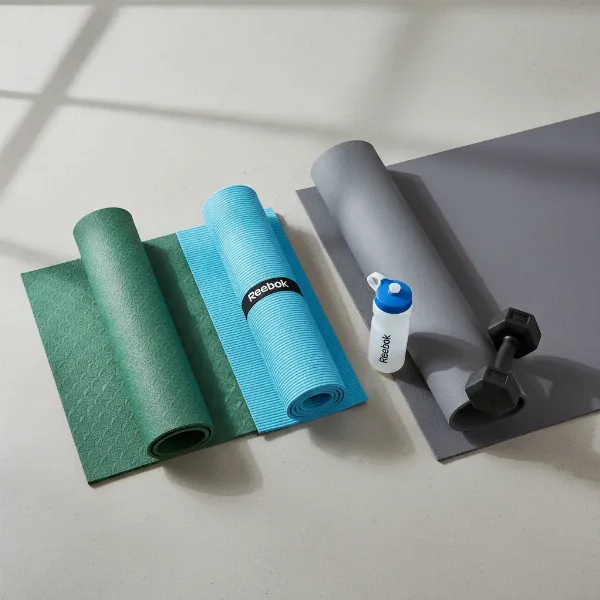 Various Reebok yoga mats displayed, showing different thicknesses, colors, and textures for diverse fitness needs.
Tips for Cleaning and Maintaining Your Reebok Yoga Mat
Proper care extends the life of your Reebok yoga mat and maintains its hygienic properties. Regular cleaning is essential to remove sweat, dirt, and oils that can accumulate and potentially reduce grip over time.
To clean your mat, use a damp cloth with a mild soap or a specialized yoga mat cleaner. Avoid harsh chemicals or abrasive scrubbers, as these can degrade the mat’s material and surface texture. After wiping, rinse thoroughly with a clean, damp cloth to remove any soap residue. Always allow your mat to air dry completely in a well-ventilated area, away from direct sunlight, before rolling it up and storing it. This prevents the growth of mold or mildew and helps maintain the mat’s shape and integrity. When storing, roll your mat correctly to prevent creases or deformation, ensuring it’s ready for your next session.
Top Reebok Yoga Mats for Your Fitness Needs
Reebok offers several popular yoga and fitness mats, each tailored to different requirements.
- Reebok Delta 5mm Pro HD Fitness Mat: This mat is highly praised for its “high-quality build” and “non-slip surface,” making it suitable for yoga, HIIT, and stretching. Its 5mm thickness provides an excellent balance of cushioning and stability, appealing to a broad range of users. It’s often recommended for its durability and ease of cleaning, making it a versatile choice for a home gym.
- Reebok Eco-Friendly Yoga Mat (4mm): For the environmentally conscious practitioner, this mat is crafted from an EVA and TPE blend with 50% recycled content, being non-toxic and PVC-free. The 4mm thickness offers adequate cushioning while maintaining a connection to the floor, ideal for various yoga styles. Its lightweight and rollable design also makes it a great portable option.
- Reebok Double Sided 6mm Yoga Mat: If comfort is your priority, this 6mm mat stands out. Described as “extremely comfortable” with a “memory foam” feel, it provides superior cushioning for sensitive joints and floor work. While thicker, it’s still suitable for yoga and Pilates, offering a luxurious practice experience.
- Reebok Delta Pro 15mm Fitness Mat: This mat is built for serious cushioning and support. Its substantial 15mm thickness makes it perfect for high-impact workouts, heavy lifting, or individuals needing significant joint protection. Though less portable, its comfort and stability for home use are highly rated, often considered “worth the higher price” for the quality it delivers.
Where to Buy Reliable Reebok Yoga Mats?
When purchasing a Reebok yoga mat, it’s important to choose reputable retailers to ensure you receive an authentic and high-quality product. You can typically find Reebok yoga mats through various channels:
- Online Retailers: Major online stores like Walmart, Amazon, B&Q, and the official Reebok Fitness website are reliable sources. These platforms often provide detailed product descriptions, customer reviews, and specifications that can help you compare models.
- Sporting Goods Stores: Local or national sporting goods retailers often stock Reebok fitness equipment, including yoga mats. This allows you to physically inspect the mat, feel its texture, and test its cushioning before buying.
When buying online, always double-check the mat’s specifications, including material, thickness, and dimensions, to ensure it meets your specific needs. Pay attention to customer reviews for insights into real-world performance regarding grip, durability, and comfort.
Buying Guide
Navigating the options for a Reebok yoga mat can be simplified by focusing on a few key personal factors. This guide will help you align your needs with the perfect mat.
- Budget: Determine how much you are willing to spend. Reebok offers mats across various price points, from more affordable general-purpose mats to premium options with advanced features and materials. A higher budget often translates to better durability, eco-friendly materials, and enhanced grip.
- Frequency of Practice: If you practice yoga or engage in floor exercises frequently (daily or several times a week), investing in a more durable and comfortable mat like a 5mm or 6mm TPE/EVA blend from Reebok is advisable. For occasional use, a standard 4mm mat might suffice.
- Type of Yoga/Fitness: Your specific workout style dictates the ideal mat.
- Dynamic Yoga (Vinyasa, Ashtanga): Prioritize strong, non-slip grip and stability. A 4-5mm mat with a textured surface is usually best.
- Restorative Yoga, Hatha, Pilates: Comfort and cushioning are key. A 6mm mat with a softer, memory foam-like feel will provide excellent support.
- High-Impact Workouts (HIIT, Cardio) or Strength Training: Maximum cushioning to protect joints is essential. The 15mm Reebok fitness mats are designed for this purpose.
- Personal Factors: Consider any specific needs you have. Do you have sensitive knees or wrists that require extra padding? Are you prone to sweaty hands, necessitating a mat with superior wet grip? Do you prefer eco-friendly materials? Do you need a lightweight mat for travel, or will it mostly stay at home? Reebok offers options addressing many of these individual preferences, from varying thicknesses to eco-conscious materials and textured surfaces.
Conclusion
The Reebok yoga mat emerges as a strong contender for anyone seeking a versatile and reliable fitness companion. With a range of thicknesses and material compositions, Reebok effectively caters to diverse fitness needs, from enhancing stability in yoga to providing crucial cushioning for high-intensity workouts. Whether you prioritize eco-friendliness with an EVA/TPE blend, crave the plush comfort of a 6mm “memory foam” feel, or demand maximum impact absorption from a 15mm mat, Reebok offers a thoughtfully designed option. Many users commend the mats for their durable construction, dependable non-slip surfaces, and overall value. By carefully considering your specific practice style, comfort requirements, and portability needs, you can certainly find a Reebok mat that not only meets but elevates your fitness journey. What kind of movement will your new Reebok mat inspire you to explore?
Frequently Asked Questions
Is the Reebok yoga mat non-slip?
Yes, many Reebok yoga mats are designed with non-slip surfaces, often featuring textures like diamonds to provide enhanced traction. This helps keep the mat stable on the floor and prevents hands and feet from sliding during various exercises, including yoga and HIIT.
What material is a Reebok yoga mat made of?
Reebok yoga mats commonly use materials like EVA (Ethylene-vinyl acetate) and TPE (Thermoplastic Elastomer), often in blends for optimal performance. Some eco-friendly models may feature POE (Polyolefin Elastomer) or incorporate recycled content.
Are Reebok yoga mats good for sweaty hands?
While many Reebok mats offer good grip with textured surfaces, individuals with very sweaty hands might find that some models, particularly thinner or older rubber versions, could still pose a slipping risk. For intense practices, consider mats specifically designed for superior wet grip.
Can I use a Reebok yoga mat for HIIT?
Absolutely. Reebok offers several mats suitable for HIIT, especially their thicker “fitness mats” (e.g., 15mm) and even 5mm options. These mats provide essential cushioning to protect joints during high-impact movements and feature non-slip surfaces for stability.
How do I clean my Reebok yoga mat?
To clean your Reebok Yoga Mat, wipe it down with a damp cloth and mild soap or a specialized mat cleaner after each use. Rinse off any soap residue with a clean, damp cloth and then allow the mat to air dry completely in a well-ventilated area before rolling it up.