In the vast world of yoga, finding the perfect mat can feel like an endless quest. From beginner-friendly options to premium professional gear, the choices are abundant. Among these, the Manduka PRO Yoga Mat stands out, often lauded by seasoned practitioners and studios alike. However, its significant price tag frequently raises a crucial question: is this high-end mat truly worth the investment? This comprehensive review delves into the Manduka PRO’s acclaimed features, honest drawbacks, and overall value to help you decide if it’s the ultimate foundation for your practice.
Manduka PRO Yoga Mat: An Introduction to a Legacy
The Manduka PRO Yoga Mat is more than just a surface for your practice; it’s an institution in the yoga community, recognized for its robust build and exceptional support. This mat defines reliability, offering a consistent and comfortable platform that empowers yogis to deepen their poses and transitions with confidence. Its popularity stems from a reputation built on providing an unwavering foundation, catering to diverse styles from restorative flows to dynamic Vinyasa.
The Manduka PRO is celebrated for its role in enhancing a yogi’s journey by minimizing distractions and maximizing focus on alignment and breath. For many, it represents a commitment to their practice, promising a durable and supportive companion through countless sessions. It’s designed not just to last, but to perform, becoming a cherished part of a dedicated yoga routine.
Unpacking the Manduka PRO: Key Features and Benefits
The Manduka PRO series boasts several defining characteristics that set it apart from standard yoga mats, making it a favorite among dedicated yogis. Its design priorities revolve around durability, support, and hygiene, aiming to provide a superior practice experience. Understanding these core features will clarify why many consider it a worthwhile investment.
Exceptional Cushioning and Support
At 6mm thick, the Manduka PRO offers unparalleled high-density cushioning. This substantial thickness provides superior joint protection, making kneeling poses, arm balances, and floor work significantly more comfortable. Unlike softer mats that can compress over time, the PRO maintains its firm support, which is crucial for stability in inversions and balancing postures. This robust foundation helps practitioners feel grounded and secure throughout their practice.
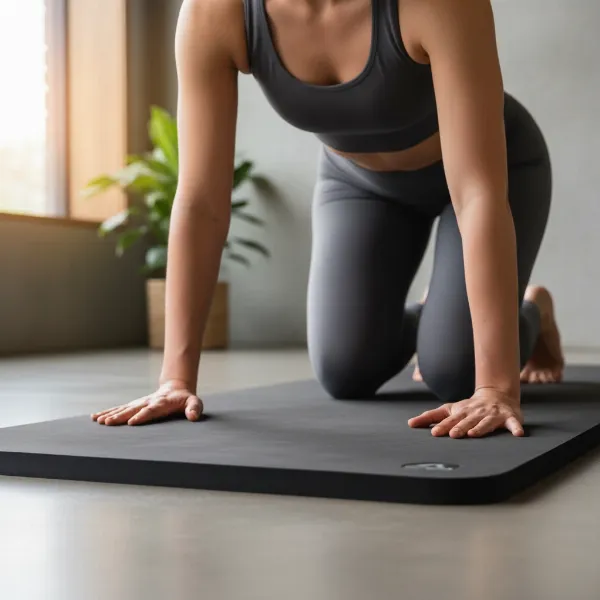 A person performing a yoga pose on a thick Manduka PRO mat, highlighting cushioning and stability.
Unrivaled Durability and Lifetime Guarantee
One of the most compelling features of the Manduka PRO is its remarkable durability, backed by a “lifetime guarantee” from the manufacturer. Users frequently report these mats lasting anywhere from five to ten years, with some retaining excellent condition for over a decade, even with daily studio use. This longevity makes the initial higher cost a long-term investment, as it significantly reduces the need for frequent mat replacements. The mat’s robust construction ensures it withstands rigorous practice and maintains its integrity over time.
Hygienic Closed-Cell Surface
The Manduka PRO features a unique closed-cell surface that prevents moisture and sweat from seeping into the mat’s core. This innovative design makes the mat highly hygienic, as it repels bacteria and odors, ensuring it stays fresh and clean over extended use. This non-absorbent quality also simplifies cleaning, as sweat and grime remain on the surface, easily wiped away. For those concerned about hygiene, especially in shared spaces or during intense practices, this feature is a significant advantage.
Thoughtful Design and Eco-Conscious Elements
While not made from natural rubber, the Manduka PRO is produced using an emissions-free manufacturing process from PVC that is certified Standard 100 by OEKO-TEX, meaning it’s free from harmful chemicals. Its extreme longevity also contributes to environmental sustainability by reducing waste from frequently discarded mats. Furthermore, the mat typically comes in a standard 6mm thickness and is often wider than conventional mats, providing ample space for movement. Manduka also offers longer versions to accommodate taller practitioners, ensuring comfort for a broad range of body types.
The Real Talk: Disadvantages and Considerations
While the Manduka PRO boasts impressive advantages, it also comes with a few considerations that might influence a purchasing decision. It’s essential to weigh these aspects against the benefits to determine if this mat aligns with your specific yoga needs and preferences. Being aware of these potential drawbacks ensures a realistic expectation of the mat’s performance.
Significant Weight
One of the most commonly cited drawbacks of the Manduka PRO is its considerable weight. At approximately 7.5 pounds (3.5 kg), it is noticeably heavier than many other yoga mats on the market. This makes it less ideal for commuting to and from studios, traveling, or anyone who needs a lightweight, easily portable mat. Many users find it cumbersome to carry regularly, often reserving it for home practice where portability is not a concern.
Initial Slipperiness and Break-in Period
Perhaps the most discussed challenge with the Manduka PRO is its initial slipperiness, which requires a dedicated break-in period. When new, the mat can feel slick, especially for those with sweaty hands or feet, leading to stability issues in certain poses. Manduka officially recommends a salt scrub to accelerate this process, involving sprinkling sea salt, misting with water, letting it sit, and then wiping it clean. However, even with this method, the break-in can take anywhere from one to three months of consistent use, with some users reporting up to six months before optimal grip is achieved. This initial phase can be frustrating for practitioners expecting immediate traction.
The closed-cell surface, while excellent for hygiene, does not absorb moisture, which means sweat can accumulate on the surface and reduce grip. For hot yoga or very sweaty practices, many find it necessary to use a yoga towel to maintain traction, despite the mat’s inherent durability. This characteristic means that while the mat is excellent for joint protection and longevity, its “grip” performance, particularly under sweaty conditions, may not meet everyone’s immediate expectations without supplementary aids or a prolonged break-in.
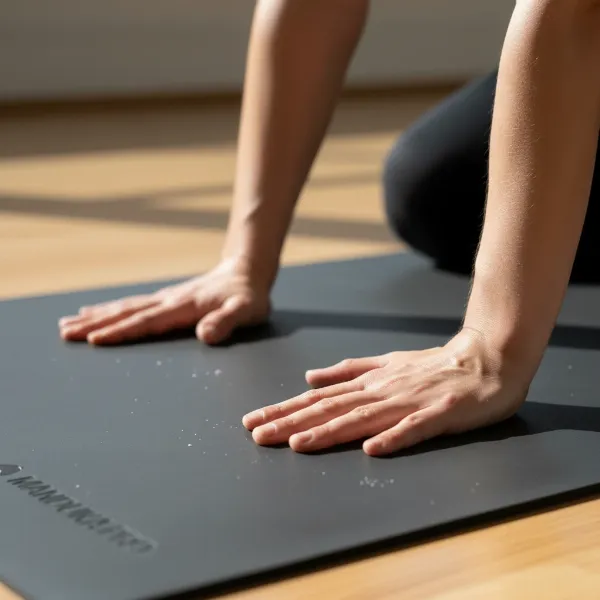 A yogi struggling slightly with grip on a new yoga mat, or using a towel for sweaty hands.
Is the Manduka PRO Worth the Investment? Deciding if it’s Right for You
Deciding if the Manduka PRO is the right mat for you ultimately comes down to your personal priorities and practice style. It’s a significant investment, and its value proposition lies in specific areas that cater to particular types of yogis. By understanding who this mat best serves, you can make an informed decision.
Who Should Consider the Manduka PRO?
The Manduka PRO is an excellent choice for frequent practitioners and dedicated yogis who attend classes regularly or practice daily at home. Its exceptional durability means it will withstand years of intense use, making the initial cost a long-term saving. If you prioritize superior joint protection and cushioning, this mat’s 6mm thickness offers unmatched comfort and support, particularly beneficial for sensitive knees or elbows. Furthermore, those who desire a stable and grounded surface for challenging poses, inversions, and balances will appreciate its firm, dense construction. Finally, if you value a hygienic and easy-to-clean mat and are willing to embrace the break-in process or use a yoga towel for very sweaty sessions, the Manduka PRO’s closed-cell design is a major plus.
Who Might Explore Alternatives?
Conversely, the Manduka PRO might not be the ideal choice for everyone. Travelers or yogis who frequently transport their mat will likely find its heavy weight cumbersome and inconvenient. If you are a beginner on a tight budget, the high price point might be prohibitive, and more affordable options could serve your initial needs just as well. Individuals who sweat heavily and require immediate, absolute grip without any break-in period or the need for a towel might find the Manduka PRO’s initial slipperiness and performance in very wet conditions frustrating. Those who prefer natural rubber mats for their eco-credentials or inherent stickiness from day one might also seek alternatives.
Caring for Your Manduka PRO Mat: Maximizing Longevity
Proper care is essential to unlock the full potential and extend the already impressive lifespan of your Manduka PRO mat. While its closed-cell construction makes it relatively low maintenance, a few simple steps can ensure it remains a pristine and supportive surface for years.
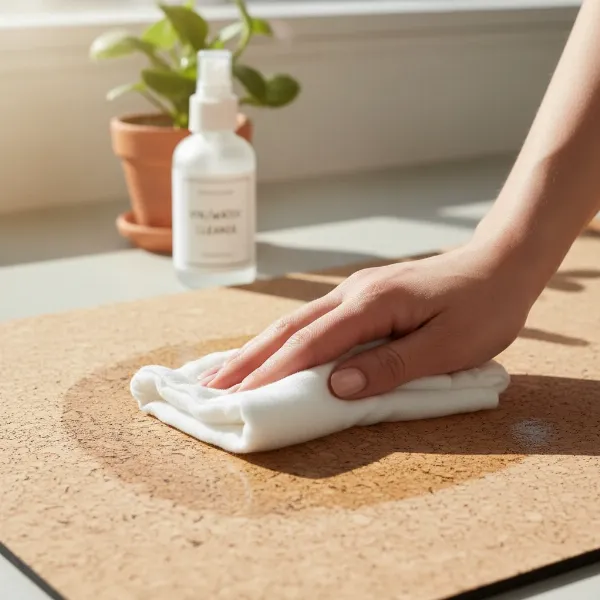
The closed-cell design inherently repels moisture and grime, preventing bacteria from soaking into the mat, which makes cleaning remarkably straightforward. To keep your mat in optimal condition, regularly wipe it down with a damp cloth after each practice. For a deeper clean, Manduka recommends using their specialized mat wash, or a gentle, non-abrasive soap diluted with water. It’s crucial to avoid harsh chemicals or abrasive brushes, as these can damage the mat’s surface. After cleaning, hang your mat to air dry completely in a shaded, well-ventilated area, away from direct sunlight, which can degrade the material over time. When storing, always roll your mat with the top surface (the side with the frog logo) facing outwards to prevent the edges from curling up and ensure it lays flat for your next session. Avoid folding the mat, as this can create creases and compromise its structural integrity.
Conclusion
The Manduka PRO Yoga Mat is undeniably a premium product, designed for longevity, exceptional support, and hygiene. Its robust construction and cushioning make it a favorite for dedicated practitioners seeking a reliable foundation for their extensive yoga journey. While the initial investment is substantial, and the mat demands a patience-testing break-in period, its unparalleled durability and lifetime guarantee offer long-term value, potentially making it the last Yoga Mat you’ll ever need to buy.
However, its considerable weight and the need for a break-in period mean it’s not a one-size-fits-all solution, particularly for traveling yogis or those needing immediate, unwavering grip for extremely sweaty practices. Ultimately, the Manduka PRO stands as a testament to quality, proving its worth for those whose practice aligns with its strengths.
Considering your own yoga style, frequency, and personal priorities, does the Manduka PRO sound like the lifelong yoga companion you’ve been searching for?
Frequently Asked Questions
How long does the Manduka PRO break-in process typically take?
The break-in period for a Manduka PRO mat can vary, but generally, it takes about one to three months of consistent, regular use to achieve optimal grip. Some practitioners report it taking even longer, up to six months, for the surface to fully adapt and lose its initial slipperiness.
Is the Manduka PRO suitable for hot yoga or very sweaty practices?
Due to its closed-cell surface, the Manduka PRO does not absorb sweat, meaning moisture can sit on top and make it slippery. For hot yoga or very sweaty practices, it is highly recommended to pair the mat with a performance yoga towel to absorb sweat and maintain traction.
How should I properly clean and care for my Manduka PRO mat?
To clean your Manduka PRO mat, wipe it down with a damp cloth after each use. For a deeper clean, use Manduka’s mat wash or a diluted gentle soap solution, then air dry completely in a shaded area. Roll it with the top side out for storage to prevent curled edges.
Is the Manduka PRO considered an eco-friendly yoga mat?
While the Manduka PRO is made of PVC, Manduka uses an emissions-free manufacturing process, and the mat is certified free from harmful chemicals. Its exceptional durability and “lifetime guarantee” contribute to sustainability by significantly reducing the frequency of mat replacement, thereby lessening waste.