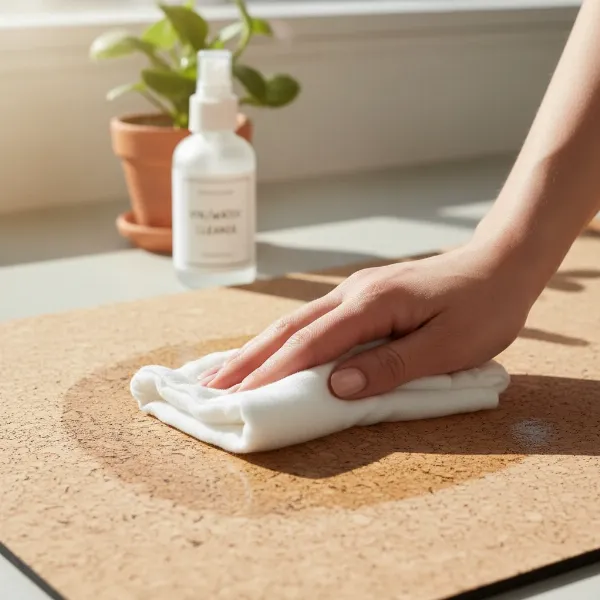
The frustrating sight of stubborn sweat stains can quickly dampen the serene aesthetic of a light-colored yoga mat. More than just an eyesore, these marks signify a buildup of body oils, salts, and bacteria, impacting both the hygiene and longevity of your beloved practice space. Maintaining a clean mat is crucial not only for a fresh appearance but also for a healthier, more grounded yoga journey. This comprehensive guide will equip you with effective strategies, tailored for light-colored mats, to tackle those unwelcome sweat stains, ensuring your mat remains pristine and supportive for every pose.
Understanding Sweat Stains on Light Yoga Mats
Sweat stains are more than just watermarks; they are often a residue of the body’s natural excretions—salts, oils, and bacteria—that accumulate during a strenuous yoga session. On light-colored mats, these residues become conspicuously visible, sometimes appearing as yellowish or darker patches. Beyond aesthetics, this buildup can compromise the mat’s grip, making your practice less safe, and create an environment ripe for bacterial growth and unpleasant odors. The porous nature of some mat materials, particularly open-cell designs, means they absorb sweat more readily, making stains more ingrained and challenging to remove from light surfaces.
Preventive Measures: Keeping Your Mat Pristine
Prevention is always better than cure, especially when it comes to keeping light-colored yoga mats free from sweat stains. By adopting a few simple habits, you can significantly reduce the likelihood of permanent discoloration and maintain your mat’s fresh appearance. Always begin your practice with clean hands and feet to minimize the transfer of dirt and oils. Consider using a yoga towel, especially during hot yoga or particularly sweaty sessions. These towels absorb moisture, creating a barrier between your body and the mat, and are much easier to machine wash than the mat itself.
After every use, give your mat a quick wipe-down with a gentle spray to remove immediate sweat and oils before they have a chance to set. This daily ritual is a powerful defense against stain buildup. Additionally, avoid applying body lotions or oils right before your practice, as these can transfer to the mat and contribute to greasy marks that attract dirt. Finally, ensure your mat is thoroughly air-dried after each use to prevent moisture from encouraging bacterial growth and odor development.
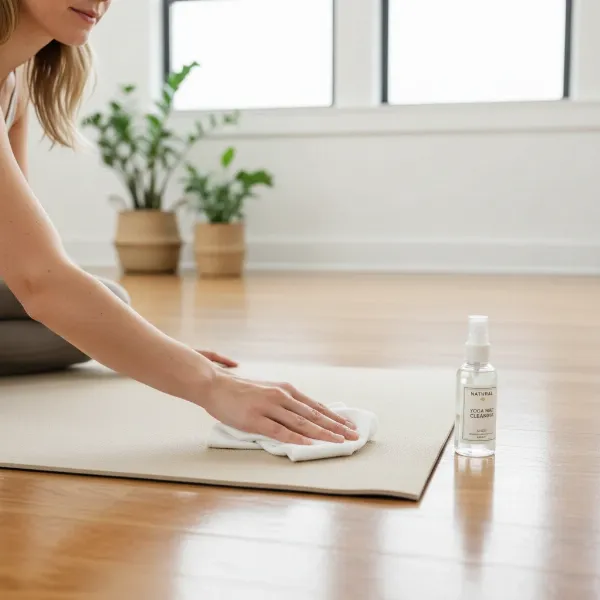 Woman wiping down her light-colored yoga mat after practice to prevent sweat stains
Essential Tools and DIY Cleaning Solutions
Tackling sweat stains on light-colored yoga mats doesn’t always require harsh chemicals. Many effective solutions can be created with common household items, offering a gentle yet powerful approach to mat hygiene. Essential tools include a spray bottle for easy application, a soft cloth or sponge for gentle wiping, and a clean towel for drying.
For daily cleaning and mild stains, a simple white vinegar and water solution is highly effective. Mix one part white vinegar with three parts water in a spray bottle. Vinegar is a natural disinfectant and deodorizer, making it ideal for combating sweat residue. For an added refreshing scent and enhanced antibacterial properties, you can incorporate a few drops of essential oils like tea tree or lavender, but exercise caution with PU mats, as they can react poorly to oils.
For tougher, more stubborn sweat stains and embedded odors, a baking soda paste is an excellent natural remedy. Mix baking soda with a small amount of water until it forms a thick paste. Baking soda is a mild abrasive that helps lift stains and neutralize odors without damaging delicate mat surfaces. Another gentle yet effective option is a solution of mild soap and water. Use a small amount of eco-friendly dish soap diluted in water. When considering commercial cleaners, opt for products specifically designed for yoga mats, which are formulated to protect the mat’s integrity and extend its life. Always check ingredients to ensure they are compatible with your mat material, especially if it’s a sensitive type like PU.
Step-by-Step Guide: Removing Sweat Stains
Effectively removing sweat stains from light-colored yoga mats requires a targeted approach, distinguishing between fresh marks and more stubborn, set-in discoloration.
1. Daily Wipe-Down for Fresh Sweat Marks (Light Stains)
For sweat marks that haven’t had time to deeply penetrate the mat, a quick daily clean is usually sufficient.
- Prepare your solution: In a spray bottle, mix one part white vinegar with three parts water. You can add 2-3 drops of tea tree or lavender essential oil for a pleasant scent and antibacterial boost, but skip oils for PU mats.
- Spritz the mat: Lightly mist the entire surface of your mat, focusing on areas prone to sweat accumulation like where your hands, feet, and head rest.
- Wipe clean: Using a clean, soft, damp cloth or sponge, gently wipe down the sprayed areas. Ensure you cover the entire surface to remove all sweat and residue.
- Rinse and dry: Dip a second clean cloth into plain water, wring it out well, and wipe the mat again to remove any lingering cleaner residue. Lay the mat flat or hang it in a well-ventilated area, away from direct sunlight, to dry completely.
|
Our Picks for the Best Yoga Mat in 2026
As an Amazon Associate I earn from qualifying purchases.
|
||
| Num | Product | Action |
|---|---|---|
| 1 | Amazon Basics Extra Thick Exercise Yoga Mat with Carrying Strap |

|
| 2 | Retrospec Solana Yoga Mat 1/2" Thick w/Nylon Strap for Men & Women - Non Slip Excercise Mat for Yoga, Pilates, Stretching, Floor & Fitness Workouts |
|
| 3 | Amazon Basics Extra Thick Exercise Yoga Mat with Carrying Strap |
|
| 4 | Retrospec Solana Yoga Mat 1" Thick w/Nylon Strap for Men & Women - Non Slip Exercise Mat for Home Yoga, Pilates, Stretching, Floor & Fitness Workouts |
|
| 5 | MICRODRY Deluxe Fitness Exercise Yoga Mat for Home & Gym, Extra Thick for High Impact Training, Multi Layered Skid Resistant Surface, Odor Neutralizing with Carrying Strap |
|
| 6 | Amazon Basics Extra Thick Exercise Yoga Mat with Carrying Strap |
|
| 7 | Retrospec Solana Yoga Mat 1" Thick w/Nylon Strap for Men & Women - Non Slip Exercise Mat for Home Yoga, Pilates, Stretching, Floor & Fitness Workouts |
|
| 8 | Amazon Basics 1/4 Inch Thick TPE Exercise Yoga Mat with Carrying Strap |
|
| 9 | Gruper Yoga Mat Non Slip, Eco Friendly Fitness Exercise Mat with Carrying Strap,Pro Yoga Mats for Women,Workout Mats for Home, Pilates and Floor Exercises |
|
| 10 | CAP Barbell High Density Exercise Yoga Mat with strap, 68"x24"x 1/2" - Sage Green |
|
2. Deep Cleaning for Stubborn Sweat Stains (Moderate to Heavy Stains)
When daily cleaning isn’t enough, it’s time for a more intensive approach. This is particularly crucial for light-colored mats where stains are highly visible.
Baking Soda Paste Method
This method is excellent for lifting tough stains and absorbing deep-set odors.
- Create the paste: Mix about 2 tablespoons of baking soda with just enough water to form a thick, spreadable paste.
- Apply to stains: Directly apply the baking soda paste onto the sweat stains. Ensure the entire stained area is covered.
- Let it work: Allow the paste to sit on the stains for 15 to 20 minutes, giving it time to absorb oils and odors. For very stubborn stains, you might extend this to an hour.
- Gently scrub: With a soft-bristled brush (like an old toothbrush) or a textured cleaning cloth, gently scrub the paste into the stain using small, circular motions. Be careful not to scrub too vigorously, especially on delicate mat materials.
- Wipe clean: Use a clean, damp cloth to thoroughly wipe away the paste and lifted stain residue. You may need to rinse and re-wipe your cloth multiple times to ensure all traces are gone.
- Air dry: Lay the mat flat or hang it to air dry completely. This might take several hours, or even overnight, depending on how much moisture was applied.
Vinegar Soak Method (for natural rubber and microfiber-topped mats)
Some porous mats benefit from a deeper soak, but this is not suitable for all materials, especially PU.
- Prepare the bath: Fill a bathtub with cool water, enough to submerge your mat. Add about half a cup of baking soda for its odor-absorbing and stain-lifting properties.
- Submerge the mat: Carefully place your mat into the water, ensuring it is fully submerged. Let it soak for 15 to 20 minutes.
- Gentle scrub (optional): If stains are still visible, gently scrub the affected areas with a soft cloth or sponge while the mat is submerged.
- Rinse thoroughly: Drain the tub and rinse your mat thoroughly under cool, running water until all soap or baking soda residue is gone. This is critical to prevent slipperiness.
- Squeeze and dry: Gently squeeze out excess water, then hang your mat to air dry completely. This can take up to 24 hours or longer.
Gentle Detergent Wash (for PVC and TPE mats)
For closed-cell mats that can handle more direct washing.
- Prepare solution: In a bucket, mix a small amount of mild, eco-friendly dish soap with warm water.
- Wash the mat: Lay your mat flat and use a soft sponge or cloth dipped in the solution to gently scrub the entire surface, paying close attention to stained areas.
- Rinse meticulously: Rinse the mat thoroughly with clean water, ensuring no soap residue remains. Any leftover soap can make the mat slippery.
- Air dry: Hang or lay flat to air dry completely, away from direct sunlight.
Cleaning Methods Tailored to Yoga Mat Materials
The effectiveness of your cleaning efforts and the longevity of your light-colored yoga mat depend significantly on its material. Different materials react differently to cleaning agents and water, making it crucial to know what your mat is made of before you begin.
- PVC (Polyvinyl Chloride) Mats: These synthetic mats are generally durable and have a closed-cell structure, meaning they don’t absorb water or sweat easily. They can withstand more robust cleaning. A simple solution of white vinegar and water or mild dish soap and water works well for daily and deep cleaning.
- TPE (Thermoplastic Elastomer) Mats: TPE mats are eco-friendlier, non-toxic alternatives, also featuring a closed-cell structure. Like PVC, they are less porous and are relatively easy to clean with gentle solutions like water and mild soap.
- Natural Rubber & Microfiber-Topped Mats: These mats often have an open-cell, porous surface, which makes them excellent for grip as they absorb sweat. However, this porosity also means they are more prone to absorbing oils and sweat, leading to noticeable stains and odors on light versions. They benefit greatly from baking soda deep cleans. Avoid harsh chemical cleaners and excessive oils, which can degrade the natural rubber. When using essential oils, ensure they are highly diluted.
- PU (Polyurethane) Sticky Mats: Often featuring an open-cell surface bonded to a rubber base, PU mats are known for their exceptional grip. However, their porous nature means they absorb everything, including dirt and sweat, making them prone to water and oil stains. It is critically important to avoid oils and strong detergents on PU mats, as these can stain them and compromise their unique grip. Stick to light sprays and gentle wiping, and never heavily drench them.
- Cork Mats: Cork is naturally antimicrobial and self-cleaning, making these mats quite low-maintenance. They naturally repel odors. Typically, a simple wipe-down with a mat spray (water and a drop of mild soap) is sufficient. Deep washing is rarely needed.
Drying and Storage: The Final Crucial Steps
Proper drying and storage are just as vital as the cleaning process itself, especially for light-colored yoga mats prone to mold, mildew, and material degradation. After cleaning, the most important step is to ensure your mat is 100% dry before rolling it up or storing it. Lingering moisture is a breeding ground for bacteria and can lead to musty odors and even mold, which will be particularly visible and difficult to remove from light surfaces.
Hang your mat in a well-ventilated area where air can circulate freely around both sides. A shower rod or a clothesline (indoors or in a shaded area) works perfectly. Avoid direct sunlight as much as possible. While sunlight might seem like a quick drying solution, prolonged exposure can cause light-colored mats to fade, become stiff, brittle, and even degrade certain materials like natural rubber. Depending on how wet your mat got, drying can take anywhere from a few hours to over 24 hours. Patience is key! Once completely dry, roll your mat loosely and store it in a cool, dry place. Avoiding tight rolling can help prevent creasing and maintain the mat’s shape over time.
Top Tips for Maintaining Light-Colored Yoga Mats
Keeping your light-colored yoga mat looking pristine requires a blend of diligence and understanding of its unique needs. Here are some essential tips to ensure your mat remains a clean and inviting space for your practice:
- Regularity is Key: Consistent, light cleaning after each practice session will prevent sweat and oils from setting in and forming stubborn stains. This proactive approach is far more effective than infrequent, intensive deep cleans.
- Test Cleaners First: Before applying any new cleaning solution to your entire mat, always test it on an inconspicuous area. This is particularly important for light-colored mats, which can show discoloration or adverse reactions more readily.
- Don’t Over-Soak Delicate Mats: While some mats can handle a full soak, many—especially PU and cork—should not be drenched. Excess water can damage their structure, affect grip, and prolong drying times, increasing the risk of mold.
- Address Stains Quickly: The sooner you address a sweat stain, the easier it will be to remove. Fresh stains are much more amenable to simple cleaning solutions than those that have set in over time.
- Consider Mat Sprays: If DIY solutions aren’t your preference, invest in a high-quality yoga mat cleaning spray designed for your specific mat material. These are often formulated to be gentle yet effective, and many come with pleasant, natural scents.
“A clean mat is a clear mind. The effort you put into maintaining your yoga mat reflects your dedication to your practice, ensuring a sacred and hygienic space for self-discovery.” – Maria Sanchez, Certified Yoga Instructor and Wellness Expert
Buying Guide: Choosing a Stain-Resistant Yoga Mat
When investing in a new yoga mat, especially if you prefer lighter colors, considering its stain resistance and ease of cleaning can save you a lot of hassle down the line. The material of the mat plays a significant role in how well it conceals or resists sweat stains. Closed-cell materials like PVC and TPE are generally less absorbent, making them easier to wipe clean and less prone to deep-set stains. If stain visibility is a major concern, these materials might be a good choice.
Conversely, open-cell materials such as natural rubber and PU offer superior grip due to their porous nature, but this also means they absorb sweat and oils more readily. While fantastic for performance, light versions of these mats will show sweat marks more prominently and require more diligent cleaning. If you opt for these, be prepared for more frequent and targeted cleaning.
Another practical consideration is the color and pattern of the mat. While this article focuses on cleaning light-colored mats, choosing a darker hue or a mat with a subtle pattern can naturally help camouflage minor sweat marks and everyday dirt, extending the time between deep cleans. Think about your frequency of practice and type of yoga. If you practice hot yoga or sweat heavily, a mat that is easy to wipe down and quick-drying will be paramount. Finally, establish your budget. While cheaper mats might seem appealing, investing in a higher-quality mat that aligns with your cleaning needs and material preferences can offer better longevity and a more enjoyable practice experience.
Conclusion
Maintaining the pristine condition of a light-colored yoga mat, free from sweat stains, is an essential aspect of a hygienic and aesthetically pleasing yoga practice. By understanding the nature of sweat stains, implementing consistent preventive measures, and utilizing the right cleaning techniques tailored to your mat’s material, you can ensure your sacred space remains fresh and inviting. From daily wipe-downs with simple vinegar solutions to deep cleaning with baking soda paste for stubborn marks, the tools and methods are accessible and effective. Embrace these mat care practices as an extension of your mindfulness, honoring your commitment to both your well-being and the longevity of your practice companion. What’s your biggest challenge when cleaning your light-colored yoga mat?
Frequently Asked Questions
How often should I clean my light-colored yoga mat for sweat stains?
For optimal hygiene and to prevent sweat stains from setting in, it’s recommended to wipe down your light-colored yoga mat after every use. A deeper clean using a baking soda paste or a gentle wash is advisable every one to two weeks, or more frequently if you practice hot yoga or sweat heavily.
Can I use bleach on sweat stains on my light yoga mat?
No, it is strongly advised against using bleach or harsh chemical cleaners on your yoga mat, especially light-colored ones. Bleach can damage the mat’s material, cause discoloration, and potentially leave behind residues that can irritate your skin or make the mat slippery. Stick to gentler, natural solutions.
Are essential oils safe for all yoga mat materials when cleaning?
Most essential oils are safe when highly diluted in cleaning solutions for PVC, TPE, natural rubber, and microfiber mats. However, PU (polyurethane) mats are particularly sensitive to oils and strong detergents, which can degrade their grip and cause staining. Always test on an inconspicuous spot first and avoid oils on PU mats.
Why do my light yoga mat get sweat stains so easily?
Light-colored yoga mats tend to show sweat stains more easily because the discoloration from body oils, salts, and dirt is visually more apparent against a pale background. Open-cell mat materials, which are designed to absorb moisture for grip, also contribute to visible and deep-set staining on lighter shades.
How to remove yellowing from a white yoga mat?
Yellowing on a white Yoga Mat, often caused by sweat and body oils, can typically be addressed with a baking soda paste. Apply the paste directly to the yellowed areas, let it sit for 15-30 minutes, then gently scrub with a soft brush before wiping clean with a damp cloth and air-drying thoroughly. This method helps lift and neutralize the discoloration.