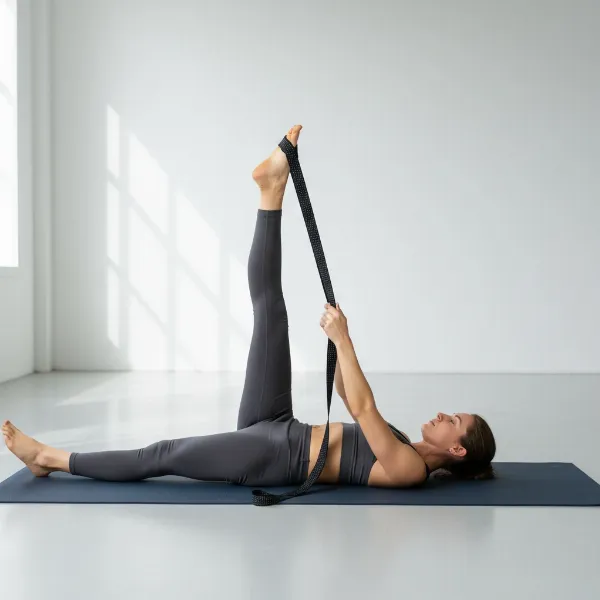
Every yogi knows the serene bliss of stepping onto their mat, ready to find stillness and strength. But for cat owners, this peaceful moment can quickly turn into a battle of wills as their feline friends decide the yoga mat is the purr-fect new scratching post. If you’ve ever unrolled your yoga mat only to find it adorned with new claw marks, you’re not alone. This guide offers practical strategies and insights to help you protect your beloved yoga mat from feline mischief, ensuring harmony in your home and a pristine space for your practice.
Understanding the Feline Fascination: Why Cats Target Your Yoga Mat
Cats scratch for a variety of instinctual reasons, and your yoga mat often presents an irresistible temptation. Primarily, scratching helps cats maintain healthy claws, shedding old layers and keeping them sharp. It’s also a powerful way for them to mark their territory, both visually and through scent glands in their paws. The unique texture of many yoga mats—often soft, pliable, and offering satisfying resistance—mimics materials cats naturally gravitate towards, such as carpet or sisal scratching posts. Sometimes, it’s simply a bid for attention, a playful invitation to interact when your focus is elsewhere. Understanding these motivations is the first step toward effective prevention.
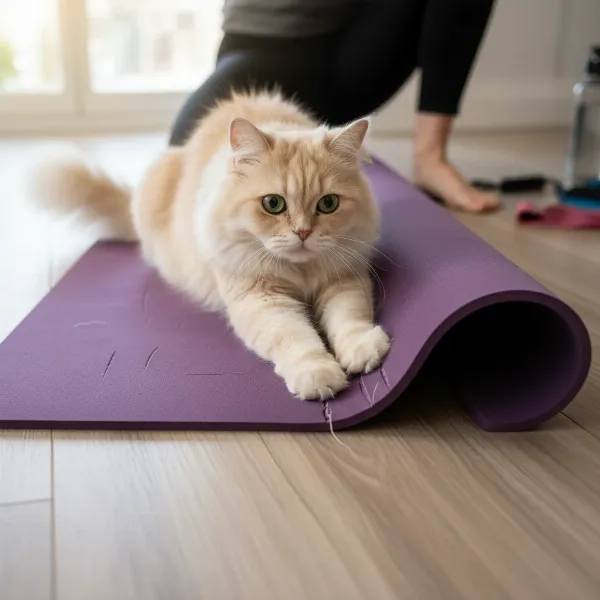 Playful cat with claws out on a yoga mat, illustrating feline mischief during practice.
Common Yoga Mat Materials: How They Stand Up to Feline Foes
The material of your yoga mat plays a significant role in how it withstands the onslaught of curious claws. While no mat is entirely “cat-proof” if a determined feline decides it’s their next target, some materials offer better resistance or are less appealing than others.
Yoga Mat PVC
PVC (Polyvinyl Chloride) mats are widely popular due to their affordability and durability. They generally offer a smooth, slightly cushioned surface.
- Pros: Easy to clean, durable against general wear and tear, budget-friendly.
- Cons: Not environmentally friendly, can be easily punctured or shredded by sharp claws, especially thinner mats.
- Best for: Beginners or those on a budget who can easily replace their mat or are diligent about storage.
Yoga Mat TPE
TPE (Thermoplastic Elastomer) mats are often seen as a more eco-friendly alternative to PVC. They offer a good balance of grip and cushioning.
- Pros: Environmentally conscious, good grip, lightweight.
- Cons: Can still be damaged by persistent scratching, durability against sharp claws is moderate.
- Best for: Environmentally aware yogis whose cats are less aggressive scratchers or who prioritize quick storage.
Yoga Mat Natural Rubber
Natural rubber mats are renowned for their exceptional grip and eco-friendliness. They often have a slightly textured surface.
- Pros: Superior grip, highly durable, natural and biodegradable.
- Cons: Can be heavier, may have a distinct rubber scent, generally more expensive. While more resilient than TPE or PVC, sharp claws can still leave marks or small tears.
- Best for: Advanced practitioners or those prioritizing sustainability and grip, willing to invest in a more robust (though not entirely impervious) mat.
Yoga Mat Jute
Jute mats are made from natural fibers, offering a rustic, earthy feel and excellent breathability.
- Pros: Sustainable, absorbent, unique texture.
- Cons: Can be rougher on skin, less cushioning, and the fibrous texture is highly appealing for cats to scratch and shred, leading to rapid damage.
- Best for: Yogis who prefer natural fibers and breathability, but are prepared for potential cat damage, or whose cats are not interested in scratching.
Yoga Mat Cotton
Cotton yoga mats or “rugs” are traditionally used in some yoga styles, offering a soft, absorbent surface.
- Pros: Soft, highly absorbent (great for hot yoga), breathable.
- Cons: Lacks grip on smooth floors (often used over another mat), very easily snagged and shredded by cat claws, poor durability against scratching.
- Best for: Specific yoga styles (e.g., Ashtanga, Mysore) or meditation, but require extreme vigilance for cat owners due to high susceptibility to damage.
Comparison Table: Mat Materials & Cat Scratch Resistance
| Material | Scratch Resistance | Durability Against Claws | Texture Appeal to Cats | Price Point | Notes for Cat Owners |
|---|---|---|---|---|---|
| PVC | Low | Moderate | Moderate | Low | Easily punctured, but durable enough for light scratching |
| TPE | Moderate | Moderate | Low | Medium | Resists minor scratches, but determined cats can damage |
| Natural Rubber | High | High | Low | High | More resilient, but not entirely scratch-proof; can show marks |
| Jute | Low | Low | High | Medium | Cats love the fibrous texture, highly susceptible to shredding |
| Cotton | Low | Low | High | Low | Very soft, easily snagged and torn by claws |
Essential Strategies: How to Keep Your Cat from Scratching Your Yoga Mat
Protecting your yoga mat requires a multi-faceted approach, combining proactive measures, deterrents, and behavioral redirection.
Provide Appealing Alternatives
Cats scratch because they need to. The most effective strategy is to give them appropriate outlets that are more appealing than your mat. Invest in a variety of scratching posts—sisal, cardboard, vertical, horizontal—and place them in prominent areas, especially near where you practice yoga. Consider even designating an old, less-loved mat or a durable cat scratcher as their “special” yoga mat. Encouraging their use with catnip spray or treats can work wonders.
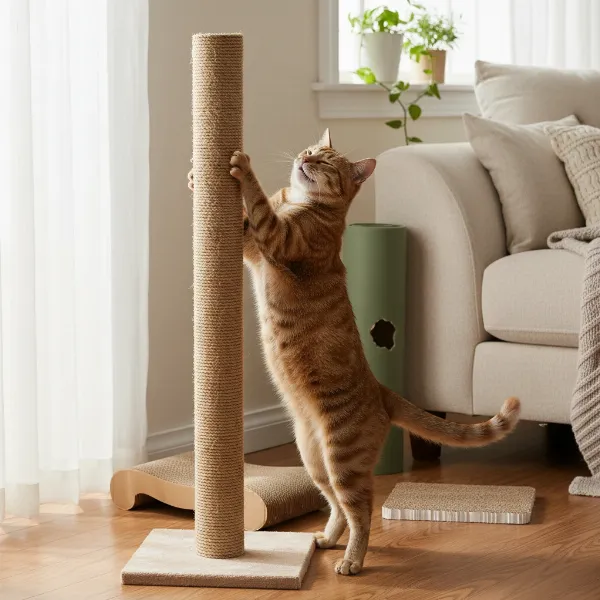 Happy cat using a sisal scratching post, with various other scratching alternatives visible.
Implement Effective Deterrents
Deterrents can make your yoga mat less inviting.
- Scent-Based Solutions: Cats dislike certain smells. Sprays with citrus (lemon, orange), peppermint, or specific cat-repellent essential oils can be effective. Always ensure any essential oils used are diluted and safe for cats. Spritz lightly on or around the mat. Some yogis have found success with cleaning their mats with diluted Irish Spring soap due to its strong scent.
- Texture-Based Deterrents: Temporarily applying double-sided sticky tape (like Sticky Paws) or aluminum foil to the mat can create an undesirable texture that cats will avoid. This is usually best for when the mat is left out momentarily and you need a quick barrier.
Strategic Storage is Key
Out of sight, out of mind is often the simplest and most effective solution. After each practice, roll up your yoga mat tightly and secure it with straps. Store it in a closet, a mat bag, or a high shelf where your cat cannot access it. This eliminates the temptation entirely when you’re not actively using it.
Training and Redirection
Positive reinforcement is crucial. If you see your cat approaching the mat with scratching intent, gently redirect them to their designated scratching post. Praise and reward them when they use the appropriate scratching surfaces. Engaging in active play sessions before your yoga practice can also tire out your cat, making them less likely to seek attention through scratching during your session.
Regular Claw Maintenance
Keeping your cat’s claws trimmed regularly can minimize the damage they inflict. While this won’t stop the scratching behavior itself, it can make their claws less effective at tearing through your mat’s material.
Choosing a Yoga Mat for Cat Owners
When purchasing a new yoga mat, especially with feline companions in mind, prioritize durability and ease of storage.
- Material Durability: Opt for natural rubber or thicker TPE mats, which tend to be more resilient to punctures and tears than softer materials like jute or cotton. While not indestructible, they offer better longevity.
- Texture Considerations: Avoid mats with highly textured or fibrous surfaces, as these are often more appealing to a cat’s natural scratching instincts.
- Ease of Storage: Choose a mat that rolls up easily and compactly, ideally with a carrying strap or compatible mat bag, making it simple to stow away immediately after use.
Repairing and Maintaining Your Cat-Damaged Yoga Mat
Minor surface scratches might be buffed out with a damp cloth and mild soap. For deeper gouges or tears, unfortunately, repair options are limited. Sometimes, a strong, flexible adhesive can temporarily seal small tears. However, extensive damage often means it’s time to replace the mat for hygiene and safety during your practice. Regular cleaning not only keeps your mat fresh but also removes any lingering scents that might attract your cat, while also removing cat hair and dander.
Top Yoga Mats for Cat Owners: Durability Meets Practice
While specific brand recommendations can vary, look for mats known for their robust construction. Mats from brands like Manduka (e.g., PRO series or eKO Lite) are often cited for their durability, with some users reporting their cats are less drawn to them due to their texture or density. Ultimately, the best mat is one that you can easily store away and that offers sufficient grip and cushioning for your practice.
Where to Purchase Cat-Proof Yoga Mats and Deterrents
You can find durable yoga mats at specialty yoga stores, sporting goods retailers, and online marketplaces. When searching for cat deterrents, check pet supply stores, both brick-and-mortar and online. Look for sprays specifically designed to be cat-safe. Always read reviews, especially those from other pet owners, to gauge effectiveness and safety.
Buying Guide for Cat-Owner Yogis
- Budget: Determine your comfort level for investment, considering that a more durable mat might be a better long-term value, even if initially more expensive.
- Cat’s Personality: Does your cat only occasionally bat at the mat, or are they a persistent, destructive scratcher? This will influence how robust your solutions need to be.
- Storage Convenience: How easily and consistently can you store your mat away after each session? A difficult-to-store mat is more likely to fall victim to claws.
- Material Preference: Balance your personal preference for mat feel and grip with its inherent resistance to cat damage.
“A harmonious home for both human and feline means understanding and redirecting natural behaviors. Your yoga mat can coexist peacefully with your cat, but it requires consistent effort and smart strategies.”
Conclusion
Sharing your home with a cat brings immense joy, but it also comes with unique challenges, like protecting your yoga mat. By understanding why your cat scratches, implementing effective deterrents, providing appealing alternatives, and prioritizing smart storage, you can safeguard your mat and maintain a peaceful co-existence. A little proactive effort goes a long way in preserving your practice space and fostering a happy environment for both you and your furry friend. Which strategy will you try first to reclaim your mat from mischievous paws?
Frequently Asked Questions
Is there such a thing as a completely “cat-proof” yoga mat?
No Yoga Mat is truly 100% “cat-proof” against a determined scratcher, as cats’ claws are designed to penetrate various materials. However, some mats made of denser materials like natural rubber offer greater resistance to damage than softer alternatives.
Are essential oils safe to use as cat deterrents on a yoga mat?
Some essential oils, particularly citrus and peppermint, are disliked by cats and can act as deterrents. It’s crucial to dilute them heavily and ensure they are pet-safe, as some oils can be toxic to cats. Always consult with your veterinarian before using essential oils around pets.
What should I do if my cat only scratches my mat when I’m using it?
If your cat scratches your mat while you’re practicing, it’s often a bid for attention. Try engaging them in a vigorous play session before your yoga, or have a dedicated toy or scratching post nearby to redirect their focus during your practice.
Can I repair my yoga mat if my cat has scratched it?
Minor surface scratches can sometimes be minimized with cleaning. However, deep gouges or tears are typically difficult to repair effectively and may compromise the mat’s integrity and hygiene, making replacement a safer option.
How can I make my cat’s scratching post more appealing than my yoga mat?
To make a scratching post more attractive, ensure it’s stable, tall enough for a full stretch, and made of a material your cat enjoys (like sisal or cardboard). You can entice them with catnip spray or by rewarding them with treats and praise when they use it.