Embarking on your yoga journey is an exciting step towards wellness, but choosing the right equipment, especially a yoga mat, can feel overwhelming. Two prominent brands often surface in this quest: Gaiam and Manduka. Both are celebrated in the yoga community, yet they cater to different needs and preferences. For a beginner, understanding the nuances between these brands is crucial for selecting a mat that supports your practice without frustration. This article will meticulously compare Gaiam and Manduka, guiding you to discover which brand is better suited for new yogis, ensuring your first downward dog is on solid ground.
Yoga Mat Basics: Why Your First Mat Matters
A yoga mat is more than just a piece of equipment; it’s your personal sanctuary and a foundation for every pose. For beginners, the right mat can significantly impact comfort, stability, and safety. A good mat provides essential cushioning to protect joints during floor poses and crucial grip to prevent slipping, especially as you explore new and challenging postures. Without these fundamental elements, a new yogi might find themselves distracted by discomfort or instability, hindering their ability to focus on breath and alignment. Investing in a quality mat from the start fosters a positive and safe introduction to yoga, laying the groundwork for a consistent and fulfilling practice.
Gaiam Yoga Mats: An Introduction for New Yogis
Gaiam has long been a popular choice, particularly for those just starting their yoga journey. The brand is well-regarded for its accessibility, often providing a comfortable entry point into the world of yoga mats. Gaiam mats are typically more affordable, making them an attractive option for beginners who may not want to invest heavily until they commit to a regular practice.
A key feature for Gaiam mats is their immediate, reliable grip, which is a significant advantage for new yogis. Many Gaiam mats come with a textured, non-slip surface, helping you maintain stability from your very first class. This instant traction means less worry about sliding, allowing you to build confidence in your poses. Gaiam mats also tend to be lighter and more portable, which is ideal if you plan to carry your mat to and from classes. While primarily made from PVC, some Gaiam mats now feature TPE, an environmentally friendlier alternative. The brand also offers a wide array of designs and colors, allowing for personal expression on the mat.
-
Pros:
- Beginner-Friendly Price: Generally more affordable, making it a low-risk initial investment.
- Immediate Grip: Provides good traction right out of the box, reducing slipping worries.
- Portability: Lighter weight makes them easy to transport to and from studios.
- Variety: Available in numerous designs and colors.
- Cushioning: Typically offers comfortable cushioning, often around 5mm thick, providing ample joint support.
-
Cons:
- Durability: May not be as long-lasting as higher-end mats, potentially requiring replacement sooner with frequent use.
- Eco-Friendliness: Many models are made from PVC, which is less environmentally friendly than natural rubber.
Manduka Yoga Mats: A Deeper Dive for the Aspiring Yogi
Manduka stands as a premium brand in the yoga world, often favored by experienced practitioners for its exceptional quality and durability. While Manduka mats typically come with a higher price tag, they are considered a long-term investment due to their renowned longevity. Many users report Manduka mats lasting for a decade or more.
The Manduka PRO series, in particular, is celebrated for its dense cushioning and robust construction. This provides superior joint protection and stability, though its heavier weight makes it less ideal for daily commuting. Manduka also offers eco-friendly options like the eKO series, made from sustainable natural rubber, appealing to environmentally conscious yogis.
A crucial point for beginners considering a Manduka mat, especially the PRO and PROlite, is the “break-in” period. These mats can be quite slippery when new and often require several uses, or even a salt scrub treatment, to achieve optimal grip. While some yogis appreciate this process, finding that the mat adapts uniquely to their practice, it can be a significant hurdle and a source of frustration for a new practitioner who expects immediate traction.
-
Pros:
- Exceptional Durability: Built to last for many years, making it a valuable long-term investment.
- Superior Cushioning: Mats like the Manduka PRO offer excellent joint protection.
- Eco-Friendly Options: The eKO series is made from natural rubber, appealing to those seeking sustainable products.
- Stability: Dense construction provides a very stable surface for practice.
-
Cons:
- Higher Price: A significant upfront investment compared to beginner-friendly mats.
- Break-in Period: PRO series mats can be slippery initially and require dedicated use or treatment to become grippy. This can be challenging for beginners.
- Weight: The Manduka PRO is notably heavy, making it less portable for studio classes.
- Odor: Natural rubber mats (eKO series) may have a strong rubber smell initially.
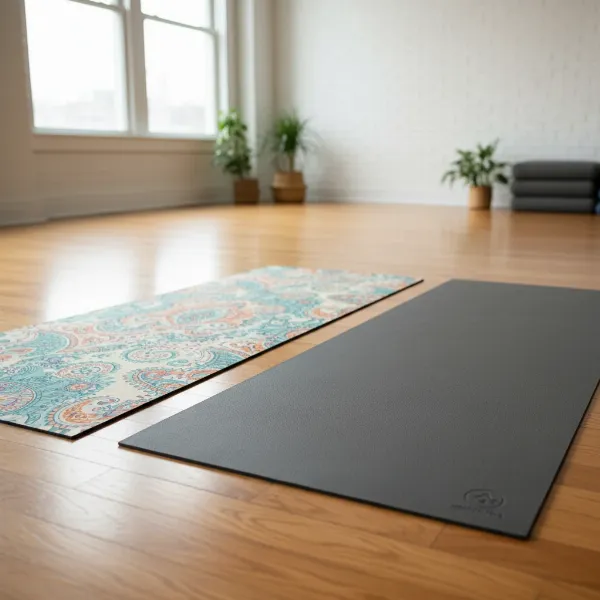 A side-by-side comparison of a colorful Gaiam yoga mat and a sleek Manduka yoga mat, highlighting their aesthetic differences for beginners.
Gaiam vs. Manduka: A Side-by-Side Comparison for Beginners
To help you decide, here’s a direct comparison of how Gaiam and Manduka stack up on factors most important to new yogis:
| Feature | Gaiam | Manduka | Better for Beginners? |
|---|---|---|---|
| Price | Low to Mid-range | Mid to High-range | Gaiam (more accessible initial investment) |
| Initial Grip | Good, often non-slip right away | PRO series often slippery, requires break-in; eKO series better | Gaiam (immediate confidence on the mat) |
| Cushioning | Comfortable (e.g., 5mm Classic Solid) | Excellent (e.g., 6mm PRO) | Both offer good cushioning, Manduka PRO is plush |
| Portability | Lightweight, easy to carry | PRO is heavy; PROlite & eKO Superlite are lighter | Gaiam (generally more portable) |
| Durability | Good for casual/moderate use, less long-lasting | Exceptional, lasts 10+ years | Gaiam (sufficient for early stages, lower commitment) |
| Break-in Period | None | Yes, for PRO series | Gaiam (no waiting, ready to use) |
| Material | Mostly PVC, some TPE | PVC (PRO), Natural Rubber (eKO) | Gaiam (PVC is common, TPE is eco-friendly alternative) |
Choosing Your First Yoga Mat: Key Considerations
Selecting your first yoga mat is a personal decision that depends on several factors. Consider these points to guide your choice between Gaiam and Manduka:
- Budget: If you’re cautious about a large initial investment, Gaiam offers excellent value without compromising on essential beginner features. It allows you to explore yoga without a significant financial commitment.
- Grip Preference: For immediate confidence and less potential frustration, a mat with good initial grip is paramount. Gaiam mats generally provide this straight out of the packaging. If you’re willing to dedicate time to “breaking in” a mat for superior long-term performance, Manduka might be an option.
- Portability: Do you plan to practice mostly at home, or will you be commuting to a studio? If regular travel with your mat is a factor, Gaiam’s lighter options or Manduka’s PROlite or eKO Superlite models will be more convenient. The Manduka PRO is best suited for home use due to its weight.
- Commitment Level: If you’re trying yoga for the first time and aren’t sure how consistent your practice will be, Gaiam offers a reliable and affordable starting point. If you’re already committed to yoga and see yourself practicing for years to come, a Manduka mat could be a worthwhile long-term investment.
- Environmental Concerns: If eco-friendliness is a high priority, Manduka’s eKO series, made from natural rubber, aligns well with sustainable values. Gaiam also offers TPE options which are an improvement over traditional PVC.
Expert Opinions: What Seasoned Practitioners Say
Seasoned yoga instructors and long-time practitioners often have strong opinions about their mats, highlighting the personal nature of the choice. Many agree that for an absolute beginner, ease of use is paramount.
“For newcomers, a mat that offers immediate grip and comfort is key. You want to focus on learning poses, not battling a slippery surface. Gaiam often provides that reliable foundation right from day one.”
While Manduka mats are praised for their unparalleled durability and performance once broken in, the initial phase can be a deterrent for new students. The Manduka PRO, for instance, requires dedication to become fully integrated into one’s practice. However, for those who persevere, the reward is a mat that can truly last a lifetime. Ultimately, the best mat is one that encourages consistent practice by feeling supportive and comfortable.
Mẹo Vệ Sinh Và Bảo Quản Yoga Mat
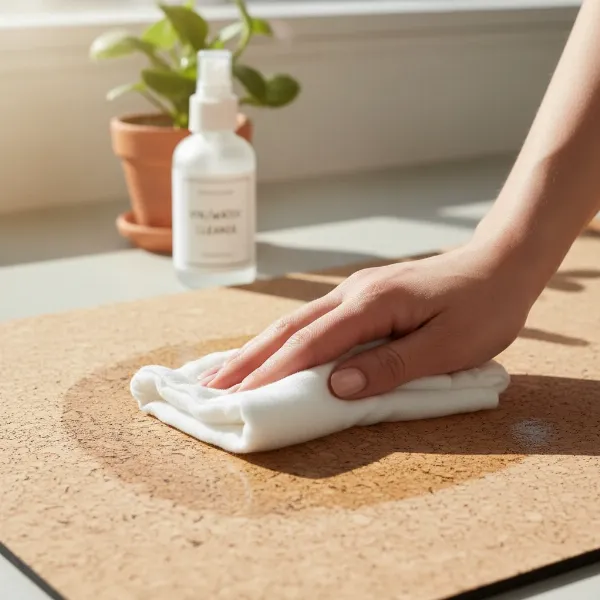
Proper care is essential to extend the life of any yoga mat, whether it’s a Gaiam or a Manduka. Regular cleaning not only keeps your mat hygienic but also helps maintain its grip.
- Wipe Down Regularly: After each practice, especially if you sweat, wipe your mat down. A simple solution of water and a few drops of mild soap or a specialized yoga mat cleaner can be used.
- Deep Clean Occasionally: For a more thorough clean, Manduka offers specific cleaning solutions, and for Gaiam mats, a gentle scrub with a soft brush or cloth can remove deeper dirt. Always follow the manufacturer’s cleaning instructions.
- Air Dry Completely: Never roll up a wet or damp mat. Lay it flat or hang it to air dry completely in a cool, shaded area. Direct sunlight or excessive heat can damage some mat materials, particularly natural rubber.
- Store Properly: When not in use, roll your mat tightly, starting from the end opposite to how you normally use it to help keep it flat. Store it in a cool, dry place, away from direct sunlight or extreme temperatures. Avoid folding it, as this can create creases and compromise its integrity over time.
Top Yoga Mat Được Ưa Chuộng Nhất Hiện Nay
While Gaiam and Manduka are top contenders, other excellent mats exist. However, focusing on the beginner’s perspective, both brands offer specific models that consistently receive high praise.
- For Beginners Prioritizing Value and Immediate Use: The Gaiam Classic Solid Yoga Mat is highly recommended. At typically 5mm thick, it offers ample cushioning and a textured surface for reliable grip, making it an ideal, affordable choice for those just starting out.
- For Beginners Eyeing a Long-Term Investment (with patience): The Manduka PROlite Yoga Mat is a fantastic option. It provides much of the durability and cushioning of the heavier PRO mat but in a lighter, more portable package. While it still requires a break-in period, its longevity and performance make it a favorite for those committed to a lasting practice.
Choosing between these often comes down to balancing initial cost and immediate functionality versus long-term investment and the willingness to break in a mat.
Mua Yoga Mat Ở Đâu Uy Tín?
When you’re ready to purchase your yoga mat, it’s important to buy from reputable sources to ensure authenticity and quality.
- Online Retailers: Major online platforms like Amazon, YogaOutlet.com, and the official Gaiam.com and Manduka.com websites are reliable places to buy. Look for official brand stores or authorized sellers to avoid counterfeit products.
- Specialty Yoga Stores: Local yoga studios or dedicated yoga and fitness stores often carry a curated selection of quality mats, including both Gaiam and Manduka. Shopping here allows you to feel the mat in person and get advice from knowledgeable staff.
When buying online, always check product reviews and the seller’s rating. Verify the return policy, especially if you are unsure about the mat’s feel or grip, as some mats may not meet your personal preferences.
Buying Guide
To summarize your purchasing decision, consider these points before making your final choice:
- Budget: Determine how much you are comfortable spending. Gaiam offers great entry-level options, while Manduka is a premium investment.
- Practice Frequency: If you plan to practice several times a week, a more durable mat like a Manduka might be a wise long-term choice. For occasional practice, a Gaiam mat will suffice.
- Yoga Style: For restorative yoga or gentle practices, extreme grip might be less critical than cushioning. For dynamic or hot yoga, grip is paramount.
- Personal Factors: Your body’s needs (e.g., sensitive knees needing extra cushioning), environmental preferences (natural rubber vs. PVC), and even aesthetic choices can influence your ideal mat.
Kết luận
Navigating the world of yoga mats as a beginner can seem daunting, but understanding the core differences between brands like Gaiam and Manduka makes the choice clearer. Gaiam emerges as an excellent starting point for new yogis, offering affordability, immediate grip, and portability, allowing you to dive into your practice without complex preparation. Manduka, on the other hand, stands as a testament to durability and quality, ideal for the committed practitioner willing to invest in a mat that will last for years, provided they are patient with the break-in process.
Ultimately, the best yoga mat is the one that empowers you to step onto it consistently, feeling safe, supported, and inspired. Consider your personal needs, practice intensity, and long-term goals to make a choice that will truly enhance your yoga journey. Which mat will be the foundation of your practice?
Frequently Asked Questions
Is Manduka PRO too slippery for beginners?
|
Our Picks for the Best Yoga Mat in 2026
As an Amazon Associate I earn from qualifying purchases.
|
||
| Num | Product | Action |
|---|---|---|
| 1 | Gruper Yoga Mat Non Slip, Eco Friendly Fitness Exercise Mat with Carrying Strap,Pro Yoga Mats for Women,Workout Mats for Home, Pilates and Floor Exercises |

|
| 2 | Retrospec Solana Yoga Mat 1/2" Thick w/Nylon Strap for Men & Women - Non Slip Excercise Mat for Yoga, Pilates, Stretching, Floor & Fitness Workouts |
|
| 3 | CAP Barbell High Density Exercise Yoga Mat with strap, 68"x24"x 1/2" - Sage Green |
|
| 4 | Retrospec Solana Yoga Mat 1" Thick w/Nylon Strap for Men & Women - Non Slip Exercise Mat for Home Yoga, Pilates, Stretching, Floor & Fitness Workouts |
|
| 5 | Amazon Basics Extra Thick Exercise Yoga Mat with Carrying Strap |
|
| 6 | Amazon Basics Extra Thick Exercise Yoga Mat with Carrying Strap |
|
| 7 | MICRODRY Deluxe Fitness Exercise Yoga Mat for Home & Gym, Extra Thick for High Impact Training, Multi Layered Skid Resistant Surface, Odor Neutralizing with Carrying Strap |
|
| 8 | Amazon Basics 1/4 Inch Thick TPE Exercise Yoga Mat with Carrying Strap |
|
| 9 | Retrospec Solana Yoga Mat 1" Thick w/Nylon Strap for Men & Women - Non Slip Exercise Mat for Home Yoga, Pilates, Stretching, Floor & Fitness Workouts |
|
| 10 | Amazon Basics Extra Thick Exercise Yoga Mat with Carrying Strap |
|
The Manduka PRO series mats can indeed feel slippery when new, and many users report a significant break-in period before optimal grip is achieved. This initial slipperiness can be frustrating and potentially unsafe for beginners who are still finding their balance and building confidence in basic poses, making it a challenging choice for first-time yogis seeking immediate traction.
Are Gaiam mats durable enough for daily use?
Gaiam mats are generally durable for regular, moderate use, especially for beginners and casual practitioners. However, if you plan to practice daily or engage in very strenuous styles of yoga, a Gaiam mat might show signs of wear and tear sooner than a premium, heavy-duty mat like a Manduka PRO, which is built for extreme longevity.
What is the best thickness for a beginner yoga mat?
For beginners, a Yoga Mat thickness of 4mm to 6mm is generally recommended. This range provides a good balance between cushioning for joint comfort during floor poses and sufficient stability for standing poses. Thicker mats (over 6mm) offer more padding but can sometimes make balancing more challenging.