Are you a dedicated yogi drawn to the dynamic, continuous movement of Ashtanga or Vinyasa Flow? If so, you understand that your yoga mat is far more than just a surface for your practice—it’s your foundation, your anchor, and your trusted companion through every sun salutation, every challenging inversion, and every moment of mindful transition. Without the right mat, your practice can quickly become a slippery struggle, leading to frustration and potential injury. This comprehensive guide, crafted by an expert with over a decade of experience with countless mats, will equip you with the knowledge to choose the perfect yoga mat designed to support the intensity and fluidity of Ashtanga and Vinyasa.
What is a Yoga Mat? Why is it Essential for Ashtanga & Vinyasa?
A yoga mat is a specially designed surface used to provide cushioning, hygiene, and most importantly, grip during yoga practice. For dynamic styles like Ashtanga and Vinyasa Flow, its role is amplified. These practices involve rapid transitions, powerful movements, and often intense heat generation, leading to sweat. A high-quality mat becomes essential for maintaining stability, preventing slips that could disrupt your flow or cause injury, and offering crucial joint protection during repetitive movements or sustained poses. It acts as a personal sanctuary, allowing you to focus deeply on your breath and movement without distraction.
The Unique Demands of Dynamic Yoga
Ashtanga and Vinyasa Flow yoga are characterized by their vigorous nature and continuous sequence of postures. Ashtanga follows a fixed series, while Vinyasa creates varied, creative flows, but both demand exceptional performance from your mat. You need a surface that offers unwavering grip, even when damp with sweat, to execute jump-backs, chaturangas, and balancing poses with confidence. Durability is also paramount, as these styles put significant friction and pressure on the mat through daily, intense use. The mat must withstand constant movement without degrading quickly, providing a stable and resilient base throughout your practice.
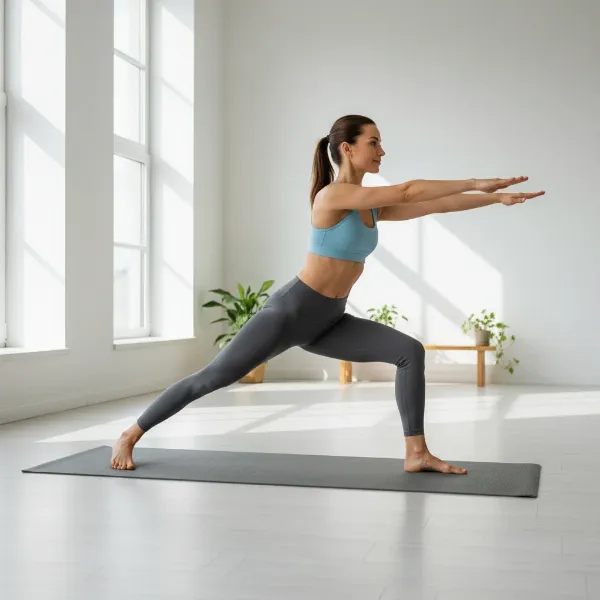 A female yogi performs a challenging Vinyasa pose on a high-grip mat, demonstrating stability.
Key Considerations for Ashtanga & Vinyasa Mats
Choosing the best mat for dynamic practices involves focusing on specific features that directly impact your performance and safety.
Unrivaled Grip & Non-Slip Surface
For Ashtanga and Vinyasa, grip is non-negotiable. You need a mat that keeps your hands and feet firmly planted, preventing any slipping or sliding, whether your hands are dry or damp with sweat. Mats made from natural rubber or advanced polyurethane surfaces are often praised for their superior traction, especially as they get a little wet. Some mats even feature “heat-activated” surfaces, where the grip improves with body temperature and moisture. Additionally, cotton yoga rugs, placed over a standard mat, can be an excellent option for Ashtanga practitioners who sweat profusely, as their traction often increases with moisture.
Optimal Thickness for Stability
While cushioning might sound appealing, too thick a mat can compromise stability in dynamic practices. For Ashtanga and Vinyasa, a thinner to medium thickness, typically around 4mm to 5mm, is generally preferred. This range provides enough cushioning for your joints without detaching you too much from the floor, allowing for a stronger connection and a more stable base crucial for quick transitions and intricate balancing postures. Mats thicker than 6mm can sometimes make balancing more challenging. Travel mats, usually 1-1.5mm, while portable, are often too thin for daily, vigorous practice.
Exceptional Durability
The constant movement, friction from jump-throughs, and sustained pressure on your joints in Ashtanga and Vinyasa demand a mat that can endure. Investing in a dense, high-quality material that resists wear and tear is crucial for longevity. PVC mats, like the Manduka PRO, are renowned for their lifespan, often coming with lifetime guarantees. Natural rubber mats can also offer excellent durability, especially those designed for professional or intensive use, such as the Jade Harmony Professional series.
Material Matters: A Detailed Look
The material of your yoga mat dictates its grip, durability, environmental impact, and overall feel.
- Natural Rubber: Highly regarded for its excellent, immediate grip, even with some sweat. It’s an eco-friendly choice, sustainably harvested, biodegradable, and free from most toxic chemicals. However, natural rubber mats can be heavier, may have a distinctive rubber smell initially (which fades), and might not be suitable for individuals with latex allergies.
- Polyurethane (PU): Often layered over a rubber base, PU offers an incredibly grippy, smooth surface that performs exceptionally well in sweaty conditions. It provides a luxurious feel and excellent wet-grip. PU mats are generally robust and popular among serious practitioners, though they can sometimes show marks more easily.
- PVC (Polyvinyl Chloride): Known for its extreme durability and long lifespan. Some PVC mats, like the Manduka PRO, are favorites for their dense cushioning and stability once “broken in.” However, PVC is less environmentally friendly and some formulations can be very slippery, especially when wet, before extensive use.
- TPE (Thermoplastic Elastomer): A blend of plastic and rubber, TPE mats are a good eco-friendly alternative to PVC. They are lighter, generally have good grip, and are recyclable. While typically durable, some may not withstand the same intensity as top-tier natural rubber or dense PVC mats over many years.
- Jute: Made from the natural fibers of the jute plant, these mats are eco-friendly and offer a textured surface that can provide good grip. They are breathable and durable but may not offer as much cushioning or wet-grip as rubber or PU mats. They are excellent for those who appreciate natural textures and prefer a firmer surface.
- Cotton (Yoga Rugs/Mysore Rugs): Traditionally used in Ashtanga, cotton rugs absorb sweat, and surprisingly, their grip often improves as they become damp. They are soft, breathable, machine-washable, and eco-friendly. They are usually placed over a standard sticky mat for added cushioning and to prevent sliding on the floor.
Bảng So Sánh Các Loại Yoga Mat
| Chất Liệu | Ưu Điểm | Nhược Điểm | Độ Bám | Độ Bền | Giá | Phù Hợp Với |
|---|---|---|---|---|---|---|
| PVC | Giá rẻ, dễ vệ sinh, độ bền cao | Không thân thiện môi trường, độ bám có thể thấp | Trung bình | Cao | Thấp-Trung bình | Người mới bắt đầu, ngân sách hạn chế, cần độ bền |
| TPE | Thân thiện môi trường, độ bám tốt, nhẹ | Độ bền trung bình | Tốt | Trung bình | Trung bình | Người tập yoga thường xuyên, ưu tiên eco |
| Cao Su Tự Nhiên | Độ bám cực tốt, thân thiện môi trường, đàn hồi tốt | Mùi tự nhiên, giá cao, nặng | Rất tốt | Cao | Cao | Người tập yoga chuyên nghiệp, ưu tiên chất lượng |
| Jute | Thân thiện môi trường, độ bền cao, texture tự nhiên | Khó vệ sinh, độ bám trung bình | Trung bình | Cao | Trung bình | Người yêu thích sản phẩm tự nhiên, cần độ chắc |
| Cotton | Mềm mại, thấm hút mồ hôi tốt, tăng bám khi ướt | Dễ bám bẩn, độ bền thấp hơn các loại khác | Tốt (khi ướt) | Thấp | Thấp-Trung bình | Yoga phục hồi, thiền định, Ashtanga (với mat lót) |
Hướng Dẫn Chọn Yoga Mat Phù Hợp
Finding the ideal yoga mat involves balancing your personal needs with the specific demands of Ashtanga and Vinyasa.
Độ Dày (Thickness)
The thickness of your mat directly impacts comfort and stability.
- 3-4mm: Often chosen by Ashtanga practitioners for a strong connection to the floor and excellent stability, crucial for balancing poses and quick transitions. Offers sufficient cushioning without feeling “squishy.”
- 5-6mm: Provides a good balance of cushioning and stability, suitable for most Vinyasa practitioners who might appreciate a bit more joint protection, especially for knees and wrists.
- Trên 6mm: Best for restorative practices or those with sensitive joints needing maximum padding. Generally not recommended for Ashtanga or Vinyasa as it can reduce stability and make balancing challenging.
Kích Thước (Size)
Your mat should comfortably accommodate your entire body during all poses.
- Chiều dài (Length): A good rule of thumb is to choose a mat that is at least 10-15 cm (4-6 inches) longer than your height. This ensures your head and feet don’t hang off during Savasana or extended stretches.
- Chiều rộng (Width): Standard mats are typically 61 cm (24 inches) wide. If your practice involves expansive movements or you prefer more space, consider a wider mat, often 66-71 cm (26-28 inches), to prevent you from sliding off during dynamic flows.
Độ Bám (Grip)
This is paramount for Ashtanga and Vinyasa. A high-grip surface is essential to prevent slipping, especially as you begin to sweat. Look for mats explicitly advertised for “superior grip,” “non-slip,” or “wet-grip” performance. Materials like natural rubber and polyurethane are excellent choices here. Some practitioners also use yoga towels to enhance grip in very sweaty conditions.
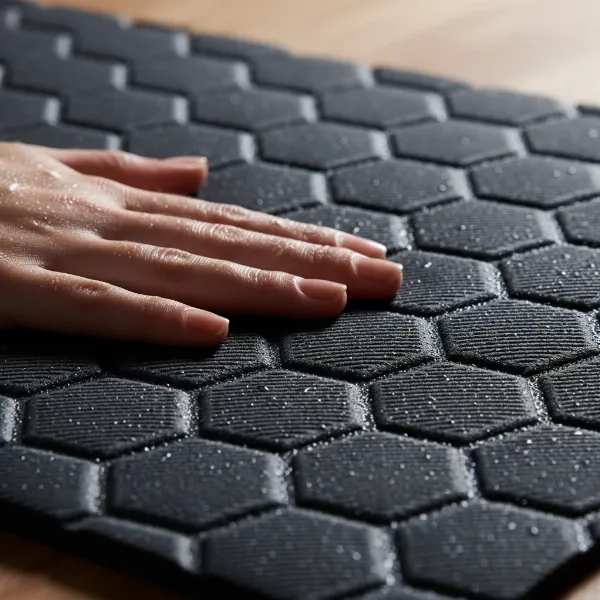 Close-up of a high-grip yoga mat surface, highlighting its non-slip texture for stability.
Chất Liệu (Material)
Align your mat’s material with your priorities:
- For maximum grip and eco-consciousness, natural rubber or PU are top contenders.
- For durability and a traditional feel, a high-quality PVC mat can be a lifetime investment (though it often requires a “break-in” period).
- For sweat absorption and natural feel, consider a cotton yoga rug, perhaps over a thinner mat.
- For a balance of eco-friendliness and performance, TPE mats are a solid choice.
Giá Cả (Price)
Yoga mats for dynamic styles can range from moderately priced to premium.
- Budget-friendly: You can find good quality TPE or basic PVC mats.
- Mid-range: Many excellent natural rubber or mid-tier PVC mats fall here.
- Premium: Top-tier natural rubber, high-performance PU, and lifetime-guaranteed PVC mats are often a significant investment, but their durability and performance justify the cost for serious practitioners. Consider it an investment in your practice and well-being.
Mẹo Vệ Sinh Và Bảo Quản Yoga Mat
Proper care extends the life of your mat and maintains its hygienic, grippy surface.
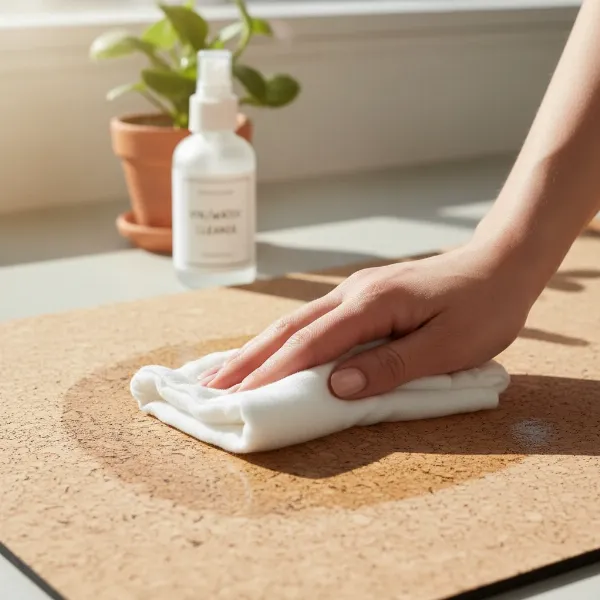
- Vệ sinh thường xuyên: After each sweaty Ashtanga or Vinyasa session, wipe your mat down to remove sweat and oils. A damp cloth with a mild, mat-specific cleaner or a dilute solution of water and white vinegar (1:10 ratio) works well.
- Tránh hóa chất mạnh: Harsh chemicals or abrasive scrubbers can damage the mat’s surface and reduce its grip. Always use gentle, non-toxic cleaning agents.
- Phơi khô hoàn toàn: Never roll up a wet or damp mat. Air dry it completely in a cool, shaded area. Direct sunlight can degrade certain materials, especially natural rubber, making them brittle over time.
- Cuộn đúng cách: Roll your mat tightly, surface side out (or as recommended by the manufacturer), to prevent creases and preserve the integrity of the grip. Store it in a cool, dry place away from extreme temperatures.
- Sử dụng túi đựng: A yoga mat bag protects your mat from dirt, damage, and UV exposure when transporting or storing it.
Top Yoga Mat Được Ưa Chuộng Nhất Hiện Nay
Based on expert reviews and practitioner feedback, several mats consistently stand out for Ashtanga and Vinyasa Flow.
- Manduka PRO Series (PRO & PROlite): Renowned for exceptional durability and density, offering superb cushioning and stability. While some find them initially slippery and requiring a “break-in” period, they are often a lifetime investment for consistent practitioners. The PROlite offers a lighter option.
- Jade Harmony Professional: Made from natural rubber, these mats offer immediate, impressive grip, even in moderately sweaty conditions. They are also eco-friendly, made with sustainable materials. They are a popular choice for their balance of grip, cushion, and environmental consciousness.
- Liforme Yoga Mat: Celebrated for its revolutionary “GripForMe” material, which provides excellent grip even when very wet. It also features unique alignment markers, which can be beneficial for refining postures in both Ashtanga and Vinyasa.
- Lululemon The Mat: Offers a blend of natural rubber and polyurethane, providing outstanding grip and a smooth, comfortable surface. It’s often praised for its immediate “sticky” feel and good cushioning, suitable for various dynamic styles.
- oléyoga Eco Daily Mat: Favored by many Ashtanga practitioners, this mat emphasizes maximum grip, stability, and resistance to intensive use, allowing for confident flow through traditional sequences.
- Yoga Design Lab Combo Mat: These mats often feature a microfiber towel surface bonded to natural tree rubber, designed specifically for sweaty practices. The grip improves as you sweat, making them ideal for Hot Vinyasa or intense Ashtanga.
Mua Yoga Mat Ở Đâu Uy Tín?
Investing in a quality yoga mat means choosing a reputable retailer.
- Cửa hàng chuyên dụng (Specialty Yoga Stores): These stores often have knowledgeable staff who can guide you based on your practice style and offer a range of high-quality brands. You can feel the mats and compare them in person.
- Cửa hàng thể thao lớn (Major Sporting Goods Stores): Larger chains may carry a selection of yoga mats, but the expertise might vary. Look for well-known yoga brands.
- Cửa hàng trực tuyến (Online Retailers): Websites of specific yoga mat brands (e.g., Manduka, Liforme, Jade Yoga) or large e-commerce platforms (like Amazon or specialized yoga equipment sites) offer a vast selection, often with customer reviews and competitive pricing.
- Lưu ý khi mua online: Always check return policies, read customer reviews focusing on grip and durability for dynamic styles, and verify the material composition. Be wary of unbranded mats that promise too much for too little.
Buying Guide
To simplify your decision, keep these factors in mind as you choose your dynamic yoga mat:
- Ngân sách (Budget): Determine how much you’re willing to invest. Remember, a higher price often correlates with superior grip, durability, and eco-friendly materials, which can be a worthy investment for frequent practitioners.
- Tần suất tập luyện (Frequency of Practice): If you practice Ashtanga or Vinyasa daily or several times a week, a high-performance, durable mat is essential. Casual practitioners might opt for a more versatile, mid-range mat.
- Loại hình Yoga (Type of Yoga): While this article focuses on Ashtanga and Vinyasa, if you also practice Hot Yoga, ensure your mat’s grip enhances with sweat. For restorative yoga, you might prioritize a thicker, more cushioned mat.
- Yếu tố cá nhân (Personal Factors): Consider your personal preferences for material (e.g., natural vs. synthetic), weight (if you transport your mat frequently), and even color or alignment markers. If you have a latex allergy, avoid natural rubber.
“For dynamic yoga, the mat isn’t just under you, it’s an extension of your body. Its grip, density, and resilience directly impact your ability to flow freely and safely.” – Sarah Powers, Renowned Vinyasa and Yin Yoga Teacher
Kết luận
Selecting the right yoga mat for Ashtanga and Vinyasa Flow is a crucial step towards deepening your practice and enhancing your overall experience. With a mat that provides exceptional grip, optimal thickness, and superior durability, you can transition seamlessly, hold challenging postures with confidence, and truly immerse yourself in the mindful movement. Remember to prioritize quality materials like natural rubber, polyurethane, or high-grade PVC, and always consider how a mat’s features align with the rigorous demands of your dynamic flow. Take the time to choose wisely, and your mat will become a steadfast ally on your yoga journey. What kind of mat will elevate your Ashtanga or Vinyasa practice to new heights?
Frequently Asked Questions
What is the best material for a non-slip yoga mat in Ashtanga and Vinyasa?
For Ashtanga and Vinyasa, natural rubber and polyurethane (PU) are generally considered the best materials for non-slip performance. They offer superior grip, even in sweaty conditions, which is essential for maintaining stability during dynamic transitions and challenging poses.
How thick should my yoga mat be for Vinyasa Flow?
For Vinyasa Flow, a mat thickness of 4mm to 5mm is often recommended. This range strikes an ideal balance, providing enough cushioning to protect your joints while maintaining a strong connection to the floor for stability and confident execution of rapid movements and balancing postures.
Can I use a regular yoga mat for Ashtanga and Vinyasa?
While you can use a regular Yoga Mat, it might not offer the specialized grip and durability required for Ashtanga and Vinyasa. Regular mats often become slippery with sweat, hindering your flow and potentially leading to injury. Investing in a mat designed for dynamic styles will significantly enhance your practice.
Do I need a yoga towel for sweaty Ashtanga practice?
If you tend to sweat a lot during Ashtanga, a yoga towel (or a traditional cotton yoga rug) can be highly beneficial. Many towels are designed to become grippier when damp, absorbing sweat and preventing slips. They can be laid over your mat for added traction and hygiene.
How often should I replace my Ashtanga or Vinyasa mat?
The lifespan of your Ashtanga or Vinyasa mat depends on its material, quality, and frequency of use. High-quality mats made from durable materials like dense PVC or natural rubber can last for many years, even a decade or more with proper care. However, if your mat shows signs of wear, reduced grip, or loss of cushioning, it’s time to consider a replacement for safety and performance.