Slipping during a yoga pose or a Pilates exercise can instantly break your focus, disrupt your flow, and even lead to injury. If you frequently find yourself battling a slick mat or studio floor, the solution might be simpler than you think: a quality pair of grip socks. These essential accessories are specifically designed to provide the unwavering traction you need, transforming a potentially hazardous workout into a secure and confident practice. This comprehensive guide will walk you through everything you need to know about selecting the perfect grip socks to conquer any slippery surface, ensuring your stability and enhancing your performance.
What Are Grip Socks and Why Are They Essential?
Grip socks, also known as non-slip or grippy socks, are specialized footwear featuring textured patterns, typically made of silicone or rubber, on their soles. Unlike regular socks, which can slide freely on smooth surfaces, grip socks create friction, anchoring your feet firmly in place. This enhanced traction is paramount for activities like yoga, Pilates, barre, and even some strength training exercises where maintaining balance and precise foot placement is crucial.
The benefits of incorporating high-performance grip socks into your fitness routine are numerous. They significantly improve your stability, allowing you to hold poses longer and execute movements with greater control and confidence. By preventing slips and slides, they also play a vital role in injury prevention, safeguarding your joints and muscles from sudden, uncontrolled movements. Furthermore, grip socks offer a hygienic barrier between your feet and shared studio mats or floors, providing peace of mind during group classes. For those who get sweaty feet, many designs also feature moisture-wicking properties, keeping your feet dry and comfortable throughout your session.
Key Features to Look for in High-Performance Grip Socks
Choosing the best grip socks involves understanding the critical features that contribute to their effectiveness and your comfort. Focusing on these elements will ensure you find a pair that truly performs.
Superior Grip Material and Pattern
The most crucial element of any grip sock is, naturally, its grip. Look for soles adorned with high-quality silicone or rubber treads. The pattern and coverage of these grips matter significantly. Socks with full-foot coverage, extending from the toes to the heel, often provide the most reliable anti-slip protection. Some designs incorporate strategically placed dots or shapes that allow for natural foot articulation while still maximizing traction. The material itself should be durable, retaining its stickiness even after multiple washes.
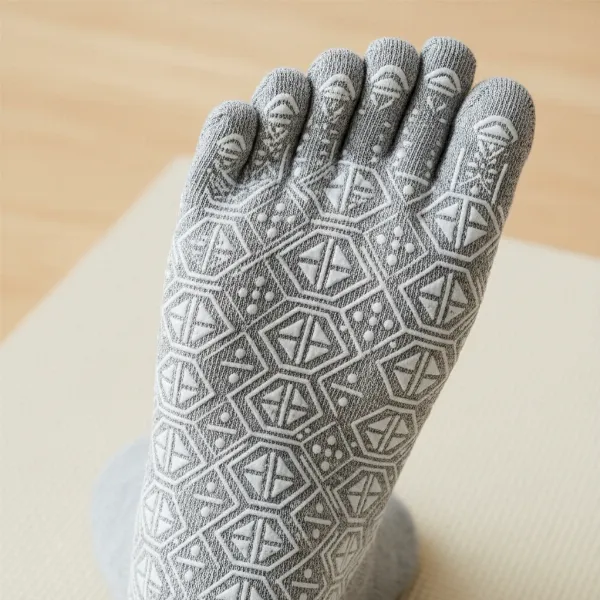 Close-up of grip sock sole with silicone treads for anti-slip traction on studio floor.
Optimal Fit and Comfort
A snug yet comfortable fit is essential. Socks that are too loose will bunch up, negating the grip and causing internal slippage, while those that are too tight can restrict movement and circulation. Most grip socks come in a blend of materials like cotton, nylon, and spandex, offering flexibility and conforming to your foot’s shape. Features like arch support can provide an extra layer of comfort and stability, particularly during sustained poses or repetitive movements. Padded heels or cushioned soles can also enhance overall comfort, especially during exercises that involve direct pressure on the foot.
Breathability and Moisture-Wicking
Sweat is a primary culprit for slippage, even with grip socks. High-quality grip socks are crafted from breathable, moisture-wicking fabrics that draw sweat away from your skin, keeping your feet dry. Mesh ventilation panels are often integrated into the design to further enhance airflow and prevent overheating, which is especially beneficial for hot yoga or intense Pilates sessions.
Durability
Given the friction and movement they endure, grip socks need to be durable. Reinforced heels and toes can extend the lifespan of your socks, as these areas often experience the most wear. Investing in socks made from resilient fabric blends and featuring robustly attached grips will ensure they stand up to regular use and washing, maintaining their performance over time.
Types of Grip Socks: Finding Your Perfect Style
Grip socks come in various styles, each offering unique benefits to suit different preferences and activities.
Full-Toe Grip Socks
Full-toe grip socks encase each toe individually, similar to a glove for your foot. This design promotes natural toe splay, allowing your toes to spread and engage fully with the mat, which can enhance balance and proprioception. They also offer a layer of hygiene and warmth, covering the entire foot.
Toeless Grip Socks
For those who prefer the tactile sensation of their toes on the mat but still require forefoot and heel traction, toeless grip socks are an excellent choice. These socks often feature an open-toe design, allowing for maximum toe dexterity and breathability while providing grip under the ball of the foot and the heel.
Ankle and No-Show Styles
Ankle-height grip socks provide coverage just above the ankle, offering a classic sock feel with added grip. No-show styles are designed to be invisible beneath shoes or when worn on their own, perfect for a minimalist look while still providing essential traction. These are popular for both studio workouts and casual home use.
Crew and Ballet/Strap Styles
Crew-length grip socks extend up the calf, offering additional warmth and a distinct aesthetic. Some designs feature criss-cross straps over the arch, reminiscent of ballet slippers, which can provide an even more secure and stylish fit, preventing the sock from twisting or slipping on your foot.
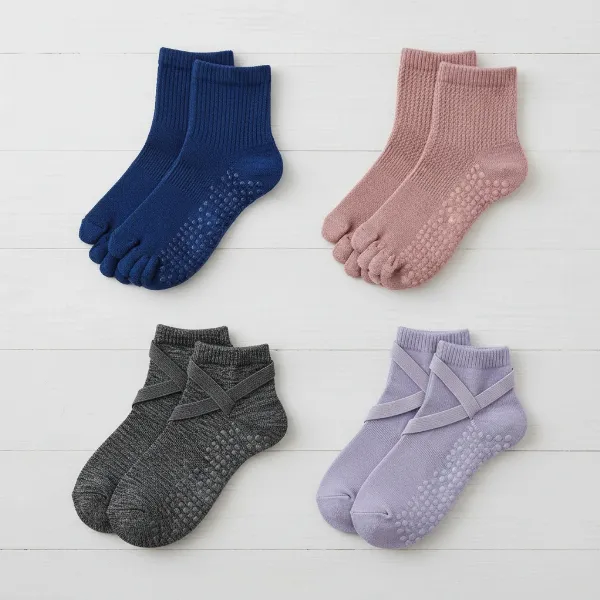 Assortment of grip sock styles: full-toe, toeless, ankle, and ballet, displayed for fitness.
How to Choose the Right Grip Socks for Your Practice
Selecting the ideal pair of grip socks requires considering your specific needs and preferences.
Consider Your Activity: For dynamic practices like Vinyasa yoga or reformer Pilates, maximum, full-foot grip and a secure fit are paramount. For restorative yoga or meditation, comfort and moderate grip might be prioritized. If you often practice in a cold studio, a full-toe or crew-length sock might be more appealing for warmth.
Assess Your Mat and Environment: If you know your mat is particularly slippery, or if you’re practicing on polished studio floors, prioritize socks with very dense and durable silicone grips. For more forgiving surfaces, you might have more flexibility in grip density.
Personal Fit and Comfort: Always refer to sizing charts. A sock that fits well will feel like a second skin, supporting your foot without constriction. Consider if you prefer individual toe separation or a closed-toe design, and if extra cushioning or arch support would benefit your feet.
Budget vs. Durability: While budget-friendly options exist, investing in higher-quality grip socks often translates to better performance, greater comfort, and longer lifespan. Durable materials and well-applied grips will save you money in the long run.
Maintaining Your Grip Socks: Care Tips for Longevity
Proper care is essential to ensure your grip socks maintain their stickiness and integrity over time.
- Washing: Always turn your grip socks inside out before washing. This protects the silicone or rubber grips from excessive friction and wear against other garments in the washing machine. Use cold water and a gentle cycle with a mild detergent.
- Drying: Air drying is highly recommended. High heat from a tumble dryer can degrade the grip material, making it brittle and less effective. Lay them flat or hang them to dry in a cool, well-ventilated area, away from direct sunlight.
- Storage: Store your grip socks neatly folded or rolled. Avoid cramming them into tight drawers, which can deform the grips. Keep them separate from harsh chemicals or sharp objects that could damage the material.
- Rotation: If you practice frequently, having a few pairs of grip socks to rotate can extend the life of each pair, preventing excessive wear on any single pair.
Conclusion
Choosing the best grip socks for slippery mats is a small investment that yields significant returns in your practice. By providing unparalleled stability, improving control, and enhancing hygiene, these specialized socks empower you to move with confidence and focus on perfecting your form without the distraction of slipping. From the precise engagement offered by full-toe designs to the freedom of toeless styles, there’s a perfect pair waiting to elevate your yoga, Pilates, or barre experience. Step onto your mat with renewed assurance and let your grip socks ground you through every movement.
What unique challenges have you faced with slippery mats, and how have grip socks helped you overcome them?
Frequently Asked Questions
Do grip socks actually work on extremely slippery mats?
Yes, grip socks are specifically designed to work on various slippery surfaces, including yoga and Pilates mats. Their silicone or rubber treads create the necessary friction to prevent sliding, even on mats that may feel slick. The effectiveness can vary slightly depending on the density and quality of the grips.
How often should I replace my grip socks?
The lifespan of grip socks depends on usage frequency, care, and quality. With regular use and proper care, high-quality grip socks can last anywhere from 6 to 12 months. Signs that they need replacing include worn-down grips, holes, loss of elasticity, or if your feet start to slip more often.
Can I wear grip socks for activities other than yoga or Pilates?
Absolutely! Grip socks are versatile and beneficial for many activities. They are commonly used for barre classes, dance, physical therapy, strength training, and even for improved stability around the house, especially on hardwood or tiled floors. Some people also wear them in hospitals or care facilities to prevent falls.