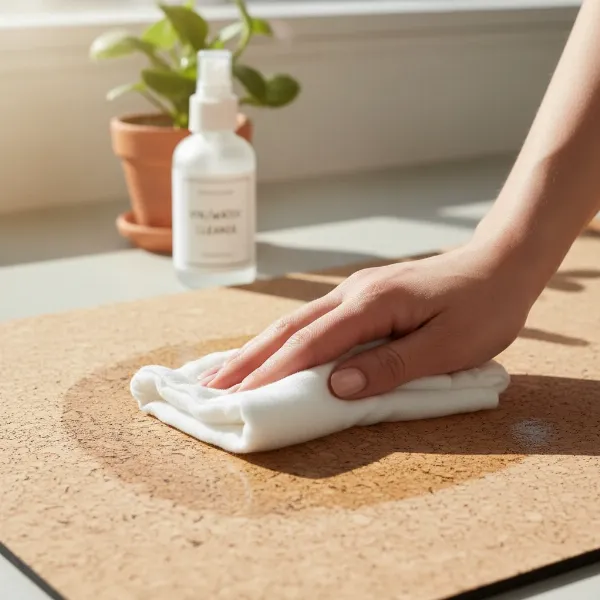
Stepping out of a hot yoga session or an intense Vinyasa class, you feel invigorated, stretched, and perhaps a little… sticky. Your yoga mat, a silent witness to your practice, has absorbed every drop of sweat and every ounce of effort. While the post-yoga glow is real, the reality of a sweaty mat can be less appealing. Beyond the visual grime and a potential lingering odor, a damp yoga mat is a breeding ground for bacteria, fungi, and other unwelcome guests that can compromise your hygiene and even your health. Learning how to properly disinfect your yoga mat is not just about cleanliness; it’s about extending its life, maintaining optimal grip, and ensuring a truly mindful and healthy practice.
Why a Sweaty Mat Needs Disinfecting
After a challenging yoga session, your mat is covered in a mixture of sweat, skin cells, and studio dust. This creates a warm, moist environment perfect for microbes to thrive. Neglecting regular cleaning can lead to:
- Health Risks: Bacteria and fungi from your skin and the studio floor can transfer to your mat, potentially causing skin irritations, rashes, or even infections like athlete’s foot.
- Unpleasant Odors: The accumulation of sweat and bacteria is the primary cause of that distinctive “gym smell” on your mat. A clean mat, free from odors, enhances your focus and overall practice experience.
- Compromised Grip and Longevity: Residue buildup from sweat and uncleaned products can make your mat slippery, increasing the risk of injury. Moreover, certain materials can degrade over time if not cared for properly, shortening your mat’s lifespan. Regular disinfection maintains the mat’s integrity and grip.
Understanding Your Yoga Mat Material
Different yoga mat materials react uniquely to various cleaning agents and methods. Knowing your mat’s composition is crucial to select the most effective and safest disinfection strategy.
- PVC (Polyvinyl Chloride) Mats: Often durable and closed-cell, meaning they don’t absorb moisture easily. These mats are generally robust and can handle a wider range of cleaning solutions.
- TPE (Thermoplastic Elastomer) Mats: Eco-friendlier than PVC, TPE mats are also usually closed-cell, offering good hygiene and easy cleaning.
- Natural Rubber Mats: These are typically open-cell, making them highly absorbent for excellent grip, especially in sweaty conditions. However, their absorbency also means they require more careful cleaning to prevent damage and avoid trapping moisture. They are more sensitive to harsh chemicals and excessive essential oils.
- Cork Mats: Naturally antimicrobial and absorbent, cork mats are a sustainable choice. They are relatively easy to clean but benefit from gentle care.
Daily Quick Clean vs. Deep Disinfection
Maintaining a hygienic yoga mat involves a two-tiered approach: a quick wipe-down after every use and a more thorough deep clean periodically.
The Quick Clean: After Every Class
|
Our Picks for the Best Yoga Mat in 2026
As an Amazon Associate I earn from qualifying purchases.
|
||
| Num | Product | Action |
|---|---|---|
| 1 | Amazon Basics Extra Thick Exercise Yoga Mat with Carrying Strap |

|
| 2 | CAP Barbell High Density Exercise Yoga Mat with strap, 68"x24"x 1/2" - Sage Green |
|
| 3 | Amazon Basics Extra Thick Exercise Yoga Mat with Carrying Strap |
|
| 4 | Amazon Basics Extra Thick Exercise Yoga Mat with Carrying Strap |
|
| 5 | MICRODRY Deluxe Fitness Exercise Yoga Mat for Home & Gym, Extra Thick for High Impact Training, Multi Layered Skid Resistant Surface, Odor Neutralizing with Carrying Strap |
|
| 6 | Amazon Basics 1/4 Inch Thick TPE Exercise Yoga Mat with Carrying Strap |
|
| 7 | Retrospec Solana Yoga Mat 1/2" Thick w/Nylon Strap for Men & Women - Non Slip Excercise Mat for Yoga, Pilates, Stretching, Floor & Fitness Workouts |
|
| 8 | Gruper Yoga Mat Non Slip, Eco Friendly Fitness Exercise Mat with Carrying Strap,Pro Yoga Mats for Women,Workout Mats for Home, Pilates and Floor Exercises |
|
| 9 | Retrospec Solana Yoga Mat 1" Thick w/Nylon Strap for Men & Women - Non Slip Exercise Mat for Home Yoga, Pilates, Stretching, Floor & Fitness Workouts |
|
| 10 | Retrospec Solana Yoga Mat 1" Thick w/Nylon Strap for Men & Women - Non Slip Exercise Mat for Home Yoga, Pilates, Stretching, Floor & Fitness Workouts |
|
Ideally, you should clean your mat immediately after each use, especially if you’ve had a particularly sweaty session or practiced in a shared studio space. This quick clean prevents sweat and surface grime from setting in and dramatically reduces bacterial growth.
- Blot Sweat: Before applying any cleaner, use a clean, dry microfiber towel to gently blot away any visible puddles or heavy sweat. This prevents smearing salt and oil deeper into the mat’s texture.
- Mist Lightly: Using a DIY or commercial cleaning spray, lightly mist the entire surface of your mat, focusing on areas where your hands and feet were.
- Wipe Down: With a clean, damp cloth (microfiber works best), wipe down the entire mat surface. Flip the mat and wipe the underside as well, as it also comes into contact with studio floors.
- Air Dry Fully: This is perhaps the most crucial step. Never roll up a damp mat. Lay it flat or hang it to air dry completely before storing it. Trapped moisture is the fastest way to cultivate odor and mildew.
Deep Disinfection: Weekly or Bi-weekly
A deep clean goes beyond the surface, tackling embedded grime and ensuring a more thorough disinfection. If you practice hot yoga multiple times a week, consider a deep clean weekly. For less frequent or sweaty practices, aim for bi-weekly or monthly.
- Prepare Your Mat: Unroll your mat completely on a clean, flat surface, such as the floor or a large table.
- Apply Solution: Using your chosen DIY mixture or commercial cleaner, apply a more generous amount than you would for a quick clean. Ensure even coverage.
- Gentle Scrub: With a soft cloth or sponge, gently rub the cleaner into the mat using circular motions. Pay extra attention to textured areas and spots where hands and feet make consistent contact. Avoid harsh scrubbing or abrasive brushes, which can damage the mat surface.
- Rinse Thoroughly: If using a soap-based solution, lightly rinse the mat with a clean, damp cloth to remove any soap residue. Too much soap can leave a slippery film. For vinegar-based solutions, a thorough wipe with a clean, water-damp cloth is usually sufficient.
- Ultimate Drying: This step is paramount for deep cleaning. Hang your mat over a shower rod, a clothesline, or lay it flat on a clean, dry surface. Ensure maximum airflow to both sides. Allow it to air dry for at least 12-24 hours until it’s completely moisture-free before rolling it up. Avoid direct sunlight, especially for natural rubber mats, as it can cause oxidation and degradation.
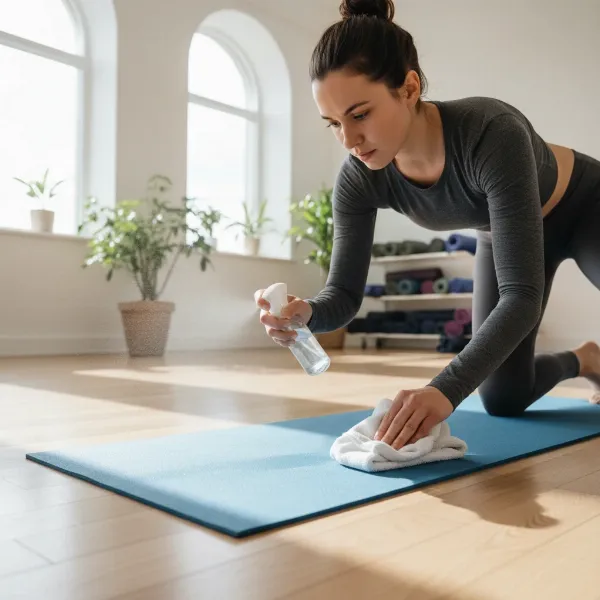 A person wiping down a yoga mat with a spray bottle and cloth after a sweaty class, focusing on hygiene and freshness
DIY Yoga Mat Cleaning Solutions
Creating your own cleaning solution is simple, cost-effective, and allows you to control the ingredients, opting for natural and mat-friendly options.
Gentle Soap & Water
This is a versatile and safe option for most mat types, especially for quick cleans or mild grime.
- Recipe: Mix a few drops of mild dish soap (eco-friendly and fragrance-free is best) with warm water in a spray bottle or bowl. A little goes a long way; too much soap can leave a slippery residue.
- Instructions: Spray the solution evenly onto your mat. Wipe thoroughly with a clean, damp cloth. Follow with another wipe using a cloth dampened only with plain water to remove any soap film. Air dry completely.
Vinegar or Witch Hazel Spray
Vinegar and witch hazel are natural astringents with mild disinfectant properties, making them excellent choices for sanitizing.
- Recipe: Combine 1 part white vinegar or witch hazel with 4 parts distilled water in a spray bottle. For natural rubber mats, some manufacturers recommend a more diluted solution, like 1 part vinegar to 20 parts water, to prevent material breakdown.
- Essential Oil Additions: For a pleasant scent and added antimicrobial benefits, add 2-10 drops of essential oils. Tea tree oil is highly recommended for its antiseptic qualities. Lavender and eucalyptus offer calming and refreshing aromas. Lemon and orange oils provide natural cleansing properties. Be cautious not to use too many drops, as excessive oil can make your mat slippery or damage certain materials.
- Instructions: Shake the bottle well before each use. Spray the mixture liberally onto your mat. Wipe down with a clean towel. Ensure the mat is fully dry before rolling or storing.
Commercial Yoga Mat Cleaners
For those seeking convenience or specific formulations, many excellent commercial yoga mat cleaners are available on the market.
- Benefits: These cleaners are often pre-mixed with mat-safe ingredients, designed to dry quickly, and may contain specific essential oil blends for a fresh scent. Brands like ASUTRA, Manduka, Lululemon, and Yoga Clean offer natural, organic, and eco-friendly options.
- Usage: Always follow the manufacturer’s instructions, as formulas can vary. Generally, you spray, wipe, and then air dry. Look for products that are non-toxic, free from harsh chemicals, and suitable for your specific mat material.
Special Considerations for Different Mat Types
While general cleaning principles apply, tailoring your approach to your mat’s material ensures its longevity and performance.
- Natural Rubber Mats: These open-cell mats are fantastic for grip but require delicate care.
- Avoid Soaking: Never immerse or soak natural rubber mats in water, as they absorb moisture and can bloat or degrade.
- Gentle Solutions: Use highly diluted solutions of mild soap and water (1:20 ratio of soap to water) or vinegar and water (1:20 vinegar to water) rather than stronger concentrations.
- Limit Essential Oils: Use essential oils sparingly (a few drops only) as some can break down rubber over time.
- Air Dry Indoors: Always air dry completely, laid flat or hung, but away from direct sunlight, which can oxidize and damage the rubber.
- PVC and TPE Mats: These closed-cell mats are more resilient.
- You can be a bit more liberal with mild soap and water solutions.
- Antibacterial wipes can also be used for a quick clean on closed-cell PVC mats, ensuring no residue is left behind.
- Cork Mats: Naturally antibacterial, cork benefits from simple cleaning.
- Wipe with a soft cloth dampened with cold water.
- For deeper cleaning, a small amount of gentle soap or white vinegar can be added to the water.
- Air dry completely, ideally laid flat.
Preventing Future Buildup
A consistent cleaning routine is your best defense against a dirty, smelly mat. However, a few proactive steps can further minimize buildup and prolong your mat’s cleanliness.
- Use a Yoga Towel: Laying a yoga towel over your mat, especially during hot yoga or intense sessions, can absorb most of the sweat, acting as a protective barrier. This significantly reduces the amount of sweat your mat absorbs directly.
- Wipe Yourself Down: Before stepping onto your mat, quickly wipe off excessive sweat from your body, especially hands and feet.
- Store Properly: Always ensure your mat is completely dry before rolling it up for storage. Store it in a cool, dry place, away from direct sunlight. If possible, store it unrolled or loosely rolled to allow for better air circulation. Avoid sealing a damp mat in an airtight bag, as this traps moisture and promotes odor.
“A clean mat isn’t just about aesthetics; it’s a foundation for a healthy, focused, and truly grounded practice. Your mat is your personal sanctuary, treat it with care, and it will support you faithfully.” – Admin, yogamatgo.com, Yoga Mat Expert
Conclusion
Maintaining a clean and disinfected yoga mat is an essential part of a healthy and fulfilling practice. By understanding your mat’s material and implementing a consistent cleaning routine—from a quick wipe-down after every sweaty session to a thorough deep clean weekly or bi-weekly—you can prevent the buildup of bacteria and odors, enhance your grip, and significantly extend your mat’s life. Whether you choose a simple DIY solution or a specialized commercial cleaner, the key is consistency and proper drying. A well-cared-for mat reflects a well-cared-for practice, allowing you to fully immerse yourself in the present moment. So, what cleaning ritual will you adopt to keep your yoga mat pristine?
Frequently Asked Questions
How often should I disinfect my yoga mat if I practice hot yoga?
If you practice hot yoga, it’s highly recommended to wipe down your mat with a disinfectant spray after every class and perform a deeper clean at least once a week to prevent bacteria and odor buildup from excessive sweat.
Can I use household cleaning wipes or sprays on my yoga mat?
It’s generally not advisable to use harsh household cleaning wipes or sprays, especially those containing alcohol or strong chemicals, as they can damage certain mat materials, particularly natural rubber, and leave behind slippery residues. Opt for mild, mat-specific cleaners or DIY solutions.
How can I remove stubborn odors from my yoga mat?
For stubborn odors, a deep clean with a vinegar and water solution (1:4 ratio, or 1:20 for rubber mats) combined with a few drops of tea tree essential oil can be effective. Ensure the mat is thoroughly scrubbed, rinsed, and completely air-dried in a well-ventilated area, away from direct sunlight.
Is it safe to use essential oils on all yoga mat types?
While essential oils can add a pleasant scent and some have antimicrobial properties, use them sparingly (2-10 drops) and always dilute them in a water or witch hazel solution. Excessive use or direct application of certain oils can break down the material of natural rubber mats or leave a slippery film on others.
What’s the best way to dry my yoga mat after cleaning?
The best way to dry your Yoga Mat is to lay it flat or hang it over a shower rod or clothesline, ensuring both sides get adequate airflow. Allow it to air dry completely for at least 12-24 hours before rolling it up. Avoid direct sunlight, especially for natural rubber mats, as UV rays can cause damage.