Stepping onto your mat is often the first step in your yoga journey, but selecting the right mat can be surprisingly complex. Among the myriad of factors like material, grip, and length, one stands out as paramount for both comfort and performance: thickness. The difference between a 3mm, 5mm, or 8mm yoga mat can profoundly impact your practice, from enhancing stability in balancing poses to providing crucial cushioning for sensitive joints. This comprehensive guide will dissect the nuances of each thickness, helping you navigate your options and find the perfect foundation for your unique yoga path.
Understanding Yoga Mat Thickness: Why It Matters
A yoga mat is far more than just a barrier between you and the floor; it’s an essential piece of equipment that provides a stable, cushioned, and hygienic surface for your practice. The thickness of your mat plays a pivotal role in this, directly influencing several key aspects of your yoga experience. It dictates the level of cushioning, impacting joint comfort during poses that put pressure on knees, wrists, or hips. It also affects stability, as a thicker, softer mat can make balancing poses more challenging by creating a less firm surface underfoot. Furthermore, mat thickness influences portability, with thinner mats being lighter and easier to transport, while thicker mats offer more substantial padding, often at the cost of being bulkier. Understanding these trade-offs is crucial for choosing a mat that truly supports your individual needs and yoga style.
The 3mm Yoga Mat: Precision and Portability
The 3mm yoga mat, often referred to as a “travel mat” or “performance mat,” represents the thinner end of the spectrum. It’s designed for yogis who prioritize a direct connection to the floor, valuing stability and portability above all else.
Advantages of 3mm Mats:
- Exceptional Stability: With minimal cushioning, a 3mm mat provides a firm, grounded surface, making it ideal for standing and balancing poses where you need to feel stable and connected to the earth. This enhances proprioception, your body’s awareness of its position in space.
- Superior Ground Feedback: The thin profile allows for excellent tactile feedback, enabling you to feel the nuances of your alignment and engage your muscles more effectively.
- Lightweight and Portable: These mats are incredibly easy to roll or fold and carry, making them perfect for commuting to the studio, traveling, or practicing outdoors. Many can even fit into a suitcase.
- Ideal for Dynamic Styles: For practices like Vinyasa, Ashtanga, or power yoga, where rapid transitions and strong foundational poses are common, the firmness of a 3mm mat prevents sinking and allows for swift movements.
Disadvantages of 3mm Mats:
- Minimal Cushioning: The primary drawback is the lack of padding. Individuals with sensitive joints (knees, wrists, hips) may find poses like kneeling lunges, tabletop, or plank uncomfortable, potentially leading to pain or the need for additional padding.
- Less Forgiving: It offers little protection from hard floors, which can be challenging for beginners still developing strength and proper alignment, or for those with existing joint issues.
Best For:
Experienced yogis who require precision and stability, practitioners of dynamic and fast-paced yoga styles, frequent travelers, and individuals who prefer maximum ground contact.
The 5mm Yoga Mat: The Versatile All-Rounder
The 5mm yoga mat is often considered the “standard” or “all-purpose” thickness, striking a harmonious balance between cushioning and stability. It’s a highly versatile option that caters to a broad range of practitioners and yoga styles.
Advantages of 5mm Mats:
- Balanced Comfort and Stability: This thickness offers a comfortable amount of cushioning to protect joints without compromising stability in balancing poses. It’s soft enough to prevent discomfort but firm enough to keep you grounded.
- Versatility: A 5mm mat is suitable for almost all yoga styles, from flowing Vinyasa sequences to slower Hatha or restorative practices. It adapts well to various demands.
- Good Joint Protection: It provides adequate padding for knees, wrists, and hips, reducing pressure and impact, which is beneficial for both beginners and regular practitioners who want to protect their joints.
- Manageable Portability: While slightly heavier and bulkier than a 3mm mat, a 5mm mat is still generally easy to transport to and from classes, especially with a carrying strap.
Disadvantages of 5mm Mats:
- May Not Be Enough for Extreme Sensitivity: For individuals with severe joint pain or medical conditions requiring extensive padding, even 5mm might not offer sufficient cushioning.
- Less Ground Feedback for Some: While offering good feedback, it’s not as direct as a 3mm mat, which some advanced yogis might miss.
Best For:
Beginners, intermediate practitioners, those practicing a variety of yoga styles, individuals seeking a good balance of comfort and stability for regular use, and yogis who attend studio classes frequently.
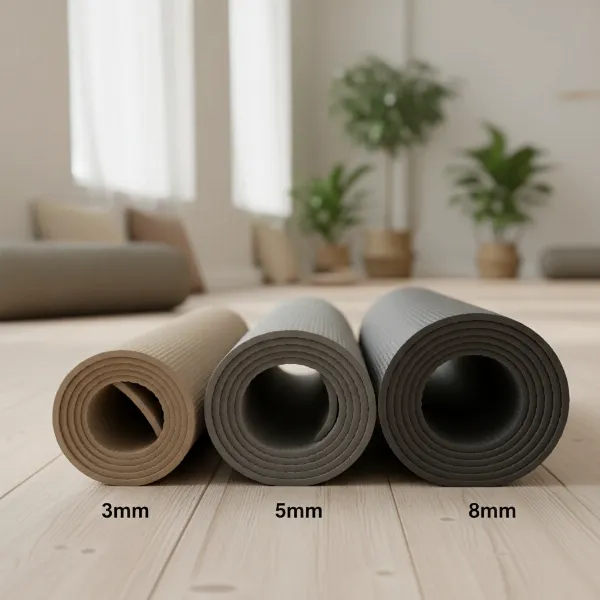 Three yoga mats of 3mm, 5mm, and 8mm thickness rolled up and side-by-side, on a wooden floor in a serene yoga studio setting. The mats are in neutral, calming colors. They highlight the different thickness profiles.
The 8mm Yoga Mat: Maximum Comfort and Support
An 8mm yoga mat, falling into the “extra-thick” category, is designed for those who prioritize plush cushioning and superior joint protection above all else. These mats transform your practice space into a soft haven.
Advantages of 8mm Mats:
- Superior Cushioning: The generous thickness provides maximum padding, making it incredibly comfortable for sensitive joints, bones, and pressure points. It’s a game-changer for poses that involve kneeling, sitting, or lying down for extended periods.
- Excellent Joint Protection: For individuals with knee pain, wrist issues, hip discomfort, or those recovering from injuries, an 8mm mat offers invaluable shock absorption, significantly reducing impact.
- Ideal for Restorative and Yin Yoga: These slower, more passive styles benefit immensely from the deep padding, allowing practitioners to fully relax into poses without discomfort. It’s also excellent for Pilates, core work, and rehabilitation exercises.
- Comfort for Beginners: New yogis who are still building strength and body awareness often appreciate the extra comfort and confidence an 8mm mat provides as they learn new poses.
Disadvantages of 8mm Mats:
- Reduced Stability: The softness of an 8mm mat can make balancing poses more challenging, as the cushioned surface creates instability. It might feel like “sinking” into the mat.
- Limited Ground Feedback: The significant padding reduces your connection to the floor, which can hinder fine-tuning alignment for some practitioners.
- Bulkier and Heavier: These mats are considerably less portable than thinner options, making them less convenient for travel or carrying to a studio. They are often best suited for home practice.
- Not Ideal for Dynamic Styles: For fast-paced, dynamic practices, the extra cushioning can slow down transitions and make it harder to push off the mat effectively.
Best For:
Individuals with joint pain or sensitivities, those practicing restorative, Yin, or gentle yoga styles, Pilates enthusiasts, beginners seeking maximum comfort, pregnant individuals, and anyone who prefers a deeply cushioned surface for home practice.
Comparison Table: 3mm vs. 5mm vs. 8mm Yoga Mats
To help you visualize the differences, here’s a detailed comparison:
| Feature | 3mm Mat | 5mm Mat | 8mm Mat |
|---|---|---|---|
| Cushioning | Low | Moderate | High |
| Stability | Very High (firm ground feel) | High (good balance of firm and soft) | Moderate/Low (can feel “squishy”) |
| Ground Feedback | Excellent | Good | Limited |
| Portability | Excellent (lightweight, foldable) | Good (manageable for studio use) | Fair/Poor (bulky, heavier) |
| Joint Protection | Minimal | Good | Excellent |
| Ideal For | Dynamic flows, balance poses, hot yoga, travel, advanced practitioners | General practice, most yoga styles, beginners, regular studio use | Restorative, Yin, Pilates, joint pain relief, home practice, rehabilitation, pregnancy |
| Typical User | Advanced yogis, travelers, those prioritizing stability | Everyday yogis, beginners, versatile practitioners | Those with sensitive joints, comfort seekers, restorative practice |
How to Choose Your Perfect Yoga Mat Thickness
Choosing the right yoga mat thickness is a personal decision that depends on several factors:
Your Yoga Style
- Dynamic Styles (Vinyasa, Ashtanga, Power Yoga): If your practice involves rapid transitions, inversions, and a strong emphasis on balance, a thinner mat (3mm to 5mm) will provide the necessary stability and ground feedback.
- Slower Styles (Yin, Restorative, Hatha, Meditation): For practices where you hold poses for longer durations or require ample support for seated and reclined postures, a thicker mat (5mm to 8mm or more) offers superior comfort and cushioning.
|
Our Picks for the Best Yoga Mat in 2026
As an Amazon Associate I earn from qualifying purchases.
|
||
| Num | Product | Action |
|---|---|---|
| 1 | Amazon Basics Extra Thick Exercise Yoga Mat with Carrying Strap |

|
| 2 | Amazon Basics Extra Thick Exercise Yoga Mat with Carrying Strap |
|
| 3 | MICRODRY Deluxe Fitness Exercise Yoga Mat for Home & Gym, Extra Thick for High Impact Training, Multi Layered Skid Resistant Surface, Odor Neutralizing with Carrying Strap |
|
| 4 | Amazon Basics Extra Thick Exercise Yoga Mat with Carrying Strap |
|
| 5 | Gruper Yoga Mat Non Slip, Eco Friendly Fitness Exercise Mat with Carrying Strap,Pro Yoga Mats for Women,Workout Mats for Home, Pilates and Floor Exercises |
|
| 6 | CAP Barbell High Density Exercise Yoga Mat with strap, 68"x24"x 1/2" - Sage Green |
|
| 7 | Retrospec Solana Yoga Mat 1" Thick w/Nylon Strap for Men & Women - Non Slip Exercise Mat for Home Yoga, Pilates, Stretching, Floor & Fitness Workouts |
|
| 8 | Retrospec Solana Yoga Mat 1/2" Thick w/Nylon Strap for Men & Women - Non Slip Excercise Mat for Yoga, Pilates, Stretching, Floor & Fitness Workouts |
|
| 9 | Amazon Basics 1/4 Inch Thick TPE Exercise Yoga Mat with Carrying Strap |
|
| 10 | Retrospec Solana Yoga Mat 1" Thick w/Nylon Strap for Men & Women - Non Slip Exercise Mat for Home Yoga, Pilates, Stretching, Floor & Fitness Workouts |
|
Joint Health & Body Type
- Sensitive Joints: If you experience pain in your knees, wrists, hips, or spine, or if you’re recovering from an injury, opting for a thicker mat (5mm to 8mm) is highly recommended. The extra padding can significantly reduce discomfort and protect your joints.
- Body Weight: Individuals with higher body weights may benefit from thicker mats to provide sufficient cushioning and prevent their bones from digging into the floor.
- Seeking Precision: Advanced yogis or those focusing on subtle alignment often prefer thinner mats to feel more connected to the floor and refine their balance.
Portability Needs
- Frequent Traveler/Commuter: If you often travel or commute to different studios, a lightweight and easily packable 3mm mat will be your best companion.
- Studio Regular: A 5mm mat is generally a good choice for regular studio-goers, offering a balance of comfort and reasonable portability.
- Home Practitioner: If your practice is primarily at home, portability is less of a concern, allowing you to choose a thicker, more cushioned mat (8mm) for maximum comfort without compromise.
Personal Preference
Ultimately, the “best” thickness comes down to what feels right for you. If possible, try out different mats. Many studios offer mats for rent, or you might have friends with different thicknesses you can test. Pay attention to how your body feels in various poses on different mats.
> “The ideal yoga mat thickness isn’t universal; it’s a deeply personal choice that evolves with your practice and body’s needs. Listen to your body, not just the trends.” – Maya Sharma, Certified Yoga Therapist
Mẹo Vệ Sinh Và Bảo Quản Yoga Mat
Proper care extends the life of your yoga mat, regardless of its thickness.
- Regular Cleaning: After each practice, wipe down your mat with a damp cloth and a mild, natural cleaning solution (like diluted white vinegar or a specialized mat spray). This removes sweat, dirt, and oils.
- Thorough Cleaning: For deeper cleaning, especially for thicker mats that absorb more, you can gently wash with warm water and a small amount of mild soap, then rinse thoroughly.
- Proper Drying: Always allow your mat to air dry completely before rolling it up. Hang it over a shower rod or lay it flat in a shaded, well-ventilated area. Avoid direct sunlight, which can degrade certain materials like natural rubber.
- Correct Storage: Roll your mat loosely, rather than folding it tightly, to prevent creases and damage. Store it in a cool, dry place away from direct heat or sunlight. If not in use for extended periods, a mat bag can offer additional protection.
Top Yoga Mat Recommendations by Thickness
While specific brands vary, here are general recommendations based on thickness categories:
- For the 3mm Enthusiast (Precision & Travel): Look for mats made from natural rubber or high-performance TPE. These materials offer excellent grip and density at a thin profile, ensuring stability without too much give. Prioritize “travel” or “performance” specific lines from reputable brands.
- For the 5mm All-Rounder (Balance & Versatility): Mats in this range are widely available in various materials like natural rubber, TPE, and even high-quality PVC (often labeled as eco-PVC). Focus on a good balance of durability, grip, and comfort that suits your general practice.
- For the 8mm Comfort Seeker (Cushioning & Support): Thicker mats are often made from TPE or eco-friendly PVC. Look for options specifically marketed for “extra cushioning” or “joint support.” Ensure the material still provides adequate grip, as some very soft mats can be slippery.
Mua Yoga Mat Ở Đâu Uy Tín?
Investing in a quality yoga mat is an investment in your practice.
- Specialty Yoga Stores: These shops often have knowledgeable staff who can offer personalized recommendations and allow you to test different mats.
- Online Retailers: Major online platforms offer a vast selection, often with customer reviews that can be very helpful. Be sure to check return policies, especially if you’re unsure about the thickness or material.
- Brand Websites: Purchasing directly from a reputable yoga mat brand’s website often provides the most comprehensive information and guarantees.
Buying Guide Checklist
Before making your final decision, consider this checklist:
- Budget: Determine how much you’re willing to spend. Quality mats are an investment, but options exist for every price point.
- Frequency of Practice: If you practice daily, investing in a durable, high-quality mat that matches your needs is worthwhile.
- Type of Yoga: Ensure the mat’s characteristics align with the primary style(s) you practice.
- Personal Factors: Don’t overlook details like color, design, and preferred material (e.g., eco-friendly, natural rubber for superior grip).
- Grip & Texture: Confirm the mat offers sufficient grip, especially if you tend to sweat, regardless of thickness.
Conclusion
The journey to finding your perfect yoga mat thickness is an exploration of your personal needs, practice style, and comfort preferences. Whether you choose the grounded stability of a 3mm mat, the versatile balance of a 5mm mat, or the plush support of an 8mm mat, remember that the most effective mat is one that empowers you to deepen your practice without distraction or discomfort. By understanding the distinct advantages and considerations of each thickness, you can make an informed decision that truly elevates your time on the mat. So, which yoga mat thickness will best support your journey to strength, flexibility, and inner peace?
Frequently Asked Questions
Is a 3mm yoga mat too thin for most people?
A 3mm yoga mat is not too thin for everyone; it’s ideal for advanced practitioners, travelers, and those who prioritize stability and ground feedback in dynamic styles like Vinyasa. However, beginners or individuals with sensitive joints may find it lacks sufficient cushioning for comfort and joint protection.
Is a 5mm yoga mat good for beginners?
Yes, a 5mm yoga mat is often highly recommended for beginners. It offers an excellent balance of cushioning to protect joints and provide comfort, alongside enough stability to build confidence in balancing poses. Its versatility makes it suitable for exploring various yoga styles.
What is the best yoga mat thickness for joint pain?
For individuals experiencing joint pain, an 8mm Yoga Mat is generally the best choice. Its superior cushioning provides maximum protection and shock absorption for sensitive knees, wrists, hips, and spine, making restorative and gentle practices significantly more comfortable.
Can I use an 8mm mat for Vinyasa?
While you can use an 8mm mat for Vinyasa, it’s generally not ideal. The deep cushioning can reduce stability, making balancing poses more challenging and potentially hindering rapid transitions. Most practitioners of dynamic styles prefer thinner mats (3mm-5mm) for better ground feedback and stability.