Have you ever found yourself sliding in Downward Dog, losing your focus as your hands or feet betray your carefully held pose? A slippery yoga mat can be a significant hindrance, turning a peaceful practice into a frustrating battle against gravity. When sweat, a new mat, or simply the mat’s material compromises your stability, finding a reliable solution becomes essential for both safety and progress. Fortunately, natural and effective aids like rosin and chalk can transform your grip, allowing you to anchor firmly into every posture.
This comprehensive guide will delve into how rosin and chalk work, compare their benefits, and offer practical advice to help you choose the best option for a more secure and enjoyable yoga experience.
Yoga Mat Grip: Why It Matters
The ability to maintain a strong, consistent grip on your yoga mat is fundamental to a successful and safe practice. Without it, your focus shifts from inner alignment and breath to preventing slips, which can lead to instability, frustration, and even potential injury. Good grip provides the secure foundation needed to explore deeper stretches, hold challenging balances, and transition smoothly between poses.
Several factors can contribute to a slippery mat. The most common culprit is sweat and moisture buildup, especially during intense vinyasa flows or hot yoga classes. New mats often come with a thin protective film from the manufacturing process that needs to be “broken in” before optimal grip is achieved. Over time, accumulated dirt, oils from your skin, or residues from cleaning products can also diminish your mat’s natural traction.
Understanding Rosin for Yoga Mat Grip
Rosin, often derived from natural tree resins, is a time-tested substance used across various disciplines, from ballet to weightlifting, for its remarkable grip-enhancing properties. In the context of yoga, rosin primarily works by absorbing perspiration and creating a slightly tacky surface, which significantly increases friction between your skin and the mat.
You’ll typically find rosin available in small bags containing powdered form or as a liquid solution. Rosin bags are convenient; a quick pat on your hands and feet before or during practice absorbs moisture, providing an immediate boost to your grip. Liquid rosin, often a mix of rosin with alcohol, offers a less messy application, drying quickly to leave a thin, grippy layer. Many yogis appreciate rosin for its natural origin and non-sticky feel, allowing for improved stability without a heavy, artificial coating. It’s particularly favored by those seeking a subtle enhancement that works effectively with their body’s natural moisture.
Understanding Chalk for Yoga Mat Grip
Chalk, most commonly in the form of magnesium carbonate, is another potent ally against a slippery yoga mat. Unlike rosin’s tackiness, chalk’s primary mechanism is to absorb moisture and create an extremely dry surface. This effectively eliminates the slickness caused by sweat, providing a high-friction environment that helps you maintain a firm hold.
Chalk comes in various forms to suit different preferences. Loose powdered chalk offers maximum drying power, though it can create a visible cloud. For a cleaner experience, many yogis opt for liquid chalk, which is magnesium carbonate suspended in an alcohol-based gel. This solution dries rapidly upon application, leaving a thin, even layer of chalk on your hands and feet without the powdery mess. It’s an excellent choice for closed-cell mats and for practitioners who sweat profusely, offering robust grip control that feels dry and clean, rather than sticky.
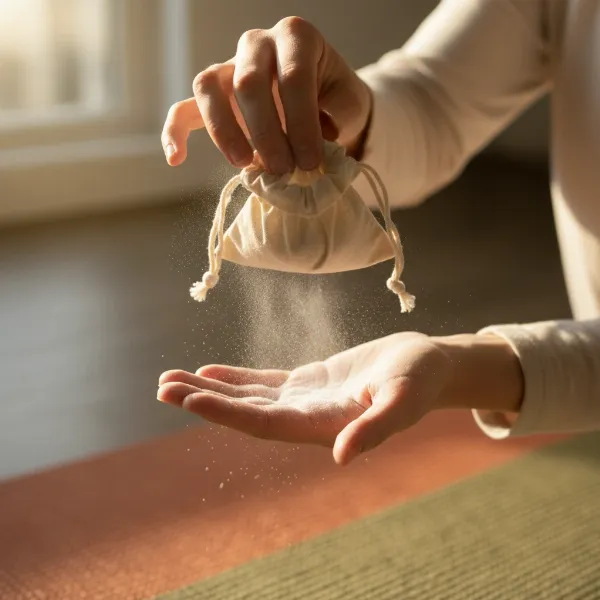 A yogi applying rosin or liquid chalk to their hands before a yoga session on a mat, focusing on enhanced grip and stability
Rosin vs. Chalk: A Comparison for Yoga Practitioners
Deciding between rosin and chalk often comes down to personal preference, the type of yoga you practice, and your individual body chemistry. Both are effective, but they achieve enhanced grip through slightly different means and offer distinct experiences.
| Feature | Rosin | Chalk (Magnesium Carbonate) |
|---|---|---|
| Primary Action | Absorbs perspiration, creates mild tackiness | Absorbs moisture, creates a dry, high-friction surface |
| Forms | Powder (in a bag), Liquid | Powder, Liquid (alcohol-based gel) |
| Feeling | Subtle tackiness, enhances natural grip | Dry, finely textured, non-sticky |
| Best For | Moderate sweat, preference for natural feel | Significant sweat, strong, immediate drying effect |
| Residue | Minimal, can feel sticky if over-applied | Visible white powder (less with liquid forms) |
| Ease of Use | Simple pat/rub application | Quick application, liquid dries quickly |
For those who prefer a more natural feel and experience moderate sweating, rosin can offer a gentle yet effective grip enhancement. If you engage in hot yoga, power yoga, or simply have very sweaty palms and feet, chalk, especially in its liquid form, might provide the superior drying power and robust grip you need.
Beyond Rosin and Chalk: Other Grip Enhancers & Tips
While rosin and chalk are excellent direct solutions, enhancing your yoga mat grip can also involve other strategies and accessories that work in tandem with or as alternatives to these aids.
One of the most popular methods is using a yoga towel. These specialized towels, often made from microfiber and sometimes featuring silicone nubs on the underside, are laid directly over your mat. They absorb sweat, and many become even grippier when slightly damp, making them ideal for hot yoga or practitioners who sweat a lot.
Maintaining your mat with regular cleaning is also paramount. A buildup of dirt, body oils, and residue can significantly reduce traction. A simple solution of water mixed with a few drops of mild soap or a quarter cup of white vinegar can effectively clean your mat without leaving a slippery film. Always ensure your mat is thoroughly dry before rolling it up or using it.
For new mats, a “break-in” period is often necessary. Some yogis gently scrub their new PVC mats with a sea salt solution to remove the factory film, then rinse and dry. Consistent use will also naturally wear down this initial slickness, gradually improving grip over time.
Don’t underestimate the power of proper form and engagement. Actively pressing through your fingertips and distributing your weight evenly can create a stronger connection to the mat, reducing reliance on external grip aids. Additionally, grippy gloves or socks designed for yoga can offer an immediate solution for persistent slipping, especially for those who travel or practice on less-than-ideal surfaces.
Choosing the Right Grip Aid for You
Selecting the perfect grip aid involves a bit of personal experimentation, as what works wonders for one yogi might not be ideal for another. Consider these factors when making your choice:
- Your Sweat Level: If you experience minimal to moderate sweating, a rosin bag might be sufficient to provide that extra bit of traction. For heavy sweaters, especially in hot yoga, liquid chalk or powdered chalk will offer more robust moisture absorption.
- Your Mat Material: Most grip aids are versatile, but some mats might react differently. For example, open-cell mats designed to absorb sweat may not benefit as much from additional drying agents directly on the mat surface itself. Closed-cell mats, which are less absorbent, often benefit greatly from applied grip enhancers.
- Personal Preference for Feel: Do you prefer a slightly tacky sensation or a completely dry, chalky feel? Rosin provides a subtle tack, while chalk delivers a distinct dry texture.
- Mess Tolerance: Powdered chalk can be messy, leaving white marks on your mat and clothing. Liquid chalk and rosin bags are generally cleaner options.
- Natural vs. Synthetic: If you prioritize natural products, rosin (derived from tree resin) might appeal more than synthetic magnesium carbonate chalk.
Ultimately, the best approach is to try a few different options to see what feels most comfortable and effective for your unique practice.
Cleaning Your Mat After Using Grip Aids
Incorporating rosin or chalk into your routine means adding a few simple steps to your mat cleaning regimen to maintain its longevity and hygiene. Both substances, if left on the mat indefinitely, can build up or attract dirt.
For rosin, a mild soap and water solution is usually effective. Mix a small amount of gentle dish soap with warm water in a spray bottle, mist your mat, and wipe it down with a soft cloth. Pay extra attention to areas where you apply the rosin to ensure any residue is removed. Rinse thoroughly with a damp cloth and allow to air dry completely.
For chalk, particularly if you use powdered forms, you’ll want to brush off any excess after practice. A slightly damp cloth with water, or a vinegar and water solution (half a cup of white vinegar to a cup of water), can then be used to wipe away chalk residue. This solution not only cleans but also helps to restore the mat’s natural pH and can enhance its inherent stickiness. Always avoid harsh chemicals or abrasive scrubbers, which can damage your mat’s surface and actually reduce its grip over time. Regular, gentle cleaning will keep your mat fresh and ready for your next session.
“A good yoga mat grip isn’t just about comfort; it’s the invisible foundation that empowers you to explore your fullest potential in every pose.” – Admin, yogamatgo.com
Conclusion
|
Our Picks for the Best Yoga Mat in 2026
As an Amazon Associate I earn from qualifying purchases.
|
||
| Num | Product | Action |
|---|---|---|
| 1 | MICRODRY Deluxe Fitness Exercise Yoga Mat for Home & Gym, Extra Thick for High Impact Training, Multi Layered Skid Resistant Surface, Odor Neutralizing with Carrying Strap |

|
| 2 | Retrospec Solana Yoga Mat 1/2" Thick w/Nylon Strap for Men & Women - Non Slip Excercise Mat for Yoga, Pilates, Stretching, Floor & Fitness Workouts |
|
| 3 | Amazon Basics Extra Thick Exercise Yoga Mat with Carrying Strap |
|
| 4 | CAP Barbell High Density Exercise Yoga Mat with strap, 68"x24"x 1/2" - Sage Green |
|
| 5 | Retrospec Solana Yoga Mat 1" Thick w/Nylon Strap for Men & Women - Non Slip Exercise Mat for Home Yoga, Pilates, Stretching, Floor & Fitness Workouts |
|
| 6 | Amazon Basics Extra Thick Exercise Yoga Mat with Carrying Strap |
|
| 7 | Amazon Basics 1/4 Inch Thick TPE Exercise Yoga Mat with Carrying Strap |
|
| 8 | Amazon Basics Extra Thick Exercise Yoga Mat with Carrying Strap |
|
| 9 | Retrospec Solana Yoga Mat 1" Thick w/Nylon Strap for Men & Women - Non Slip Exercise Mat for Home Yoga, Pilates, Stretching, Floor & Fitness Workouts |
|
| 10 | Gruper Yoga Mat Non Slip, Eco Friendly Fitness Exercise Mat with Carrying Strap,Pro Yoga Mats for Women,Workout Mats for Home, Pilates and Floor Exercises |
|
A slippery yoga mat doesn’t have to hinder your practice or your progress. By understanding the unique properties of rosin and chalk, you can effectively combat sweat and enhance your grip, transforming your stability and confidence on the mat. Whether you opt for the natural tackiness of rosin, the potent drying power of chalk, or a combination of methods, finding the right solution will allow you to focus more deeply on your breath and alignment.
Don’t let a sliding mat be a barrier to your yoga journey. Experiment with these trusted grip aids and supportive practices to find your perfect anchor. Which solution will you try first to elevate your flow?
Frequently Asked Questions
Can I use regular gym chalk for my yoga practice?
While regular gym chalk (magnesium carbonate) is essentially the same as what’s used for yoga, liquid chalk is generally recommended for yoga to minimize mess and dust in a studio environment. Powdered gym chalk can create a significant residue on your mat and the floor around you.
Will rosin or chalk damage my yoga mat?
When used correctly and in moderation, both rosin and chalk are generally safe for most yoga mats. However, prolonged buildup without proper cleaning could potentially affect the mat’s texture over time. Always clean your mat regularly to remove any residue and follow your mat manufacturer’s care instructions.
How often should I apply rosin or chalk during a yoga session?
The frequency depends on your individual sweat level and the intensity of your practice. Many find applying it once at the beginning of a session is enough. For hot yoga or if you sweat profusely, reapplication might be necessary during class, particularly before challenging poses where grip is critical.
Are there any side effects of using rosin or chalk on my skin?
Both rosin and chalk are generally safe for skin contact. However, some individuals might have sensitive skin or allergies to certain natural resins (in the case of rosin) or experience dryness from chalk due to its moisture-absorbing properties. If irritation occurs, discontinue use and wash your hands thoroughly.
Can I use these grip aids on all types of yoga mats?
Rosin and chalk are most effective on closed-cell Yoga Mats (like PVC or TPE) where they can directly interact with the surface and your skin. For open-cell mats (like natural rubber), which are designed to absorb sweat, these aids might still provide additional grip but should be used sparingly to avoid clogging the mat’s pores.