The journey to inner peace often begins before you even unroll your mat. For many yogis, the seemingly simple act of transporting their mat can become a daily ritual—or a daily challenge. Juggling your mat, water bottle, keys, and phone can quickly turn your pre-yoga calm into pre-yoga chaos. This is where dedicated yoga mat carriers come into play. But with a plethora of options on the market, how do you choose between the streamlined simplicity of a yoga mat strap and the comprehensive functionality of a yoga mat bag? Understanding their distinct advantages and disadvantages is key to finding the perfect companion for your practice.
What is a Yoga Mat Carrier and Why Do You Need One?
A yoga mat carrier is a specialized accessory designed to transport your yoga mat safely and conveniently. Beyond merely holding your rolled-up mat, these carriers play a crucial role in protecting your mat from dirt, moisture, and potential damage during transit. Whether you commute to a studio, practice outdoors in a park, or travel frequently, a good carrier enhances portability and hygiene, freeing up your hands for other essentials. Essentially, it’s an investment that can prolong your mat’s lifespan, improve your comfort, and streamline your yoga routine.
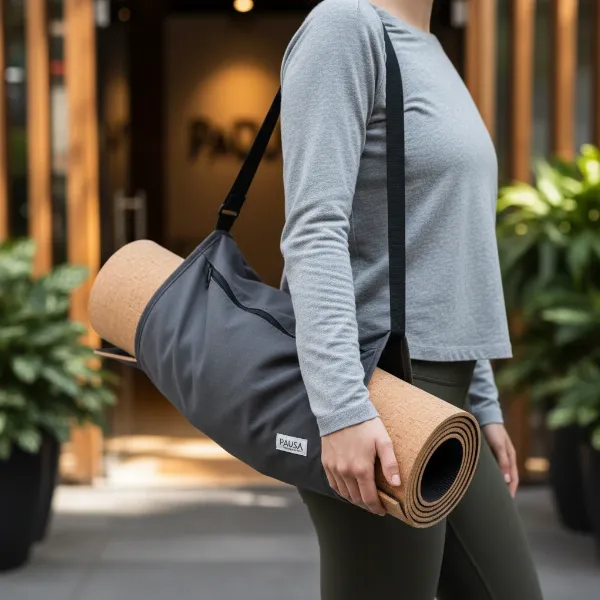 Yogi effortlessly carrying a rolled yoga mat, illustrating convenience and protection of a mat carrier.
Yoga Mat Straps: The Minimalist’s Choice
For those who embrace simplicity and prefer to travel light, a yoga mat strap is an excellent choice. These carriers typically consist of a simple, adjustable fabric loop or webbing that securely wraps around your rolled-up mat. The strap then allows you to comfortably carry your mat over your shoulder or across your body, offering hands-free transport without any added bulk.
The primary appeal of yoga mat straps lies in their lightweight nature and affordability. They are often the most budget-friendly option, making them ideal for beginners or those who only need to carry their mat for short distances. Many straps also boast dual functionality, serving as stretching aids during your practice to deepen poses and improve flexibility. They are incredibly easy to use and pack, fitting effortlessly into a small bag when not in use.
However, the minimalist design comes with its limitations. Yoga mat straps offer minimal protection for your mat, leaving it exposed to the elements, dirt, and potential scuffs. Crucially, they provide no additional storage, meaning you’ll need a separate bag for your water bottle, phone, keys, or any other accessories. For longer commutes or heavier mats, a thin strap can also become uncomfortable, potentially digging into your shoulder over time. Yoga mat straps are best suited for minimalist yogis, those who practice outdoors in dry weather, or individuals taking short walks to nearby classes.
Yoga Mat Bags: The All-in-One Solution
In contrast to the simplicity of straps, yoga mat bags offer a more comprehensive and organized solution for transporting your mat and essentials. These carriers typically resemble duffel or tote bags, designed to fully enclose your yoga mat. They often feature zipper or drawstring closures, adjustable shoulder straps, and multiple compartments.
The standout benefit of a yoga mat bag is its superior protection. By fully enclosing your mat, it shields it from dirt, dust, rain, and other environmental factors, keeping your mat clean and ready for use. Furthermore, most yoga mat bags are equipped with ample storage space, including dedicated pockets and compartments for your water bottle, towel, yoga blocks, keys, phone, and even a change of clothes. This allows for hands-free carrying while keeping all your gear neatly organized and secure in one place.
Many yoga mat bags prioritize comfort, especially for commuters. They often feature padded, adjustable shoulder straps that distribute the mat’s weight evenly, reducing strain during longer journeys. Backpack-style yoga carriers offer even more ergonomic weight distribution, making them ideal for urban commuters or those who bike to class. While generally bulkier and potentially heavier than straps, and often coming at a higher price point, the added functionality, protection, and organizational benefits make them a valuable investment for frequent practitioners. Yoga mat bags are perfect for studio and gym regulars, commuters, those who carry extra gear, and anyone who prioritizes cleanliness, organization, and mat protection.
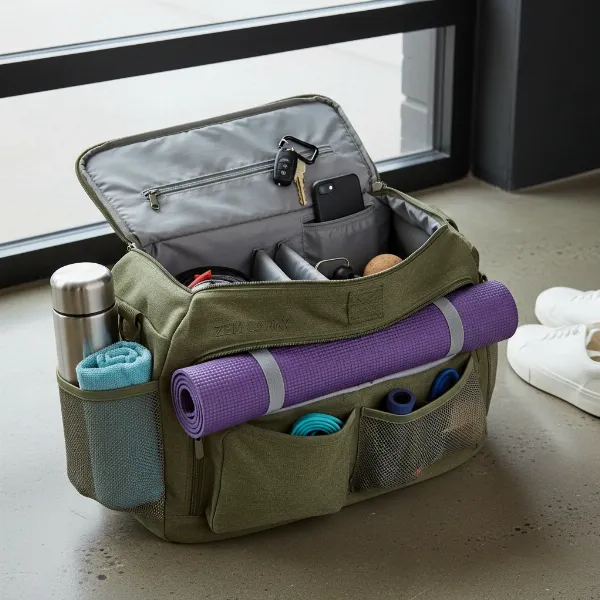 Yoga mat bag open, revealing organized compartments for mat, water bottle, towel, and phone.
A Detailed Comparison: Straps vs. Bags
Let’s break down the key differences to help you visualize which option aligns best with your yoga lifestyle:
| Feature | Yoga Mat Straps | Yoga Mat Bags |
|---|---|---|
| Protection | Minimal (mat exposed to elements) | Full (mat enclosed, protected from dirt, weather) |
| Storage | None | Ample (pockets for essentials, yoga gear) |
| Comfort | Lightweight, can cause discomfort on long distances or with heavy mats | Padded, adjustable straps for even weight distribution; good for commutes |
| Portability | Very lightweight, easy to use, compact | Can be bulkier, but offers hands-free carrying and organization |
| Cost | More affordable (typically $8-$30) | Wider price range (typically $20-$90+), reflects features and materials |
| Versatility | Can double as a stretching tool | Can carry other gym/personal items, various styles (tote, duffel, backpack) |
| Ideal User | Minimalist, short walks, outdoor yoga, budget-conscious | Commuters, those with extra gear, valuing organization, cleanliness, and protection |
Choosing Your Perfect Yoga Mat Carrier: Key Considerations
Selecting the ideal yoga mat carrier is a personal decision that hinges on several factors related to your practice and lifestyle:
- Commute & Lifestyle: How often do you practice, and how do you get there? If you walk short distances or practice at home, a strap might suffice. For daily commutes via public transport, bike, or car, a bag offers greater convenience and protection.
- Storage Needs: Do you carry only your mat, or do you bring a towel, water bottle, blocks, or personal items? If you need to carry extras, a bag with multiple compartments is indispensable.
- Mat Protection: Is shielding your mat from dirt, dust, and rain a priority? A fully enclosed bag provides comprehensive protection, especially for delicate or eco-friendly mat materials.
- Budget: Basic straps are generally more affordable, while bags vary widely in price based on materials, features, and brand. Determine what you’re willing to invest for the benefits offered.
- Material & Style: Carriers come in various materials, from breathable cotton and canvas to durable, water-resistant nylon and polyester. Consider if you prefer a minimalist, chic, sporty, or eco-friendly aesthetic.
- Comfort: Look for padded, adjustable straps if you have a heavier mat or anticipate long carrying durations to minimize shoulder strain.
Essential Tips for Care and Maintenance
Proper care of your yoga mat carrier will ensure its longevity and maintain hygiene:
- Cleaning: Most straps and bags can be spot-cleaned with mild soap and water. For machine-washable options, always follow the manufacturer’s label instructions.
- Drying: Before storing your mat in a bag, ensure it’s completely dry to prevent mildew and odor buildup. Ideally, air out both your mat and carrier regularly.
- Storage: Store your carrier in a dry, ventilated place when not in use. Avoid overloading bags beyond their recommended weight limits to prevent strain on seams and zippers.
- Durability Check: Periodically inspect straps, buckles, and zippers for signs of wear and tear, and address any issues promptly to prevent breakage.
Popular Yoga Mat Carrier Styles Beyond the Basics
Beyond the core strap and bag dichotomy, you’ll find specialized variants:
- Yoga Mat Sleeves: These are tube-like covers that fully enclose your mat, offering excellent protection from dust and moisture. They typically have limited accessory storage, making them ideal for those with premium mats who prioritize safeguarding.
- Yoga Mat Backpacks: Designed for ergonomic weight distribution with two padded shoulder straps, backpacks offer high storage capacity and often include dedicated compartments for laptops or other gear. They are recommended for urban commuters, teachers, or those with multi-activity lifestyles.
- Yoga Mat Tote Bags: Combining fashion with function, these stylish bags are roomy enough for your mat and other personal items, making them versatile for both studio and everyday use.
Conclusion
Ultimately, the choice between a yoga mat strap and a yoga mat bag boils down to your personal yoga journey. If you value simplicity, lightweight portability, and a budget-friendly solution for short trips with minimal gear, a yoga mat strap will serve you well, perhaps even doubling as a stretching tool. However, if your routine involves commuting, carrying multiple accessories, or you prioritize comprehensive mat protection and organization, investing in a durable and feature-rich yoga mat bag will significantly enhance your comfort and convenience. Reflect on your daily habits, your specific needs, and your personal style to select the carrier that empowers you to show up consistently, stay organized, and fully embrace your practice.
Frequently Asked Questions
What is the main difference between a yoga mat bag and a sling strap?
A yoga mat bag fully encloses your mat, often with zippers and pockets for extra storage, offering protection and organization. A sling strap, conversely, is a simple, adjustable loop designed only to carry the mat, prioritizing lightweight convenience without storage or full protection.
How does a yoga mat bag with pockets improve convenience?
A yoga mat bag with pockets allows you to carry essentials like water bottles, towels, and keys alongside your mat, keeping everything organized in one carrier. This is especially beneficial for commuters or anyone who brings extra gear to class, eliminating the need to juggle multiple items.
Who should consider using a sling yoga strap over a yoga mat bag?
Minimalist yogis who only need to transport their mat and prefer a lightweight, budget-friendly option will benefit most from a sling strap. It’s perfect for short walks or casual outdoor practice but lacks the storage and comprehensive mat protection of a bag.
Are adjustable yoga mat bags better for long commutes than sling straps?
Yes, adjustable yoga mat bags, especially those with padded shoulder straps or a backpack design, distribute weight more evenly and protect your mat from elements. This provides significantly more comfort and convenience for longer commutes compared to the minimal design of sling straps.
What price range can I expect for quality yoga mat bags versus sling straps?
Quality Yoga Mat bags typically range from $20 to over $90, depending on features, materials, and design. Sling straps are generally more affordable, usually falling between $8 and $30, offering a simple and economical solution for carrying your mat without extra storage.