Are you an avid yogi, or perhaps just starting your journey, but constantly battling knee discomfort during your practice? You’re not alone. Many individuals experience knee pain during yoga, often finding standard mats lack the necessary cushioning and support. The good news is, a specially designed yoga mat can transform your practice, making it comfortable, safe, and truly enjoyable. This comprehensive guide will walk you through everything you need to know to choose the best yoga mat for bad knees, ensuring your joints are protected and your focus remains on your breath and movement, not pain.
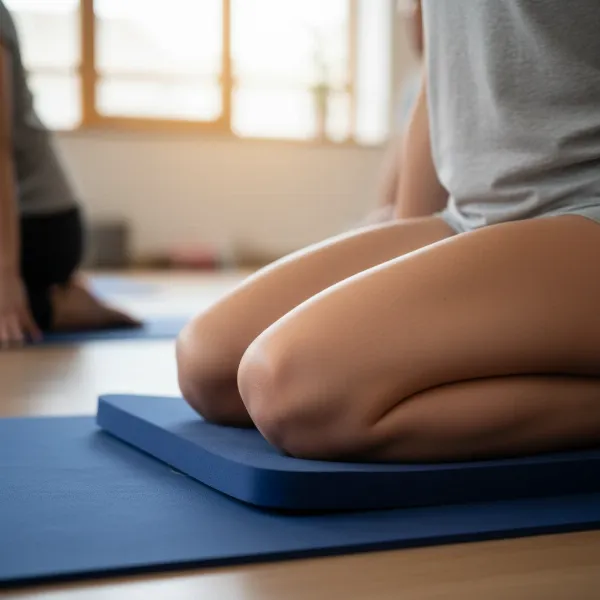 A person practicing yoga on a thick, cushioned mat, protecting their knees
What is a Yoga Mat and Why is it Essential for Your Practice?
A yoga mat is a specially designed padded surface used for practicing yoga and other floor exercises. Its primary role is to provide a stable, non-slip surface, preventing you from sliding during poses and offering a hygienic barrier from the floor. For those with sensitive knees or joint issues, a high-quality yoga mat becomes even more critical. It acts as a shock absorber, cushioning your joints against hard surfaces, reducing pressure, and enhancing overall comfort during kneeling, seated, and even standing poses. Investing in a mat tailored for knee health ensures a sustainable and pain-free yoga journey.
Exploring Popular Yoga Mat Materials: A Detailed Comparison
The material of your yoga mat significantly impacts its thickness, density, grip, and environmental footprint. Understanding the characteristics of each will help you select the ideal mat for your needs.
PVC Yoga Mats
PVC (polyvinyl chloride) mats are a long-standing popular choice in the yoga community.
- Pros: Generally affordable, highly durable, easy to clean, and offer good grip. They maintain their structure well, providing stable support.
- Cons: PVC is not biodegradable and its production can involve harmful chemicals, raising environmental concerns for some practitioners.
- Best for: Beginners, budget-conscious yogis, and those prioritizing durability and easy maintenance. They offer a good balance of cushioning and stability.
TPE Yoga Mats
TPE (Thermoplastic Elastomer) mats are a newer, more eco-friendly alternative to PVC.
- Pros: Environmentally friendly (often recyclable and biodegradable), latex-free, and lighter than rubber mats. They provide good cushioning and a decent grip.
- Cons: May be less durable than PVC or natural rubber, and their grip can vary between brands.
- Best for: Environmentally conscious practitioners, those with latex allergies, and individuals seeking a good balance of cushioning and portability.
Natural Rubber Yoga Mats
Harvested from rubber trees, natural rubber mats are celebrated for their superior performance.
- Pros: Excellent, non-slip grip even when wet, outstanding cushioning, and highly eco-friendly. They offer remarkable stability due to their density.
- Cons: Can be heavier and more expensive. Many have a distinct rubber smell initially, and some individuals may have latex allergies. Requires more careful cleaning and storage.
- Best for: Professional yogis, those with sweaty practices, and individuals who prioritize exceptional grip, cushioning, and sustainability.
Jute Yoga Mats
Jute mats are made from natural plant fibers, offering a rustic and organic feel.
- Pros: Highly sustainable and biodegradable, providing a natural, textured surface. They offer decent grip and good durability.
- Cons: Can be less cushioned than other materials, potentially rougher on sensitive skin, and may not offer sufficient padding for very sensitive knees.
- Best for: Practitioners seeking a natural, textured feel, those focused on gentle practices, and yogis with minor knee sensitivity who appreciate eco-friendly options.
Cotton Yoga Mats (Yoga Rugs)
Often referred to as yoga rugs or “yoga blankets,” cotton mats are traditional in some yoga styles.
- Pros: Soft, highly absorbent, and machine washable, providing a comfortable surface.
- Cons: Offer minimal cushioning and can slide on smooth floors if not placed over another mat. Not ideal for practices requiring significant joint support.
- Best for: Restorative yoga, meditation, or as an absorbent layer over a cushioned mat, especially for those who sweat a lot.
Comparative Table: Choosing the Perfect Yoga Mat Material
| Material | Pros | Cons | Grip | Durability | Price | Best For |
|---|---|---|---|---|---|---|
| PVC | Affordable, durable, easy to clean | Not eco-friendly, potential for chemical odors | Good | High | Low | Beginners, general use |
| TPE | Eco-friendly, lightweight, good cushion | Less durable than PVC/rubber, grip varies | Good | Medium | Medium | Eco-conscious, light travel |
| Natural Rubber | Superior grip, excellent cushioning, eco | Heavy, initial smell, higher price, latex allergy | Excellent | High | High | Advanced yogis, sweaty practices, joint pain |
| Jute | Sustainable, natural texture | Less cushioning, can be rough, average grip | Medium | High | Medium | Eco-conscious, gentle yoga, minor knee issues |
| Cotton | Soft, absorbent, machine washable | Minimal cushioning, can slip, low durability | Low (on its own) | Low | Low | Restorative yoga, meditation, over another mat |
How to Select Your Ideal Yoga Mat for Bad Knees
Choosing the right yoga mat for bad knees involves balancing several critical factors. Prioritizing cushioning without sacrificing stability is key to a pain-free and effective practice.
Thickness
This is arguably the most crucial factor for sensitive knees.
- 3-4mm (1/8 inch): Standard mats, generally insufficient for bad knees as they offer minimal cushioning against hard floors.
- 5-6mm (approx. 1/4 inch): A good starting point for sensitive knees, offering a noticeable improvement in cushioning while maintaining decent stability. Many general practitioners find this range comfortable.
- 6-8mm (approx. 1/4 – 3/8 inch): Often recommended as the ideal range for sensitive knees, providing excellent padding without significantly compromising balance. This thickness is great for most individuals needing extra joint support.
- Above 8mm (up to 12mm or 1/2 inch): Offers maximum cushioning, best for individuals with severe knee pain, or for practices focused on restorative yoga, Yin yoga, or Pilates where balance is less critical. Be aware that very thick mats can make standing poses feel less stable.
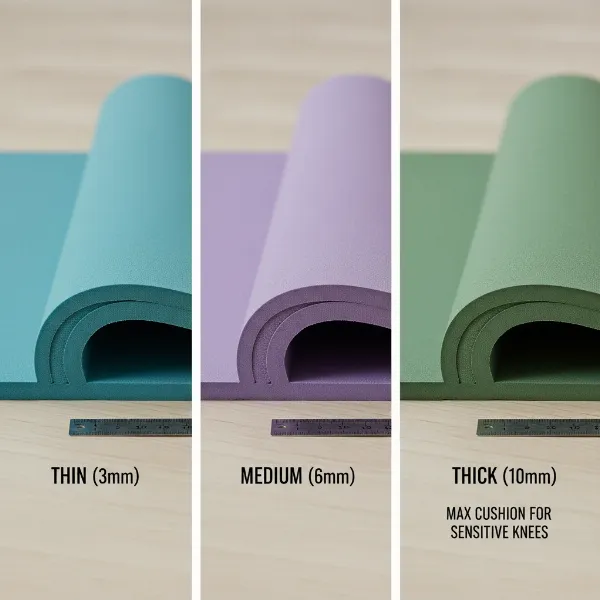 Various yoga mats with different thicknesses, highlighting cushioning levels for knees
Size
Standard yoga mats are typically 68 inches long by 24 inches wide.
- Length: Choose a mat that is at least 6-10 inches longer than your height to ensure you have ample space during poses without sliding off.
- Width: While 24 inches is standard, wider mats (up to 26-30 inches) can offer more room to move, which is beneficial for those who feel constrained or have a larger frame.
Grip and Non-Slip Surface
A reliable non-slip surface is essential to prevent injuries and maintain proper alignment.
- Look for mats with a textured surface or made from naturally grippy materials like natural rubber.
- A mat that provides good traction will keep you stable, especially during dynamic movements or when hands and feet get sweaty.
Material
As detailed above, choose a material that aligns with your needs for cushioning, durability, environmental concerns, and potential allergies. Natural rubber and TPE are excellent choices for cushioning and grip.
Density
Beyond just thickness, a mat’s density is vital. A thick but low-density mat can “bottom out,” meaning your knees will still feel the hard floor.
- Opt for high-density materials that provide firm, supportive cushioning rather than a squishy, unstable feel. This ensures consistent protection for your joints.
Portability and Weight
Thicker, denser mats tend to be heavier.
- If you plan to carry your mat to classes frequently, consider the weight. A lighter mat (like some TPE options) might be preferable, or look for thicker mats that come with a carrying strap. For home practice, weight is less of a concern.
Price
Yoga mats for bad knees can range from budget-friendly to premium investments.
- Determine your budget, but remember that a higher-quality mat often offers better density, durability, and joint protection, potentially saving you money and pain in the long run.
Essential Tips for Cleaning and Maintaining Your Yoga Mat
Proper care extends the life of your mat and maintains its hygiene and grip.
- Regular Cleaning: Wipe down your mat after each practice with a damp cloth or a gentle yoga mat cleaner to remove sweat and oils.
- Deep Cleaning: For a more thorough clean, use a mixture of water and a few drops of mild soap (or specialized mat cleaner). Avoid harsh chemicals that can degrade the mat material.
- Drying: Always allow your mat to air dry completely before rolling it up. Hang it or lay it flat in a shaded, well-ventilated area. Avoid direct sunlight, which can damage certain materials like natural rubber.
- Storage: Roll your mat loosely with the top surface facing outwards to prevent edges from curling. Store it in a cool, dry place away from extreme temperatures.
Top Yoga Mat Recommendations for Enhanced Knee Support
Based on expert insights and user reviews, here are some top yoga mats known for their superior cushioning and joint protection:
- Manduka PRO Yoga Mat: Known as a “gold standard” for durability and support, this 6mm PVC mat offers ultra-dense cushioning and a non-slip surface that improves over time. It comes with a lifetime guarantee, making it a significant investment for serious yogis.
- Jade Fusion or Harmony Yoga Mat: Crafted from natural rubber, these mats provide exceptional grip and cushioning. The Fusion mat is particularly thick, designed for maximum comfort and longevity, while the Harmony offers superior traction even when wet and is eco-friendly.
- Gaiam Essentials Thick Yoga Mat: An excellent budget-friendly option, typically 6mm to 10mm thick (often NBR foam). It delivers plush cushioning, making it perfect for restorative practices and gentle flows, and is lightweight for portability.
- Sivan Health and Fitness 1/2-Inch Extra Thick NBR Comfort Foam Yoga Mat: At 1/2 inch (around 12.7mm), this mat provides maximum cushioning for those with significant knee pain or for low-impact exercises. It’s often praised for its comfort and affordability.
- JELS Extra Thick Exercise Mat (10mm TPE): This TPE mat offers generous cushioning (10mm) and a textured surface for added grip. It’s a great eco-friendly option for sensitive knees, balancing squishy support with stability.
Where to Purchase Your Next Yoga Mat
Finding a reputable retailer ensures you get an authentic, high-quality product.
- Online Retailers: Major online platforms like Amazon, Target, and specialty yoga stores often carry a wide selection with detailed reviews. Look for sellers with good return policies.
- Specialty Yoga Stores: These stores often have knowledgeable staff who can offer personalized recommendations and allow you to physically feel the mats.
- Sporting Goods Stores: Larger chains sometimes stock a range of Yoga Mats, including thicker options suitable for joint support.
Essential Buying Guide for Bad Knees
- Budget First: Decide how much you’re willing to invest. Quality mats are often a worthwhile expense for long-term knee health.
- Practice Frequency: If you practice daily, a more durable, high-performance mat is a better long-term investment.
- Yoga Style: For slower, gentler styles (Restorative, Yin, Hatha, Prenatal), maximum cushioning (6-12mm) is ideal. For more dynamic styles (Vinyasa, Ashtanga), aim for a balance of cushioning and stability (5-8mm).