Choosing the right yoga mat is a pivotal step in enhancing your practice, offering far more than just a surface to stand on. It acts as your personal anchor, providing the stability, comfort, and grip essential for a safe and focused session. With a myriad of materials available, each boasting unique properties, navigating the options can feel overwhelming. This comprehensive guide will dissect the most popular yoga mat materials—TPE, PVC, and Natural Rubber, alongside Jute and Cotton—to help you discern which mat will perfectly align with your needs, values, and yoga journey.
What is a Yoga Mat? Why is it Essential?
A yoga mat is a specially designed padded surface used for practicing yoga postures, meditation, and other floor-based exercises. Its primary role is to provide a stable, non-slip foundation, protecting your body from hard floors and offering cushioning for joints during various poses. A quality yoga mat is indispensable because it prevents slipping, especially in dynamic or sweaty practices, ensures hygienic personal space in shared studio environments, and offers crucial shock absorption to safeguard your knees, wrists, and spine. Without it, maintaining balance, deepening stretches, and even simply feeling comfortable can become challenging, detracting from the mental and physical benefits of yoga.
Popular Yoga Mat Types: Detailed Comparison
The material of your yoga mat dictates much of its performance, feel, and environmental footprint. Understanding these differences is key to making an informed choice that supports both your practice and your principles.
PVC Yoga Mats
Polyvinyl Chloride (PVC) mats have long been the industry standard due to their affordability and robust nature. These mats offer significant durability and are easy to clean, making them a popular choice for studios and beginners alike. PVC provides a distinctive “sticky” feel, which can be beneficial for maintaining grip in many poses. However, PVC mats are not absorbent and can become quite slippery in sweaty conditions, making them less ideal for hot yoga.
A major concern with PVC is its environmental and health impact. PVC production involves toxic chemicals, including phthalates and dioxins, which can be harmful to human health and the environment during manufacturing and disposal. PVC is not biodegradable and can take hundreds of years to decompose, releasing micro-plastics and other pollutants into the environment. While some manufacturers now produce phthalate-free PVC, its overall ecological footprint remains significant.
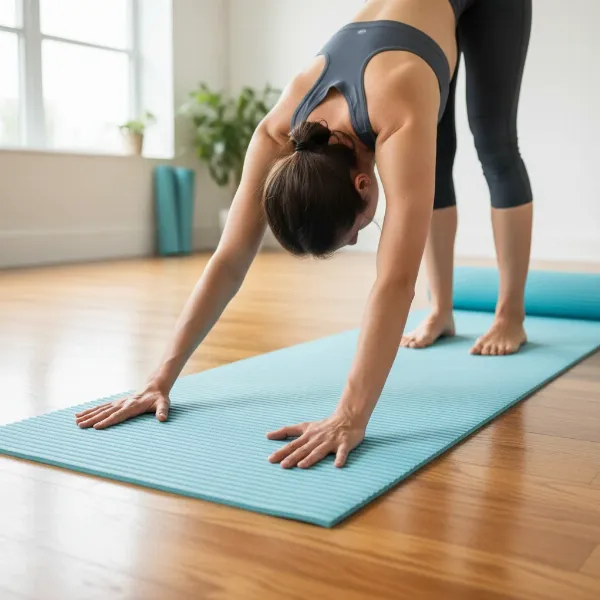 A person performing a yoga pose on a standard PVC yoga mat.
TPE Yoga Mats
Thermoplastic Elastomer (TPE) mats have emerged as a more eco-conscious alternative to PVC. TPE is a blend of plastic and rubber polymers, making it free from PVC, latex, and other heavy metals often found in traditional mats. This material is praised for being non-toxic, hypoallergenic, and recyclable, making it a safer choice for both practitioners and the planet.
TPE mats offer excellent anti-skid properties and elasticity, providing good cushioning and rebound for joint protection. They are typically lightweight and easy to transport, appealing to yogis on the go. While TPE mats generally offer good grip, some formulations may release volatile organic compounds (VOCs), especially when exposed to heat or sunlight, and their overall environmental impact can vary depending on the specific blend. TPE mats are often less durable than PVC or natural rubber mats, potentially requiring replacement more frequently.
Natural Rubber Yoga Mats
Natural rubber mats are highly regarded for their exceptional grip and eco-friendly credentials. Sourced from the sap of rubber trees, this material is a renewable resource and is fully biodegradable, decomposing naturally without leaving toxic residues. Natural rubber provides superior traction, particularly when damp, making it an excellent choice for dynamic and hot yoga practices where sweat is a factor.
These mats often feel grounded, firm, yet forgiving, offering substantial cushioning and stability. However, natural rubber mats can be heavier than other types, and many have a distinct initial rubber smell that airs out over time. They are also generally more expensive and are not suitable for individuals with latex allergies.
Jute Yoga Mats
Jute mats are celebrated for their natural, earthy texture and sustainable properties. Made from natural jute fibers, often blended with a non-slip backing of natural rubber or PER (Polymer Environmental Resin), these mats are biodegradable and eco-friendly. Jute has natural insulating, antistatic, and antimicrobial properties, contributing to a hygienic practice.
The textured surface of jute mats provides good grip, which can improve with moisture, making them suitable for some sweaty practices. However, jute mats can feel rough on the skin and typically offer less cushioning than rubber or PVC mats. A 100% jute mat might be slippery on its own, hence the common combination with a non-slip backing. They also require proper care to prevent slipperiness if the surface gets dirty.
Cotton Yoga Mats
Cotton yoga mats, often referred to as yoga rugs or “yogis,” offer a soft, natural, and highly absorbent surface. Made from natural cotton fibers, usually organic, they are biodegradable and eco-friendly. Cotton mats excel in moisture absorption, effectively wicking away sweat and making them ideal for hot yoga or restorative practices where comfort and breathability are key.
These mats are soft, skin-friendly, and hypoallergenic, making them suitable for individuals with sensitive skin. They are also lightweight, easily washable (often machine washable), and portable. However, cotton mats generally offer less grip and cushioning compared to synthetic or rubber mats, and they may slip on the floor if not backed with a grippier material. Their durability can also be lower than that of some synthetic options.
Comparison Table: Yoga Mat Materials
| Chất Liệu (Material) | Ưu Điểm (Pros) | Nhược Điểm (Cons) | Độ Bám (Grip) | Độ Bền (Durability) | Giá (Price) | Phù Hợp Với (Best For) |
|---|---|---|---|---|---|---|
| PVC | Durable, affordable, easy to clean | Not eco-friendly, non-biodegradable, potential toxins, slippery with sweat | Medium (slippery when wet) | High | Low | Beginners, budget-conscious |
| TPE | Eco-friendlier than PVC, non-toxic, lightweight, good cushioning | Less durable than PVC/rubber, can be more expensive than PVC | Good | Medium | Medium | Eco-conscious, regular practitioners |
| Cao Su Tự Nhiên (Natural Rubber) | Excellent grip (improves with moisture), eco-friendly, biodegradable, superior cushioning | Heavy, strong initial odor, higher price, not for latex allergies | Very Good | High | High | Professional yogis, hot yoga, prioritizing quality |
| Jute | Eco-friendly, biodegradable, natural texture, antimicrobial | Can be rough, less cushioning, needs backing, can be slippery when dry/dirty | Medium (improves with moisture) | High | Medium | Eco-conscious, those seeking natural feel |
| Cotton | Soft, breathable, absorbs sweat, eco-friendly, washable | Lower grip, less cushioning, can slip on floor, lower durability | Low (better when damp) | Low | Low | Restorative yoga, meditation, hot yoga (for sweat absorption) |
Guide to Choosing the Right Yoga Mat
Selecting the perfect yoga mat involves considering several personal and practical factors. Your ideal mat will support your practice, protect your body, and align with your values.
Thickness
The thickness of your yoga mat significantly impacts comfort and stability.
- 3-4mm: Offers a strong connection to the floor, ideal for balancing postures and dynamic styles like Vinyasa where you need to feel grounded. However, it provides less cushioning for joints.
- 5-6mm: The most common thickness, providing a good balance of cushioning for joint protection and sufficient stability for various poses. This is a versatile choice for most practitioners.
- Above 6mm: Provides maximum cushioning, perfect for restorative yoga, Yin yoga, or individuals with sensitive joints, knees, or wrists. The trade-off is that very thick mats can make balancing postures more challenging due to their plushness.
Size
A yoga mat should comfortably accommodate your entire body.
- Length: Choose a mat that is at least 10cm longer than your height to ensure you can lie down fully without your head or feet touching the floor.
- Width: Standard mats are usually 24 inches wide. If you have a larger frame or prefer more space to move, consider wider mats for increased comfort and to prevent sliding off during transitions.
Grip
Grip is paramount for safety and stability, especially in challenging poses or sweaty conditions.
- Look for mats with good traction that prevent slipping when dry and, crucially, when wet. Natural rubber and some TPE mats are known for their superior wet grip, making them suitable for hot yoga. PVC mats can become slippery with sweat. Textured surfaces, found on many natural fiber mats, can also enhance grip.
Chất Liệu (Material)
As explored above, your choice of material should align with your priorities:
- Eco-friendliness: Natural rubber, jute, and cotton are excellent choices.
- Performance: Natural rubber offers supreme grip, while TPE provides a good balance.
- Comfort: TPE and thicker PVC mats offer good cushioning, while cotton is soft.
- Allergies: Avoid natural rubber if you have a latex allergy.
- Durability: PVC and natural rubber tend to be very durable.
Giá Cả (Price)
Yoga mat prices vary widely based on material, brand, and features.
- Entry-level: PVC and basic cotton mats are typically the most affordable.
- Mid-range: TPE and some jute mats fall into this category.
- Premium: High-quality natural rubber mats are generally the most expensive due to their sustainable sourcing and superior performance. Determine your budget and invest in the best quality within that range, considering durability as a long-term cost saver.
Yoga Mat Cleaning and Maintenance Tips
Proper care extends the life of your yoga mat and maintains hygiene, ensuring it remains a welcoming space for your practice.
- Regular Cleaning: Wipe down your mat after every practice, especially if you sweat heavily, to remove sweat, dirt, and oils.
- Cleaning Solution: Use a dedicated yoga mat cleaner or a DIY solution of water mixed with a few drops of mild soap or white vinegar. Spray lightly and wipe with a soft cloth. For cotton mats, follow manufacturer’s washing instructions, which often include machine washing on a gentle cycle.
- Drying: Always allow your mat to air dry completely before rolling it up. Avoid direct sunlight or excessive heat, as this can degrade certain materials, especially natural rubber and biodegradable TPE.
- Storage: Roll your mat loosely, rather than folding it tightly, to prevent creases and damage. Store it in a cool, dry place away from direct sunlight and extreme temperatures.
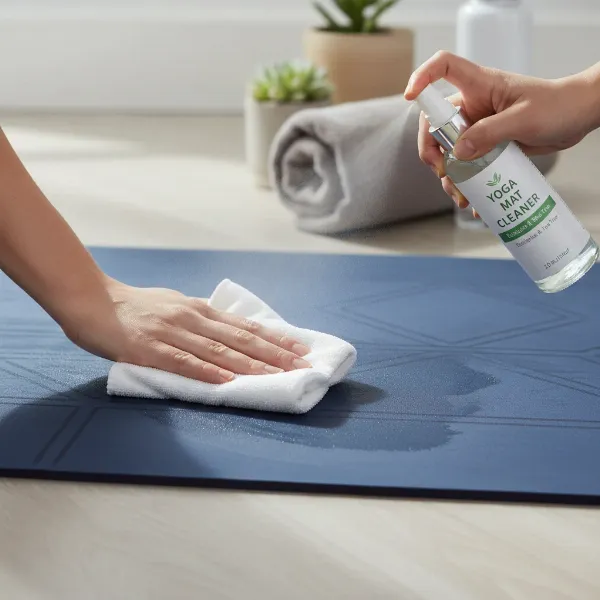 Person wiping down a yoga mat with a spray bottle and cloth for hygiene.
Top Yoga Mat Materials for Every Yogi
While specific brands are outside the scope, understanding which materials are favored for certain needs can guide your choice. For unparalleled grip and eco-consciousness, natural rubber mats are consistently a top choice, especially for advanced practitioners and hot yoga enthusiasts. If balancing eco-friendliness with affordability and versatility is your goal, TPE mats offer a great all-around option. For those prioritizing a soft, absorbent, and natural feel, cotton yoga rugs are excellent, particularly for gentler practices or as a top layer for sweat absorption. Jute mats appeal to those who value a textured, natural surface and sustainability.
Where to Buy a Quality Yoga Mat?
You can find quality yoga mats at various reputable retailers, both online and in brick-and-mortar stores.
- Online Retailers: Websites specializing in yoga and fitness equipment often have a wide selection, detailed descriptions, and customer reviews. Major e-commerce platforms also offer many options, but always check seller reputation and product specifications.
- Specialty Yoga Stores: These stores typically offer expert advice and a curated selection of higher-quality mats, allowing you to feel the materials before purchasing.
- Sporting Goods Stores: Larger stores often carry a range of yoga mats, from basic to more advanced.
When buying online, read customer reviews, check for certifications (like OEKO-TEX for TPE/PVC or GOTS for organic cotton) and understand the return policy.
Buying Guide
Finding your ideal yoga mat is a journey of self-discovery, much like yoga itself.
- Budget: Determine how much you’re willing to invest. Higher prices often correlate with better quality, durability, and eco-friendly materials.
- Practice Frequency: If you practice daily, invest in a durable, high-performance mat that will withstand frequent use. Casual practitioners might opt for a more affordable option.
- Yoga Style: Different styles benefit from different mat characteristics. For vigorous, sweaty practices, prioritize grip. For restorative or therapeutic yoga, cushioning is key.
- Personal Factors: Consider any allergies (e.g., latex), skin sensitivities, or personal preferences for texture, color, and weight.
“The mat beneath you is more than just equipment; it’s a foundation that can either hinder or elevate your practice, impacting your focus, balance, and overall well-being.”
Kết luận
Choosing the perfect yoga mat truly transforms your practice, serving as a vital extension of your intention and commitment. As we’ve explored, whether you prioritize the robust durability of PVC, the balanced eco-consciousness of TPE, the superior grip of natural rubber, the earthy texture of jute, or the soft absorbency of cotton, each material offers distinct advantages and considerations. By understanding the intricate differences in grip, cushioning, environmental impact, and durability, you’re now equipped to select a mat that not only supports your physical postures but also resonates with your personal values. May your chosen yoga mat be a steadfast companion, grounding you in every breath and movement. What material will anchor your next flow?
Frequently Asked Questions
What is the most eco-friendly yoga mat material?
Natural rubber is generally considered the most eco-friendly yoga mat material because it is sourced from a renewable resource (rubber trees), is fully biodegradable, and decomposes naturally without releasing toxic residues. Jute and organic cotton are also excellent sustainable choices due to their natural origins and biodegradability.
Which yoga mat is best for sweaty hands during practice?
Natural rubber mats are often recommended for practitioners with sweaty hands as their grip tends to improve when damp. Cotton mats are also highly effective because they are absorbent and wick away moisture, preventing slipperiness. Some TPE mats with closed-cell structures also offer good grip in sweaty conditions.
Can I machine wash all types of yoga mats?
No, not all yoga mats are suitable for machine washing. While cotton Yoga Mats are typically machine washable on a gentle cycle, most synthetic mats (like PVC and TPE) and natural rubber mats should only be wiped down with a damp cloth and mild cleaning solution. Always check the manufacturer’s care instructions to avoid damage.